Building on the success of “the world’s first Healthable hearing aid,” Livio AI, Starkey announces the release of Livio Edge AI. Livio Edge AI is said to “combine the best of both worlds: industry-leading sound quality and sound processing for challenging listening environments.” With a simple double tap, Edge Mode helps bring “the power of artificial intelligence to a patient’s fingertips, by instantaneously conducting an AI-based analysis of the acoustic environment and making immediate adjustments,” according to the company.
“As a global leader in innovation, Starkey continues to defy the limits of what others thought was possible,” said Starkey CEO Bill Austin. “By using artificial intelligence, we’ve transformed the hearing aid into a tool that can unlock the ear’s ability to be a source of complex biological information. In doing so, we’re bridging the gap between a patient’s hearing health and their overall health and wellness.”
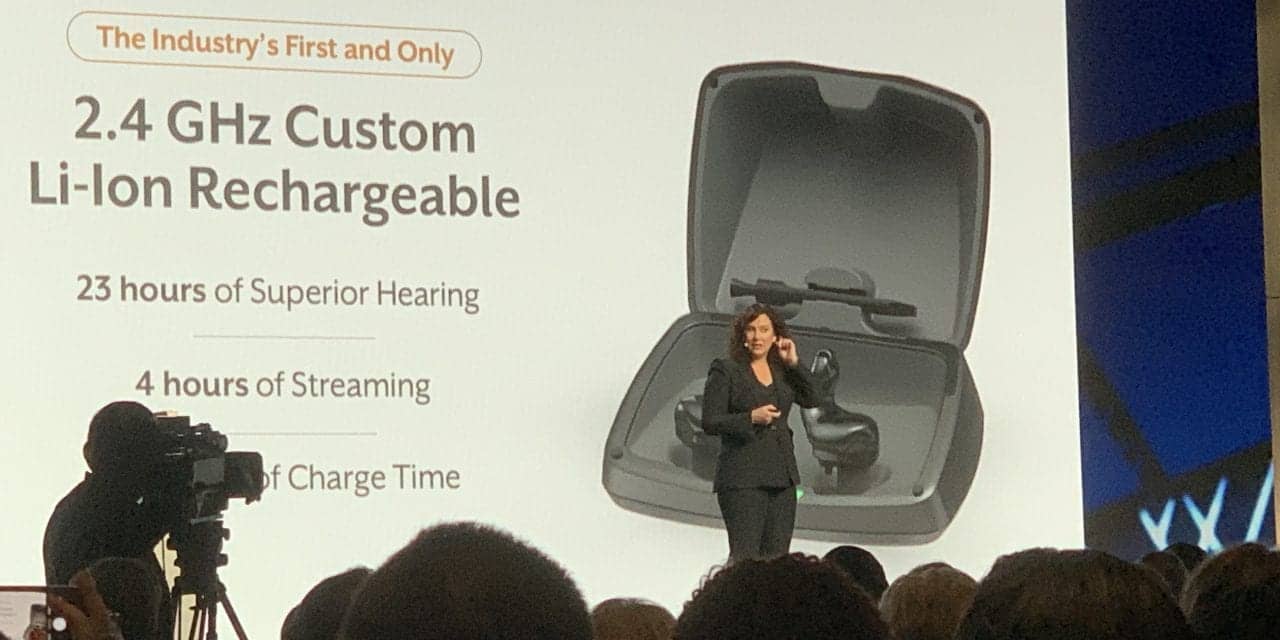
As part of this new product launch, Starkey introduces “the world’s first 2.4 GHz lithium-ion ITC and ITE custom rechargeable hearing aids.”
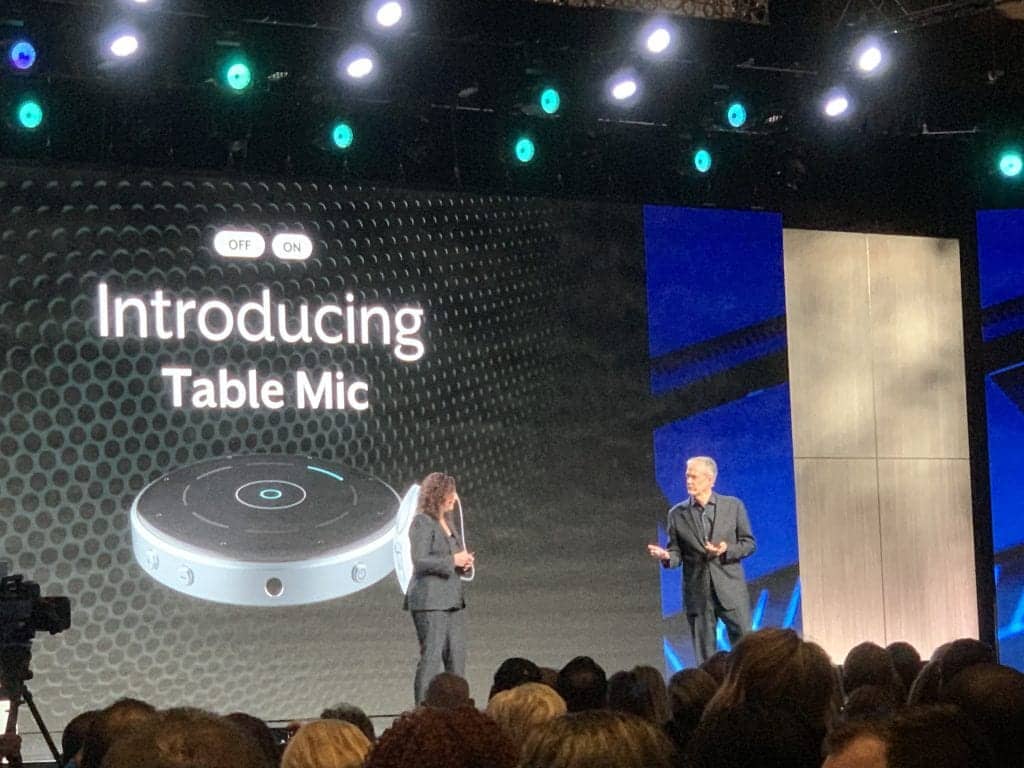
A variety of other new features includes improvements to the usability and performance of the Thrive Hearing Control app, a 2.4 GHz Table Microphone with eight built-in microphones to help users enjoy group settings, and AI for all. This means Livio AI is now available in the 2000, 1600, 1200, and 1000 technology tiers.
“We are proud to be leading the hearing industry at the speed of innovation,” said Starkey President Brandon Sawalich. “Livio AI broke barriers by becoming the first hearing aid to use artificial intelligence to monitor body and brain activity. It even achieved high-profile recognition from the likes of TIME Magazine, but, at Starkey, we don’t rest on our laurels. We continue to push ourselves to make the impossible possible, so we can help people live better lives through better hearing.”
For more information on the new products available now, please click here.
Phonak Marvel Technology Now Available in Customs and BTE Hearing Aids
Phonak, a provider of hearing aid solutions, announced its Marvel technology availability in additional styles and form factors spanning “nearly ever degree of hearing loss.” This includes an expanded portfolio of custom in-the-ear (ITE), super-power, and pediatric hearing aids across multiple performance levels, according to Phonak. Marvel connectivity is said to allow “hand-free calls as well as audio streaming to virtually any Bluetooth enabled devices like smartphones, tablets, computers, or TVs.”
Phonak Virto Black Marvel and Naida Marvel
At January’s 2020 International CES, Phonak unveiled Virto™ M Black, described as “a fully-connected hearing aid shaped like a hearable.” Virto M Black is said to be Phonak’s first custom-made hearing aid equipped with Marvel technology, including universal Bluetooth®streaming, hands-free phone calls, and a personalized hearing experience via the myPhonak app. Virto M Black was named a “Best of CES Winner in Accessibility” from Engadget, the “Best Medical Device” by Slashgear, and was included among Newsweek’s “Best of CES 2020: The Top Tech Products You Can Actually Buy This Year.”
Phonak Virto Black Marvel
Continuing this momentum is the release of Virto M NW and Virto M-Titanium, which Phonak says offers Marvel’s “signature exceptional sound quality in a smaller device, down to an invisible-in-canal (IIC).” Thanks to the Titanium FitGuide, over 50% of people are said to get an “even more discreet Virto M-Titanium fitting by an average of 2.5 mm.1” All Virto M hearing aids include Biometric Calibration, which is said to analyze “over 1,600 biometric data points to precisely calibrate the device to a patient’s individual ear anatomy,” according to Phonak.
The Phonak Sky™ portfolio now includes the new Sky M-SP in all four performance levels. Sky Mis powered by AutoSense Sky OS 3.0, the next generation of Phonak’s operating system designed specifically for children. All Sky M hearing aids can stream audio from virtually any Bluetooth device and directly connect to Roger microphones, helping give children “easier access to words and conversation at school and home.”
Also available today is Naída™ M-SP, offering “powerful, rich sound, universal Bluetooth streaming from iOS®and Android™ devices, and RogerDirect™ connectivity for unparalleled hearing in noise and over distance.2” Naída M is suitable for people with severe-to-profound hearing loss and provides 24% less listening effort in noise and with StereoZoom.*3 For words which are difficult to predict, StereoZoom improves recall in noise by 10%.*3
Phonak’s expanded Marvel portfolio will be available in various countries around the globe over the coming weeks and pre-orders in the US began on February 19.
Bishop R, Stewart E, Loyola N. Titanium FitGuide—helping more than 50% of people get an even more discreet Virto B-Titanium. www.phonakpro.com/evidence. Accessed February 19, 2020.
Winneke A, Schulte M, Latzel M. The effect of spatial noise processing in hearing aids on neural correlates of listening and memory effort: an EEG study. 2019. Manuscript submitted for publication.
At the time of publication, datasheet analysis on 2cc coupler full-on-gain, Compared to Oticon Xceed SP, Widex EVOKE FP, and Starkey Livio.
*compared to Real Ear Sound
Bluetooth® word mark is a registered trademark owned by Bluetooth SIG, Inc. and any use of such mark by Sonova AG is under license.
Livio AI Now Compatible with Samsung Galaxy S10 and Note 10 Smartphones
|
Starkey announced that Livio AI is now compatible with “more devices than ever before,” including direct streaming support from the latest in Samsung’s smartphones. This capability expands Starkey’s streaming offering to Samsung Galaxy S10, S10+, and Note 10 smartphones, leveraging all the power-saving benefits of Bluetooth® Low Energy.
“This new ability to stream directly from Samsung smartphones to Livio AI will allow Starkey to continue to expand its global footprint,” said Achin Bhowmik, PhD, Starkey’s Chief Technology Officer and Executive Vice President of Engineering. “Samsung smartphones are used around the world. This new compatibility will substantially increase the number of people who can access the groundbreaking technology that Livio AI offers.”
Livio AI is reportedly “the only hearing aid to use artificial intelligence to monitor brain and body activity, allowing people of all ages to take a proactive approach to their overall wellness,” according to Starkey. These devices continue to earn recognition inside and outside of the hearing industry, including TIME’s list of Best Inventions of 2019 and The Verge’s list of 100 best gadgets of the decade.
“We are pleased to have a chance to work with Starkey to incorporate the function for the hearing impaired in our devices,” said Jong-Mu Choi, head of convergence R&D for Samsung Electronics. “We look forward to our continued partnership, as we develop new technologies.”
https://www.keynshamhearing.co.uk/wp-content/uploads/2019/03/logo-300x79.png00adminhttps://www.keynshamhearing.co.uk/wp-content/uploads/2019/03/logo-300x79.pngadmin2020-02-16 20:50:292020-02-16 20:51:02Starkey Livio AI at Keynsham
Widex Unveils BEYOND Hearing Aid with Advanced Connectivity
Keynsham hearing Blog
With an intuitive swipe-function app, personalised sound programs, and multiple ways of connecting, the just-unveiled Widex BEYOND made-for-iPhone hearing aid is designed to deliver a high level of connectivity and sound.
According to Widex, BEYOND provides exceptional 2.4 GHz direct connectivity, while advanced TRI-LINK™ technology lets wearers instantly connect to iPhones, T-coils and a full range of DEX communication solutions. An integrated signal processing chip-set design, with 100% independent channel separation, minimal delay filters and 4 A/D converters, means BEYOND offers the cleanest sound of any hearing aid in the industry–even while streaming, reports Widex.
The company says that what makes Widex BEYOND special is its easy-to-use and customisable made-for-iPhone app. It allows full streaming functionality and control over the listening environment so hearing aid wearers are seamlessly connected anywhere and anytime – and provides unparalleled connectivity between their hearing aids. The app interface can be personalised by wearers, and also utilises the familiar swipe functionality for easy navigation – so users can quickly and easily navigate through various intuitive commands and screens.
Other BEYOND highlights include:
A clean sound hearing aid rated by wearers as significantly better than others. Brilliant sound – even when streaming.
Up to 30% better speech understanding in wind with the SMARTWIND MANAGER™ that significantly reduces wind noise annoyance
Better power consumption than many made-for-iPhone streaming hearing aids; with PowerSaver Plus™ technology, designed specifically for the demands of connectivity
Soft Level Noise Reduction that allows soft speech sounds to be heard, while reducing bothersome soft noises
WidexLink™ – the supreme InterEar communication technology
Widex-Beyond-hearing-aids-Keynsham-hearing-centre
According to Widex USA President Jeffrey Geigel, Widex BEYOND is ahead of the game when it comes to made-for-iPhone hearing technology. “Widex is already known for leading technology and sound, but now we allow the end-users to control that sound from their pockets via their iPhone.”
“BEYOND was already presented at EUHA in Germany to great success–it created a lot of positive attention,” added Widex CEO Jørgen Jensen adds. “We are proud to have a product that sets new standards. Our customers live active lives, and BEYOND really helps them live their lives the way they want.”
Widex is a global hearing aid technology company and has been developing hearing aids for 60 years. Widex products are sold in more than 100 countries around the world, and the company employs over 3,800 people worldwide.
A pair of biomarkers of brain function—one that represents “listening effort,” and another that measures ability to process rapid changes in frequencies—may help to explain why a person with normal hearing may struggle to follow conversations in noisy environments, according to a new study led by Massachusetts Eye and Ear researchers and summarised on the hospital’s website. Published online last week in the scientific journal eLife, the study could inform the design of next-generation clinical testing for hidden hearing loss, a condition that cannot currently be measured using standard hearing exams.
“Between the increased use of personal listening devices or the simple fact that the world is a much noisier place than it used to be, patients are reporting as early as middle age that they are struggling to follow conversations in the workplace and in social settings, where other people are also speaking in the background,” said senior study author Daniel B. Polley, PhD, director of the Lauer Tinnitus Research Center at Mass. Eye and Ear and Associate Professor of Otolaryngology Head-Neck Surgery at Harvard Medical School. “Current clinical testing can’t pick up what’s going wrong with this very common problem.”
Daniel B. Polley, PhD
“Our study was driven by a desire to develop new types of tests,” added lead study author Aravindakshan Parthasarathy, PhD, an investigator in the Eaton-Peabody Laboratories at Mass. Eye and Ear. “Our work shows that measuring cognitive effort in addition to the initial stages of neural processing in the brain may explain how patients are able to separate one speaker from a crowd.”
Hearing loss affects an estimated 48 million Americans and can be caused by noise, aging, and other factors. Hearing loss typically arises from damage to the sensory cells of the inner ear (the cochlea), which convert sounds into electrical signals, and/or the auditory nerve fibers that transmit those signals to the brain. It is traditionally diagnosed by elevation in the faintest sound level required to hear a brief tone, as revealed on an audiogram, the gold standard test of hearing sensitivity.
Aravindakshan Parthasarathy, PhD
Hidden hearing loss, on the other hand, refers to listening difficulties that go undetected by conventional audiograms and are thought to arise from abnormal connectivity and communication of nerve cells in the brain and ear, not in the sensory cells that initially convert sound waves into electrochemical signals. Conventional hearing tests were not designed to detect these neural changes that interfere with our ability to process sounds at louder, more conversational levels.
In the eLife report, the study authors first reviewed more than 100,000 patient records over a 16-year period, finding that approximately 1 in 10 of these patients who visited the audiology clinic at Mass. Eye and Ear presented with complaints of hearing difficulty, yet auditory testing revealed that they had normal audiograms.
Motivated to develop objective biomarkers that might explain these “hidden” hearing complaints, the study authors developed two sets of tests. The first measured electrical EEG signals from the surface of the ear canal to capture how well the earliest stages of sound processing in the brain were encoding subtle but rapid fluctuations in sound waves. The second test used specialized glasses to measure changes in pupil diameter as subjects focused their attention on one speaker while others babbled in the background. Previous research shows changes in pupil size can reflect the amount of cognitive effort expended on a task.
They then recruited 23 young or middle-aged subjects with clinically normal hearing to undergo the tests. As expected, their ability to follow a conversation with others talking in the background varied widely despite having a clean bill of hearing health. By combining their measures of ear canal EEG with changes in pupil diameter, they could identify which subjects struggled to follow speech in noise and which subjects could ace the test. The authors are encouraged by these results, considering that conventional audiograms could not account for any of these performance differences.
“Speech is one of the most complex sounds that we need to make sense of,” Polley said. “If our ability to converse in social settings is part of our hearing health, then the tests that are used have to go beyond the very first stages of hearing and more directly measure auditory processing in the brain.”
In addition to Drs Polley and Parthasarathy, co-authors on the eLife report include Kenneth E. Hancock of Mass. Eye and Ear/Harvard Medical School, Kara Bennett of Bennett Statistical Consulting, Inc, and Victor DeGruttola of the Harvard T. H. Chan School of Public Health. This study was supported by the National Institutes of Health (NIDCD P50-DC015857).
https://keynshamhearing.co.uk/wp-content/uploads/2019/03/video-microsuction-wax-removal.png6101082adminhttps://www.keynshamhearing.co.uk/wp-content/uploads/2019/03/logo-300x79.pngadmin2020-02-02 19:06:532020-02-02 19:06:53Researchers Find Two Biomarkers Involved in Speech in Noise
Starkey Launches Livio Edge AI and Several Firsts at Hearing Innovations Expo
Starkey Hearing Technologies unveiled its latest hearing aid, the Livio Edge AI, on Thursday, the opening day of the company’s Hearing Innovation Expo, held in Las Vegas and attended by a reported 3400 hearing care professionals from 60 countries. The new hearing aid—which features a 2.4 GHz custom hearing aid with rechargeability option and hands-free connectivity to new popular smartphones like the Samsung Galaxy S10—will be available in North American in February 2020.
Livio AI, featured as one of TIME magazine’s Top-100 best inventions of 2019, is designed to provide exceptional sound quality and hearing in noise in addition to: serving as a fitness app by tracking the number of steps you take each day; offering a “brain health score” based on daily social engagement and active listening; using inertial sensors for fall detection and alerting caregivers; receiving voice commands so Siri can act as your mobile personal assistant; utilizing pre-set timely reminders from you to take your medications; translating and transcribing 27 languages; and streaming audio from music and TV shows.
The new Livio Edge AI has been engineered to “go beyond” these features. According to presentations by Starkey CTO and EVP of Engineering Achin Bhowmik, PhD, Chief Audiology Officer Sara Burdak, AuD, and Chief Innovation Officer David Fabry, PhD, the new Livio Edge AI also includes:
• Edge Mode applies artificial intelligence (AI) for patient-driven, on-demand fine-tuning of the sound environment. The hearing aid user can double-tap on the hearing aid to initiate Edge Mode, which through an environmental analysis of the sound can provide an “extra boost” when in challenging listening situations. A demonstration was provided of a conversation in a noisy stadium where the crowd noise was dampened so a nearby person’s comments could be heard.
• 2.4 GHz custom hearing aids with Li-ion rechargeability, reportedly an industry first. Livio Edge AI is expected to provide 23 hours of hearing and 4 hours of streaming on a 3.5 hours charge.
• Google Pixel and Samsung Galaxy (including S10) phones are added to the connectivity options of smart-phones with direct streaming to the new Livio Edge AI Premium.
• Voice-activated and tap-activated commands can directly control the hearing aid by tapping and talking (ie, for increasing volume or changing listening modes). It can also provide access to Siri, the “intelligent assistant” for iPhone users. Using the Thrive Assistant feature in the Thrive app, patients have instant access to a world of information at their fingertips, getting in-ear and on-screen notifications for tasks like taking medications or a reminder to pick up milk on the way home from work.
Self-Check Baseline: Patient-centered care is becoming patient-driven care. With Self-Check, the patient can perform a diagnostic test of the hearing aid system anytime, on their own.
Sara Burdak and David Fabry explain the key features of Starkey’s new Table Mic.
Additionally, Starkey introduced its Table Mic, a handy remote microphone that can be placed on a table and either set to automatic mode or a manual mode where the user can direct the beamformer in up to two directions. As with other remote mics, the Table Mic is capable of improving the signal-to-noise ratio (SNR) by 12-15 dB, compared to 3-4 dB by the industry’s best digital noise reduction hearing aid algorithms.
Starkey also introduced three apps or app modifications:
• Thrive, the current user-control app for Livio AI hearing aids, has undergone a makeover designed to give it a cleaner look and feel. The new streamlined user interface is intended to make the Livio experience more transparent and easier for the hearing aid wearer.
• ThriveCare is an app for the caregivers of the hearing aid user so they can stay informed in real-time about the user’s hearing and safety status; it is designed to provide peace of mind for care providers and to help the hearing aid wearer live independently and safely. For example, it can monitor and report on the hearing aid wearer’s number of steps, use of the hearing aids, and time spent in social interaction. Dr Fabry also pointed out that ThriveCare data can be shared with friends and colleagues who also have Livio hearing aids in order to compete in the various metrics monitored by the hearing aid.
• Balance Builder is a new app intended to help improve patients’ balance and reduce risks of falls through a series of at-home interactive exercises. The user is guided through balance exercises and workouts, based on head movements detected from sensors in Livio Edge AI hearing aids. As a “trainer” app for balance, it is designed to strengthen the user’s balance, stability, and gait, and help prevent falls and improve user confidence.
Dr Bhowmik stressed that Livio AI is—first and foremost—a hearing aid dedicated to providing the best sound experience in the hearing industry. In an interview with Hearing Review, he was careful to emphasize what shouldn’t be lost in all the new (and upcoming) features is the sound processing and the advancements made in helping people to understand spoken language. With Edge Mode, for example, the device uses AI and multiple parameters in the hearing aid that are unique to the acoustic snapshot of the current listening environment.
Looking to the Future of Healthables
“The ear is the new wrist—except better,” says Bhowmik, noting that having sensors within the ear canal opens up a wealth of possibilities for monitoring body and health-related functions, even beyond the current activity tracker and sensors found in Livio hearing aids.
Starkey CTO and EVP of Engineering Achin Bhowmik, PhD, explains Edge AI during the Starkey Hearing Innovation Expo.
Dr Bhowmik explained that several of the world’s largest companies—including Apple, Intel, IBM, Google, and Microsoft—are working on the “edge of AI.” Intelligence is moving towards edge devices with increased computing power which combine sensor data and AI algorithms that drive machine learning. “Edge AI, simply put, is an implementation of artificial intelligence that builds on distributed computing,” said Bhowmik. “We have a processor in the hearing aid itself, and we connect to the power of an iPhone or Android phone, which is connected to the Cloud [which has enormous computing power]. We connect smart devices to the smart Cloud; unlike traditional AI, where the cloud is smart, but the device not so much. To do Edge AI, we have to work with the best in the field to re-architect the AI engine—the machine infrastructure [that brings] the technology to the edge.” Bhowmik says we are seeing only the beginnings of this technology emerge today. He believes that, while other companies in the hearing industry will also start to employ this type of machine learning, Starkey will already be moving to the next level at that point.
He also offered some glimpses of “cutting-edge AI” development in the near-future, extending Livio Edge AI’s sensor-based “healthable” technology for monitoring:
• Cardiovascular health. The current Livio AI contains a heart-rate sensor; however, due to problems associated with impression-taking/earmolds and the sensor contacts, it has not been implemented yet. Starkey expects to be able to add this soon to Thrive as part of its fitness tracking. Other areas being looked into are oxygen (O2) saturation in the blood and blood pressure.
• Body temperature. A built-in sensor to monitor core body temperature.
• Visual assistance. With the help of some kind of camera or optical device, the hearing aid can identify and describe what the hearing aid wearer is seeing;
• Emotion sensing. A capability to detect if the wearer is happy, sad, depressed, relaxed, etc, and offer possible options, if needed.
• Voice analysis. The capability for the hearing aid to “sense” if you’re feeling stressed or in need of help, and ask you discreetly if you’re in need of assistance.
Look for the upcoming report on the Starkey Innovations Expo and Hearing Review’s interview with Dr Bhowmik in a future edition of HR online news.
Yet only 12% of those who have a formal diagnosis of hearing loss actually get the devices—even when they have insurance coverage for at least part of the cost, the study shows. It also reveals gaps in hearing aid use among people of different racial and ethnic backgrounds, geographic locations, and genders.
The findings, made by a University of Michigan team using data from nearly 115,000 people over age 66 with hearing loss and insurance coverage through a Medicare HMO between 2008 and 2016, are published in the Journal of the American Geriatrics Society.
Unlike traditional Medicare, Medicare HMOs typically cover some hearing aid costs for members diagnosed with hearing loss by an audiologist.
Elham Mahmoudi, MBA, PhD, the U-M Department of Family Medicine health economist who led the study, says it confirms what other research has shown among patients studied at a single point in time—but the new findings show differences emerging as time goes on.
Ear wax removal Bristol
“We already know that people with hearing loss have more adverse health events, and more co-existing conditions, but this study allows us to see the effects of an intervention and look for associations between hearing aids and health outcomes,” she says.
“Though hearing aids can’t be said to prevent these conditions, a delay in the onset of dementia, depression, and anxiety, and the risk of serious falls, could be significant both for the patient and for the costs to the Medicare system.”
Long-term Tracking
Mahmoudi and her colleagues at the U-M Institute for Healthcare Policy and Innovation looked at anonymous insurance data to perform the study, and looked at the data for each person with hearing loss one year before their diagnosis, and three years after, so they could see only newly diagnosed dementia, depression, anxiety, and fall injuries.
They intend to keep studying further data from this population, to see if the differences in health outcomes continue beyond three years.
The study shows that men with hearing loss were more likely to receive a hearing aid—13.3% compared with 11.3% of women. Only 6.5% of people of Latino heritage received a hearing aid for their hearing loss, compared with 9.8% of African-Americans and 13.6% of whites.
Nearly 37% of people with hearing loss who lived in the north-central part of the country, as designated by the Census Bureau, used a hearing aid, compared with just 5.9% of people in the mountain states.
Differences in Diagnosis
When the researchers looked at the path that patients who received hearing aids took over three years, compared with those who didn’t get the devices, significant differences emerged.
In all, the relative risk of being diagnosed with dementia, including Alzheimer’s disease, within three years of a hearing loss diagnosis was 18% lower for hearing aid users. The risk of being diagnosed with depression or anxiety by the end of three years was 11% lower for hearing aid users, and the risk of being treated for fall-related injuries was 13% lower.
The study also confirms previous studies’ findings that people with hearing loss had much higher rates of dementia, depression, and fall injuries than the general population.
The reasons for this are complicated, and can include loss of social interaction, loss of independence, loss of balance, and less stimulation to the brain. Some researchers also believe that the loss of nerve impulses from the ear to the brain, and loss of cognitive ability leading to dementia, could be part of the same ageing process.
What’s to Come
The study only included individuals who billed their insurance company for part of the cost of their hearing aid, Mahmoudi notes. The coming of FDA-approved over-the-counter hearing aids in 2020 for people with mild to moderate hearing loss could make the devices much more accessible for many people.
But those new devices could also complicate researchers’ ability to study the effects of hearing aids on other health outcomes, if people don’t use insurance coverage and researchers can’t tell if they have one.
“Correcting hearing loss is an intervention that has evidence behind it, and we hope our research will help clinicians and people with hearing loss understand the potential association between getting a hearing aid and other aspects of their health,” says Mahmoudi.
She notes that Medicaid in the state of Michigan is now covering hearing aid testing, fitting, and purchase, since a policy change in 2018, and that it will be important to study impacts in this population as well.
In addition to Mahmoudi, the new study’s authors are IHPI statisticians Tanima Basu, MS and Neil Kamdar, MA, and IHPI members Kenneth Langa, MD, PhD, Michael M. McKee, MD, MPH, Phillip Zazove, MD, and Neil Alexander, MD. Langa and Alexander are professors in the U-M Department of Internal Medicine; McKee and Zazove are assistant professor and chair, respectively, of the U-M Department of Family Medicine. Langa also holds faculty positions in the U-M Institute for Social Research and the VA Ann Arbor Center for Clinical Management Research.
Original Paper: Mahmoudi E, Basu T, Langa K, et al. Can hearing aids delay time to diagnosis of dementia, depression, or falls in older adults? Journal of the American Geriatrics Society. 2019. DOI: https://doi.org/10.1111/jgs.16109
Source: University of Michigan, Journal of the American Geriatrics Society
https://keynshamhearing.co.uk/wp-content/uploads/2019/05/Keynsham-Hearing-Centre-ear-wax-removal-hearing-aids-Bath-Bristol-Somerset.jpg360640adminhttps://www.keynshamhearing.co.uk/wp-content/uploads/2019/03/logo-300x79.pngadmin2020-01-19 17:02:022020-01-19 17:02:02Hearing Aids May Lead to Lower Rates of Dementia
So the new year and new decade is here. As loud as the T.V. maybe you still are 100% sure you don’t need at the very least a hearing test. You are not that bothered that your granddaughters first few words are unheard by you or that the gossip from the next door neighbour just isn’t as good as it used to be. She talks so quietly these days you really are tired of straining to hear.
Maybe the Postman just didn’t push the doorbell hard enough as you were in when he called and you missed that package that you were waiting in all day for an now you have to go 14 mies to the sorting office with I.D. to make the collection.. At rush hour!
These little annoyances crammed with so many others it would take more than the internet to tell them all, maybe down to one thing? Your hearing maybe not as it once was (understatement possibly).
Hearing tests at the Keynsham hearing centre Bristol
Here at Keynsham Hearing we get to see many reluctant men and women who have for years put off what we all know. We are all getting older and really annoyingly we are hard of hearing! Or DEAF!
There we said it. Now we have that out there is usually a huge relief as it’s not as bad as you think. These days there is a huge difference in how hearing can be corrected in the main part. Tech is smaller, fancier and more connected than ever before.
We do understand the stigma attached to admitting that your hearing is not what it used to be. We also understand hearing is vital for people to stay connected with their family and daily lives.
Ear wax removal Keynsham Somerset
If you feel that you or someone you love could do with knowing just what their hearing is really like then we are happy to conduct a simple hearing tests and go from there. It may even by a simple ear wax issue that can be corrected in minutes.
The latest 2020 hearing aids available at the Keynsham hearing centre.
New report in deafness therapy has been reported by a new scientific paper. Here at the Keynsham hearing centre are keen to keep up with the latest information to keep our patients informed.
High-pressure Oxygen Therapy May Help Treat Sudden Deafness, Says ‘JAMA’ Study
BottomLine: The addition of hyperbaric oxygen therapy (where patients receive pure oxygen in a pressurised chamber) to standard medical treatment was associated with an improved likelihood that patients who experience sudden deafness might recover all or some of their lost hearing, JAMA Network announced on its website. Sudden deafness, also known as sudden sensorineural hearing loss (SSNHL), is hearing loss that happens within a few days and often has no identifiable cause. This study combined the results of 19 studies, including three randomised clinical trials, and suggests a greater benefit of adding the hyperbaric oxygen therapy may be associated with those patients who have severe to profound hearing loss and who failed to recover after standard medical treatment. A limitation of this study is that because a substantial number of patients with SSNHL will spontaneously recover, the benefits of treatment may not have been accurately evaluated.
Authors: Tae-Min Rhee, MD, DMO/UMO, National Maritime Medical Center, Changwon, Republic of Korea, and coauthors.
Original Paper: Rhee T-M, Hwang D, Lee J-S, Park J, Lee JM. Addition of hyperbaric oxygen therapy vs medical therapy alone for idiopathic sudden sensorineural hearing loss: A systematic review and meta-analysis. JAMA Otolaryngol Head Neck Surg. 2018. Available at: https://jamanetwork.com/journals/jamaotolaryngology/article-abstract/2704029
Source: JAMA Network, JAMA Otolaryngol Head Neck Surg
American and British Tinnitus Associations Announce Partnership
Bristol Tinnitus therapy at the Keynsham Hearing Centre
The American Tinnitus Association (ATA) and British Tinnitus Association (BTA) have announced their partnership to advocate for increased tinnitus research that offers progress for patients worldwide.
Torryn Brazell, ATA’s CEO, said, “Progress in tinnitus research depends upon new insights, and we believe that new alliances among scientists engaged in various aspects of auditory science can spark these insights. The BTA shares our passion for progress toward cures for tinnitus, and we are pleased to host an event where we hope powerful face-to-face conversations will take place and, hopefully, give rise to transformative ideas in research and modes of treatment. It’s an exciting opportunity to facilitate conversations among the best and brightest minds in auditory and neuroscience, and we are proud to be a host.”
Bristol Tinnitus therapy at the Keynsham Hearing Centre
Together the ATA and BTA will host a research event to bring the world’s top tinnitus researchers together. The event coincides with the Association for Research in Otolaryngology 43rd MidWinter Meeting, which will be held January 25-29, 2020, in San Jose, Calif. The networking event, underwritten by Neuromod, a company working on solutions for tinnitus, is designed to bring together leading auditory science researchers to spark discussion about new avenues in tinnitus research, as well as to promote possible multi-disciplinary partnerships.
Since joining the ATA in 2016, Brazell has worked with her counterpart David Stockdale, Chief Executive of the BTA, to ensure that people realize that tinnitus is an issue of global concern. Jill Meltzer, AuD, and Chair, ATA Board of Directors, notes that tinnitus affects approximately 10% of the population in the United States and is the number-one disability claim by our veterans. Nonetheless, she says tinnitus research is woefully underfunded considering the millions of people whose lives are diminished because of it.
Bristol tinnitus Therapy at the Keynsham hearing centre
“The ATA and BTA understand that tinnitus is a condition without borders, so we are using our platforms to draw attention to its prevention, treatment, and need for increased research,” Meltzer said.
“We are excited to further our partnership with the ATA by showcasing recent developments in tinnitus research to a new audience,” said Stockdale. “There has been a real focus recently on collaborative projects in the field, which have led to new knowledge and a deeper understanding of the condition. We want to bring even more people together to start even more discussions and to spark off each other, which could really push forward progress towards a cure.”
Expected dinner guests include Carol Bauer, MD, of Southern Illinois University School of Medicine; Fatima Husain, PhD, of the University of Illinois; M. Charles Liberman of Harvard; Joseph Rauschecker, PhD, DSc, University of Georgetown Medical School; Grant Searchfield, PhD, University of Auckland, Auckland, NZ, and Susan Shore, PhD, of the Kresge Hearing Research Institute at the University of Michigan. Other attendees will include members of the ATA’s Scientific Advisory Committee, which reviews seed grants to fund research aimed at discovering the underlying mechanisms of tinnitus.
https://keynshamhearing.co.uk/wp-content/uploads/2019/12/Honiton-hearing-Tinnitus.jpg427640adminhttps://www.keynshamhearing.co.uk/wp-content/uploads/2019/03/logo-300x79.pngadmin2019-12-19 16:43:392019-12-19 16:43:39Bristol Tinnitus therapy at the Keynsham Hearing Centre
This website uses cookies so that we can provide you with the best user experience possible. Cookie information is stored in your browser and performs functions such as recognising you when you return to our website and helping our team to understand which sections of the website you find most interesting and useful.
Strictly Necessary Cookies
Strictly Necessary Cookie should be enabled at all times so that we can save your preferences for cookie settings.
If you disable this cookie, we will not be able to save your preferences. This means that every time you visit this website you will need to enable or disable cookies again.





 Lee Curran