Keynsham Hearing Centre
  • Facebook
  • Home
  • Testimonials
  • Video
    • Earwax Removal Keynsham
    • #615 (no title)
    • Ear syringing.. How it was
    • Hopi candle truth 2020
    • Unitron Hearing Aid
    • GN Sports Lock Retention Wire
    • Hearing Test Information
    • Fitting Hearing Aid Battery
  • Sound Proof Room
  • Hearing Aids
  • Noise Protection
  • Microsuction
  • Contact
  • News
  • Search
  • Menu
Hearing aids Bath, Hearing aids Bristol

40 Years of hearing aid Sound Processing

40 Years of hearing aid Sound Processing


40 Years of hearing aid Sound Processing

Tech Topic | June 2021 Hearing Review

By Claus Nielsen, MA, and Tobias Bollerup Henriksen

It’s easy to take for granted the exceptional sound quality offered in today’s hearing aids. However, the road to this level of sound quality was not always a smooth one. The authors cite quotes from hearing aid users through the decades and technologies to illustrate this point.

The life of a hearing aid user has changed quite a lot during the last 30 to 40 years. Generally, in many parts of the developed world, people live longer and healthier lives than they did two or three generations ago. Social norms and society have also changed—people are often expected to be accessible 24/7. Our increased understanding of hearing loss, listening problems, and cognitive processes has also increased and evolved in tandem with technological advances.1 The hearing aids available today (2021) do not compare to the hearing aids of the 1970s.

What has happened during the last 50 years and how have these changes been perceived by hearing aid users?

In May 2018, the General Data Protection Regulation (GDPR)2 was introduced in Denmark and the rest of the EU. This regulation is quite extensive and has presented companies with several challenges. Part of the GDPR deals with the “right to be forgotten.” This means we have to delete all personal information once the test subject has deceased or decided to withdraw from our test subject panel. At Eriksholm we started working with hearing-impaired test subjects in 1977. Part of our normal business protocol was (and remains) to document our work by keeping physical and electronic records on all test subjects. As such, this GDPR requirement would potentially mean that we could lose a gold mine of subjective anecdotes and quotes from test subjects going back for more than 40 years. It was decided to preserve the data by transcribing and anonymising it before the papers went into the shredder. Reading through the resultant transcript was exciting, and we decided to analyse the data and share the users’ experiences. The right to be forgotten became the inspiration to remembered.

This is the first of five papers presenting this material. We have split the papers into different themes. This article focuses on how  sound processing in hearing aids has been perceived by the users. We also interviewed two hearing care professionals (HCPs) and a number of  active test subjects to get their perspectives on hearing aids during the last decade.

The Sound of the Hearing Aid Described by the Users

The primary function of the hearing aid is to amplify sound. More specifically, the primary function is to amplify speech sounds in different environments to enable communication. Over the years, different amplification and sound processing algorithms have been used.

A central part of the clinical work at Eriksholm with test subjects has been focused on fulfilling the needs of the individual user and their perception of sound. When we examined our data and how the users described the sound of the hearing aids across more than 40 years, we wondered whether it would be possible to arrange quotes from the users on a timeline? Could these standalone quotes demonstrate the advances in hearing aid development?

The following historical comments are illustrative of the technological gains throughout the decades:

1980s: Analog Linear Era & Early ASP Era

“When someone is using a typewriter next to me, it sounds like firing a machine gun, etc, so it is quite strenuous to be using a hearing aid in that situation.” —circa 1980, female

1990s: Digitally Programmable Era

“I felt it was very annoying to have to adjust the devices all the time due to background noise, using the telephone, etc.” —1993, male, 36 years.

“When several people are talking to each other during the coffee break at work, I cannot hear what the person next to me is saying, especially if it is a man, because the voice drowns in the surrounding speech noise. A loud female voice at the table next to me often sounds significantly louder than the man sitting next to me.” —1996, male, 35 years

“Many joys are taken away from me, for example, at dinner parties. If I have to hear the conversation of those persons closest to me, I am simultaneously almost half stunned by the noise from other people’s knives and forks against the plates.” —1996, female, 59 years

2000s: Early (DSP) Digital Signal Processing Era

“It is of course pleasant that the vacuum cleaner noise is reduced, but it seems strange when I drive my car that the engine noise is reduced. I do not have the same sense of speed as before. If I have my wife in the car with me and she speaks to me after a period of silence whilst driving, she must always repeat the first thing she said.” —2002, male

“Noise seems much less annoying now—eg, I no longer foam around my mouth due to my  screaming daughter when [she yells, saying she] needs the shower.” —2002, female, 36 years

“Example: The gas boiler makes noises in the background. When a cupboard door is slammed, the gas boiler noise disappears for a short period of time before it reappears.” —2003, male, 76 years.

“I have a reoccurring experience in [highway] driving. With the hearing aid in Program 1, I get a strong reaction when the turn signal is activated and the acoustic signal from the relay is heard, then the noise level in the car rises remarkably. Other situations with unwanted noise levels could be when I, or others, say something. The noise is so loud that speech intelligibility does not improve. It takes some time before the noise level normalises and speech is heard.” — 2003, male, 74 years

“It’s wonderful that the devices automatically turn up and down in noisy environments, and even though there is background  noise, I can mostly concentrate on talking to someone.” —2004, female, 69 years.

“The Epoq [hearing aid] also has too much compression, it turns down the volume too much in the event of sudden sounds. During simultaneous conversation, some of the understanding is lost. Still, Epoq is better than no hearing aid.” — 2007, male

2010s: Later-generation DSP & Wireless Era

“As mentioned, I have not experienced any automatic adjustments to mute or amplify the sound in the device.” — 2010, male, 77 years

“It’s incredible how quickly I forget how bad I hear without my hearing aids. If I do not think the hearing aids help, I simply take them out and get shocked when I realise how little I hear without them.” — 2014, female, 68 years

2020s: Wireless & Artificial Intelligence Era

“So, if you can talk about such a thing as educating or ‘bringing up’ a hearing aid, then the new hearing aid here is super intelligent and it is really ‘well brought up.’ With its behaviour it constantly ensures the sound is comfortable. And it goes so far that when we get to the extremes, that is, for example a chainsaw, if you are riding your bicycle, and then all of a sudden, there is someone standing with a chainsaw inside the garden, then it is not like you think ‘What is happening here?’ No, then you just think that there is someone standing with a chainsaw inside the garden.” —2021, male, 66 years

Steady Dramatic Progress in Sound Processing

These quotes  demonstrate that the perception of the sound of the hearing aid has changed dramatically during the years.

The first quotes relate to the level of the sound either being too low or too high. These were the days of analog linear hearing aids with volume controls. Quotes from around 2002 change in character. The descriptions become more detailed and the users notice strange sound processing. One of the first changes to the sound processing was the introduction of compression (eg, wide dynamic range compression was introduced as early as 1991). The next advance in signal processing was the distinction between speech or no speech in the incoming signal. By 2001, the amplification became dependent on whether speech was present or not introduced. The problem was that the algorithms were not stable or precise enough, and sometimes the resulting amplification was perceived as strange or wrong by the users.

In 2004, a test subject took part in a research project. As part of the project the man was interviewed about his experiences with the hearing aid. “Did you notice any changes to the sound using the hearing aid?” The man answered: “What do you mean? I’m not supposed to hear my hearing aid, am I? I guess the idea is that I should hear my surroundings.”

With this, we had reached a tipping point! The most annoying artefacts almost completely disappeared. The methods used in the signal processing slowly became more robust resulting in less noticeable sound processing.

The signal processing became increasingly advanced and, at Oticon, research within the field of cognition led to the concept of BrainHearing. BrainHearing can be described in many ways, but is essentially about considering  the complete auditory pathway, and providing the brain with all the acoustic information required such that the brain can make maximal use of (ie, decode) the auditory information. The idea of limiting the sound by prioritising sound coming from the front while attenuating sounds from other directions was abandoned with the introduction of Oticon Opn in 2016.

In the last quote the test subject is talking about “bringing up” or “educating” the hearing aid. This is in fact a very interesting quote. This man is fitted with Oticon More. In this hearing aid, the sound from the hearing aid’s microphones is continuously analysed to estimate how complex the sound image is and then compared with the user’s listening needs. The listening need is determined by, for example, the user’s hearing loss and age, as well as individual preference. The aim of the analysis is to present the user with as clear a sound as possible (for details, see white paper by Santurette and Behrens, 20203). Clarity is achieved by making use of artificial intelligence. In the development of the hearing aid, a neural network has been trained with millions of different sounds and sound scenes.
7th June 2021/by admin
https://www.keynshamhearing.co.uk/wp-content/uploads/2019/03/logo-300x79.png 0 0 admin https://www.keynshamhearing.co.uk/wp-content/uploads/2019/03/logo-300x79.png admin2021-06-07 09:38:102021-06-07 09:38:1040 Years of hearing aid Sound Processing
Hearing aids Bath, Hearing aids Bristol

‘Forbes’ Journalist Tries Widex Moment Hearing Aids

‘Forbes’ Journalist Tries Widex Moment Hearing Aids

‘Forbes’ Journalist Tries Widex Moment Hearing Aids

Mark Sparrow, a technology journalist, recently tested Widex Moment hearing aids and wrote about his experience in an article published March 7 on the Forbes website.

Related article: Sound Quality in Real Life–Not Just for Experts

Sparrow, who specialises in consumer technology, is interested in the convergence between hearing aids and earphones, and how technologies, like AI and machine learning, are now being incorporated into hearing devices to allow for an advanced level of hearing improvement.

In an amusing anecdote, he recalls a “maiden aunt” with hearing loss from his childhood whose hearing device he describes as a large and bulky implement strapped to a belt that “howled and squeaked” and was frequently turned off to conserve its batteries.

Related article: AI-Driven Insights from AI-Driven Data

In his experience with the Widex Moment, he calls the fit of the hearing aids “superb” and says that the sound quality had an “uncanny clarity.” He also points out the quick and easy nature of being able to connect with an audiologist remotely for a consultation via the hearing aids.

To read the story in its entirety, please click here.

Source: Forbes

1st June 2021/by admin
https://www.keynshamhearing.co.uk/wp-content/uploads/2019/03/logo-300x79.png 0 0 admin https://www.keynshamhearing.co.uk/wp-content/uploads/2019/03/logo-300x79.png admin2021-06-01 15:30:022021-06-01 15:30:02‘Forbes’ Journalist Tries Widex Moment Hearing Aids
Hearing aids Bath

Phonak Launches Naida Paradise Hearing Aid

Bath hearing centre, Bristol hearing centre, Frome hearing centre,,

Phonak Launches Naida Paradise Hearing Aid


Phonak Launches Naida Paradise Hearing Aid

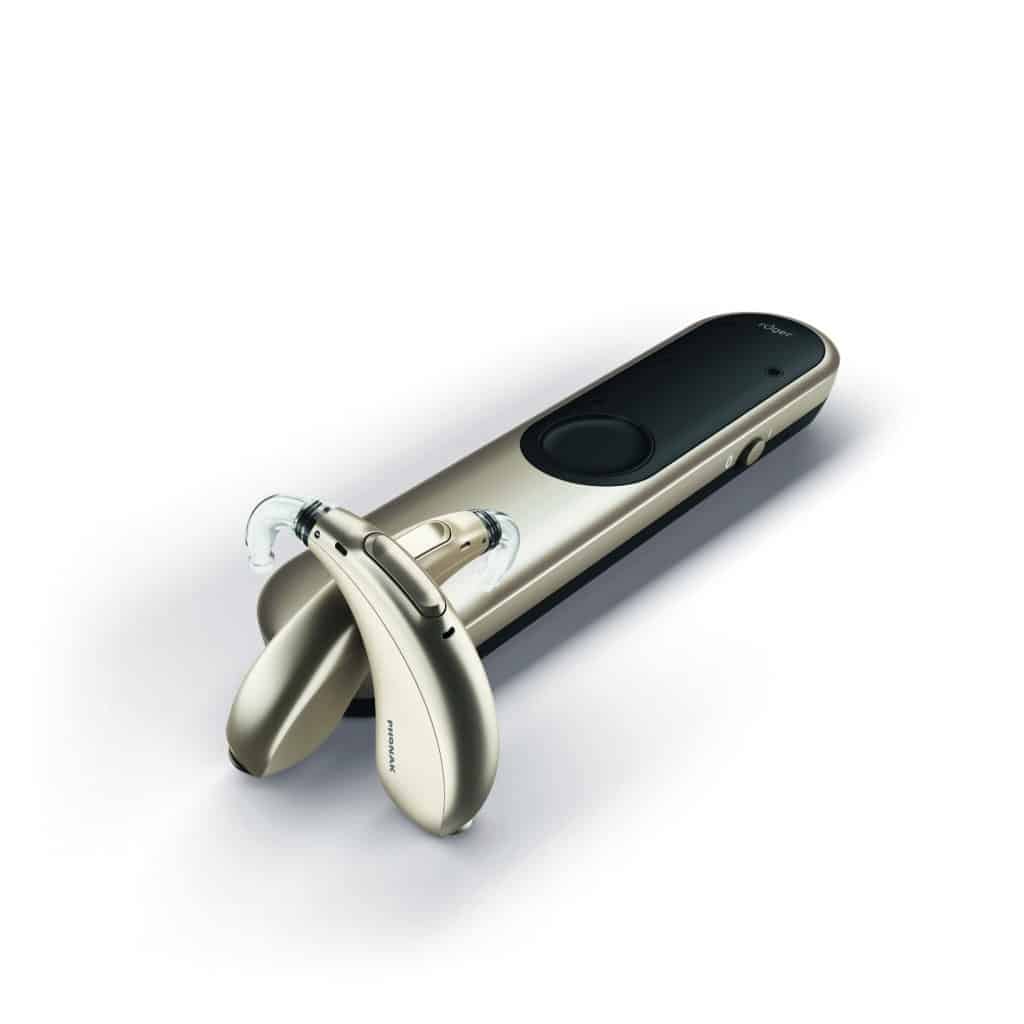
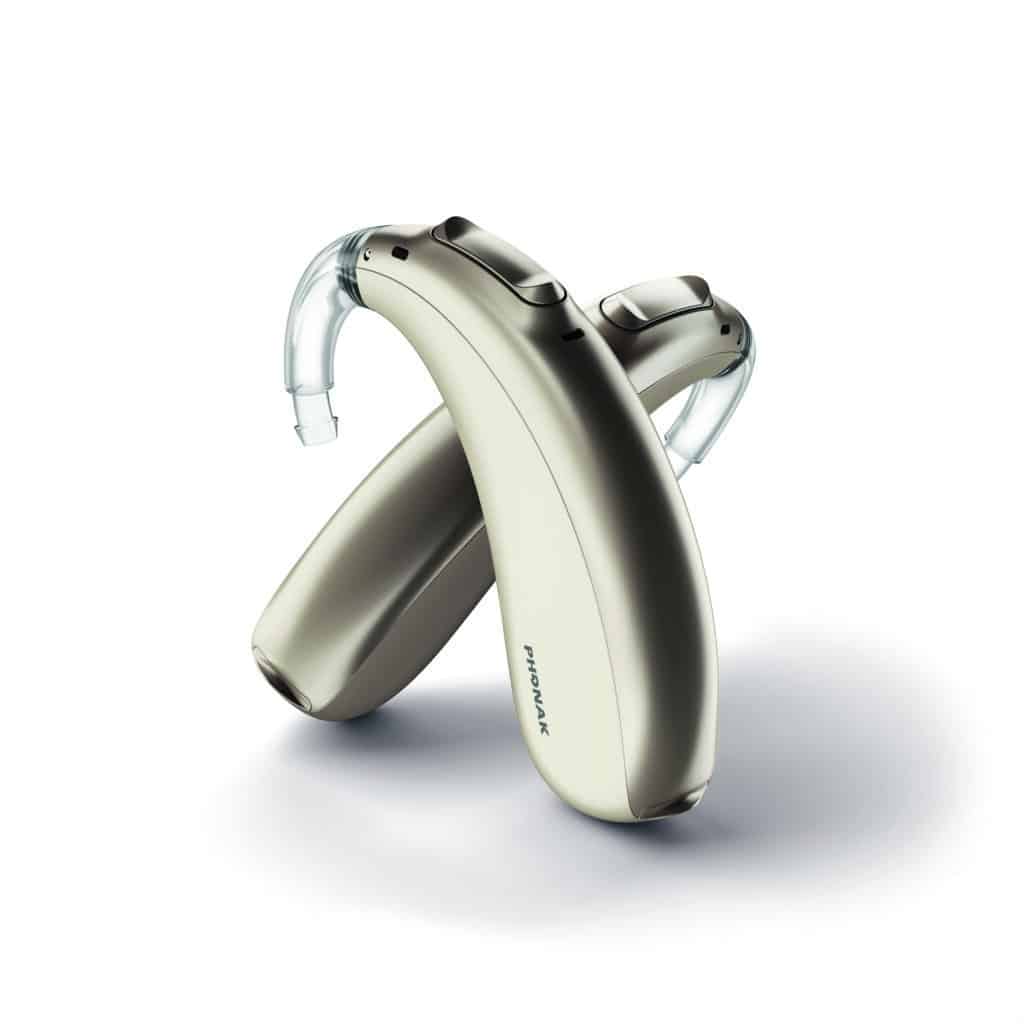
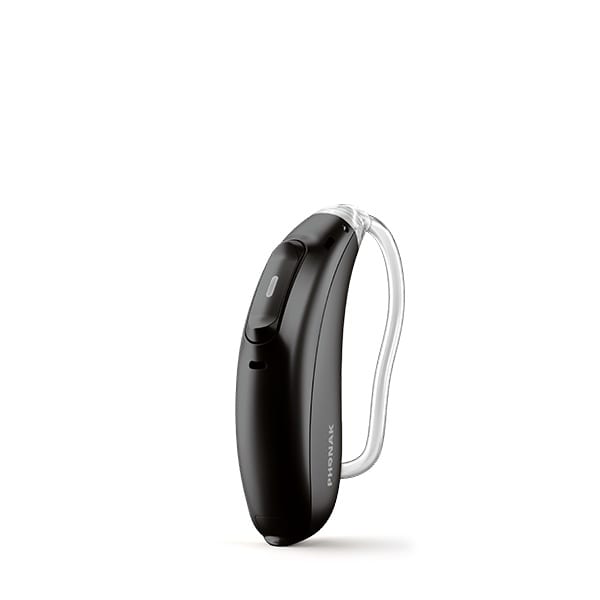
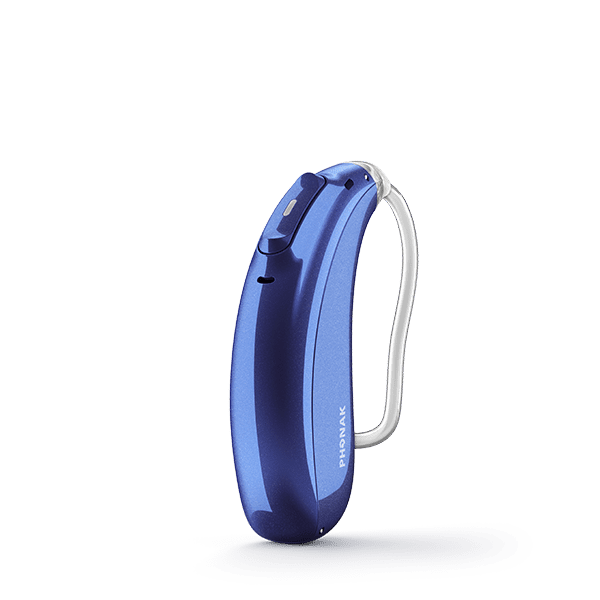
Phonak, a global provider of hearing solutions, announced Naída Paradise, the power hearing aid that “gives people with severe-to- profound hearing loss the power, sound quality, and wireless connectivity they need to connect with everything around them.” Now in its seventh generation, Naída Paradise is said to be “14% smaller, 27% lighter1, and further improves upon the hearing performance that wearers expect from Phonak.” This includes “powerful sound, industry-leading connectivity, and soon a new custom program memory feature with the new myPhonak 5.0 app.”

Phonak Naida Paradise and Roger On

Naída Paradise features a powerful double receiver that delivers up to 141 dB of peak gain in the UP model and up to 130 dB in the rechargeable model, according to Phonak. It’s powered by the new PRISM sound processing chip and features AutoSense OS 4.0 for “a host of premium features that work together seamlessly.” For example, the hearing aids can “automatically enhance soft speech in quiet places or reduce noise in loud environments.” A built-in accelerometer detects movement and automatically steers the microphones to improve listening on-the-go.2

Phonak Naida Paradise

Naída Paradise helps eliminate connectivity barriers that previously existed for consumers who needed more power. With Phonak universal connectivity, wearers can wirelessly stream audio directly into both hearing aids from virtually any smartphone, TV, laptop, tablet, eBook, and more. Phonak Paradise technology helps allow two active Bluetooth connections at the same time, so wearers can stay connected to their smartphone and their video chat without having to manually switch back and forth.

In addition to universal Bluetooth connectivity, Naída Paradise hearing aids are also equipped with RogerDirect. This means wearers can also receive the Roger remote microphone signal with no additional accessory required. Launched in 2013, Roger™ technology is “proven to boost hearing performance in loud noise and over distance.” In fact, hearing aid wearers who receive the Roger signal have better speech understanding in noise and over distance than people with normal hearing.3 Some Roger microphones and receivers have also been shown to help users understand up to 61% more speech in a group conversation in 75dBA of noise than using hearing aids alone.4

Universal Bluetooth connectivity coupled with on-board microphones means Naída Paradise wearers can use their hearing aids as wireless headsets for hands-free calls. A new Tap Control2 feature allows users to double tap on their ear to accept or end a call, or pause or resume streaming. A tap on the other ear gives access to smartphone voice-assistants like Siri or Google Assistant.

“Naída has a long-lasting history of delivering power without sacrificing sound quality, so we knew that we needed to deliver an outstanding product to our wearers who depend so heavily on their devices,” said Jon Billings, Vice-President Phonak Marketing. “With Naída Paradise, we’re making history again by giving those with severe forms of hearing loss access to next-level, powerful sound with industry-leading connectivity.”

In late spring, the myPhonak app’s 5.0 update will include the myPhonak Memory feature. It helps allow consumers to save a custom program from the app to the hearing aids, access the last-used custom program using the hearing aid’s multi-function button, or access other custom programs via the app.

Phonak is also preparing for the newest member of the Roger family with the debut of Roger On. The new Roger On remote microphone will feature MultiBeam 2.0 technology and an “improved pointing mode that allows the user to zoom into a speaker by simply pointing.” Roger On will be compatible with most hearing aids and cochlear implants and will be able to stream a variety of audio content.

The new Phonak Naída Paradise is available for pre-order by licensed hearing care professionals in the US and other select markets and will begin shipping in late February. The myPhonak 5.0 app featuring myPhonak Memory feature as well as the new Roger On microphone will be introduced in the US and other select markets in late spring.

  • For US hearing care professionals to learn more and to pre-order: https://www.phonakpro.com/us/en/campaign/naida.html.

Source/Reference

1 Naída P UP with RogerDirect compared to Naída B UP + external Roger receiver.

2 In the Phonak power BTE portfolio, only Naída P-PR comes with motion sensor technology, including Tap Control.

3 Thibodeau L. Comparison of speech recognition with adaptive digital and fm remote microphone hearing assistance technology by listeners who use hearing aids. American Journal of Audiology. 2014;23(2):201-210.

4 Thibodeau LM. Benefits in speech recognition in noise with remote wireless microphones in group settings. Journal of the American Academy of Audiology. 2020;31(6):404–411.

Bluetooth® word mark is a registered trademark owned by Bluetooth SIG, Inc. and any use of such mark by Sonova AG is under license.

Siri® is a trademark of Apple Inc., registered in the U.S. and other countries.

Google Assistant™ is a trademark of Google LLC.

Source: Phonak

Images: Phonak

21st May 2021/by admin
https://keynshamhearing.co.uk/wp-content/uploads/2019/11/2020-hearing-aids.jpg 640 640 admin https://www.keynshamhearing.co.uk/wp-content/uploads/2019/03/logo-300x79.png admin2021-05-21 14:42:532021-05-21 14:42:53Phonak Launches Naida Paradise Hearing Aid
Hearing aids Bath

Ear Drum Scaffolding

Ear Drum Scaffolding


Ear Science Institute Australia Receives $993K Grant for ClearDrum Ear Implant


Ear Science Institute Australia Receives $993K Grant for ClearDrum Ear Implant

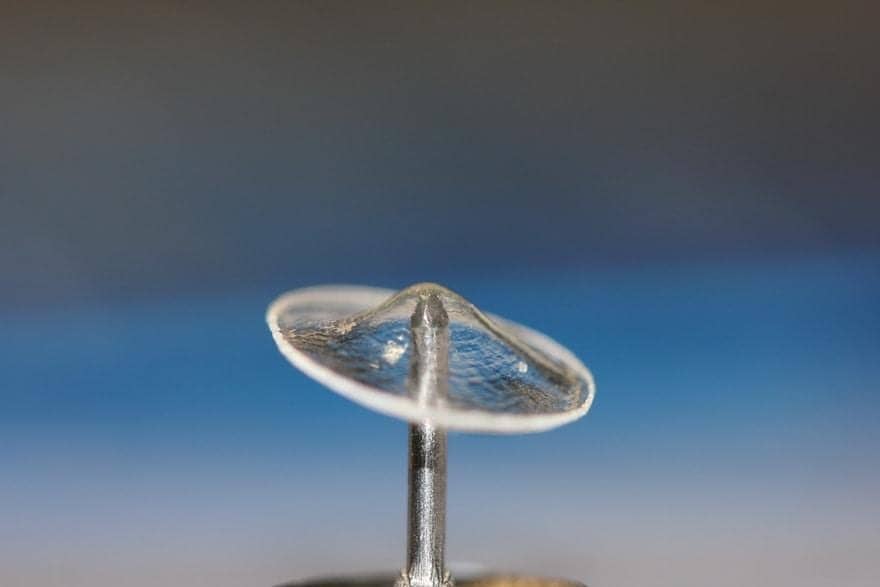
MTPConnect and the Minister for Health, The Hon Greg Hunt MP, announced $18.8 million in funding for 21 early stage medical technology projects across Australia, according to a press release on the Ear Science Institute Australia’s (ESIA) website. One of those recipients is ESIA, who received a $993,500 grant to advance the commercialisation of ClearDrum, a device that incorporates silk in an ear implant.

ClearDrum has been developed in Western Australia and has been driven by ESIA Founding Director Professor Marcus Atlas. It is a “world-first, acoustically optimised” silk fibroin implant for the treatment of chronic middle ear disease (CMED). It is the “first implant which mimics a human eardrum,” according to ESIA’s announcement. ESIA say that “while it looks like a contact lens, it’s instead a device on which the patient’s cells can grow.”

“What our team found is that the tympanic membrane cells, called keratinocytes, actively proliferate and migrate across this scaffold, promoting the healing process,” said Atlas. “This is a major step for ESIA as we move to translate our research science to the world.”

The device is developed in two different formulations, which will allow ClearDrum to dissolve over time, addressing small perforations or acting as a long lasting implant for larger perforations, with no need for further operations. Additionally, the transparent material “enables ongoing monitoring of healing and resolution of the middle ear,” ESIA says.

The World Health Organisation (WHO) estimates that 65-330 million individuals have CMED, and 60% of them have a significant hearing impairment. ClearDrum will help provide “a novel and effective treatment for sufferers of CMED, which is a major cause of global disability in ear surgery practice and is particularly prevalent in Australian indigenous populations.”

ESIA Chief Executive Officer Sandra Bellekom adds, “Our plan is for ClearDrum to be available to patients in a clinical trial next year. Without funding such as this from MTPConnect, that opportunity for the end user to benefit from our breakthrough research would be a lot further away.”

Atlas worked with lead scientist Dr Filippo Valente on the successful grant. Valente said, “Current treatments leave a significant percentage of individuals with ongoing problems, often requiring multiple surgeries and incurring high costs for the healthcare system. The ClearDrum device aims to provide an off-the-shelf, near-permanent implant, to resolve these difficulties in a single, straightforward surgical procedure.”

The current stage of development of the project includes a working prototype, a strong international IP position, a contracted manufacturer organisation, and collaborations with a series of Australian companies and organisations to address various phases of pre-clinical and clinical development. This new BMTH funding will assist with the commercialisation phase.

MTPConnect Managing Director and CEO, Dr Dan Grant, says round three of the BioMedTech Horizons program focused predominantly on research funding for digital health innovations and medical devices.

“Building home-grown translational and commercialisation capacity means boosting our knowledge economy and creating new products, jobs, and potential exports. This is particularly important now considering the hit that our sector has taken dealing with the impact of the COVID-19 pandemic and lockdown,” said Grant.

Source: ESIA

Image: ESIA

8th May 2021/by admin
https://www.keynshamhearing.co.uk/wp-content/uploads/2019/03/logo-300x79.png 0 0 admin https://www.keynshamhearing.co.uk/wp-content/uploads/2019/03/logo-300x79.png admin2021-05-08 15:55:212021-05-08 15:55:21Ear Drum Scaffolding
Hearing aids Bath, Hearing test Bristol

Oticon More Keynsham Hearing

Oticon More Keynsham Hearing


Oticon More Now Available Through VA, DOD


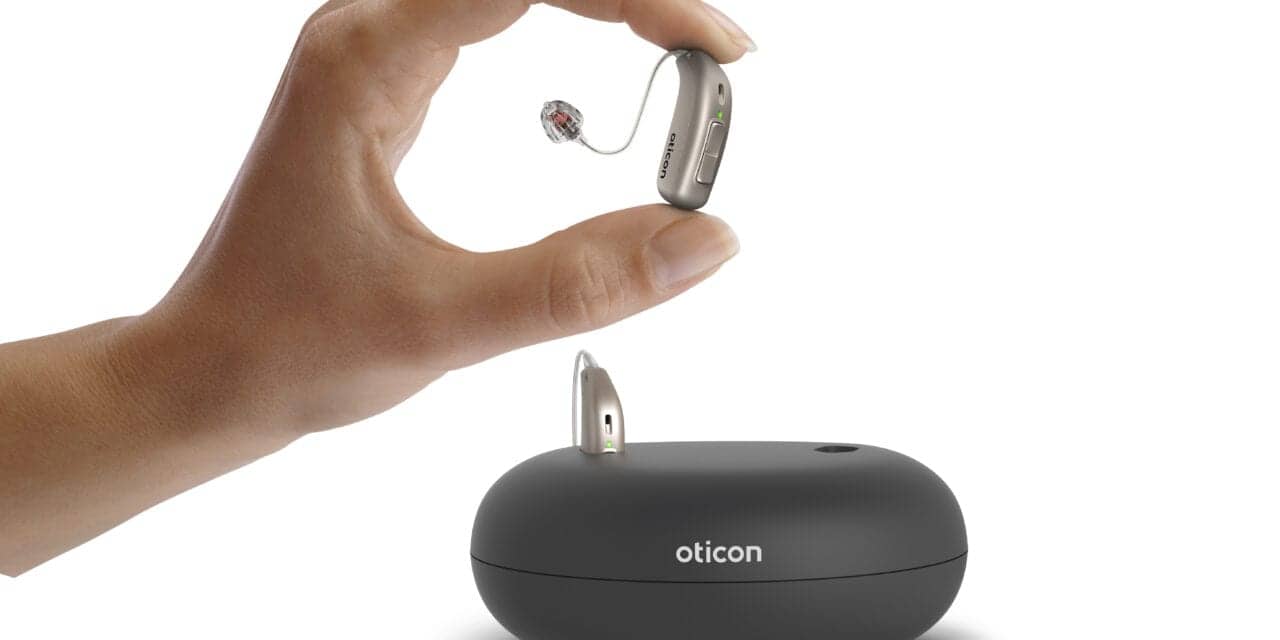
“Oticon More continues Oticon’s commitment to providing innovative hearing solutions that improve not only hearing but overall quality of life for our nation’s veterans,” said Rob Zimmer, director of government services for Oticon, Inc. “New independent research has shown that the brain needs access to all sounds — not just speech — in order to work in a natural way.  The breakthrough technology in Oticon More makes the full sound scene 60 % clearer.** This ability to represent all relevant sounds in the brain is crucial for a patient’s ability to navigate in environments that are dynamic and complex.”

Radically New Approach to Sound Processing

The Polaris platform supports Oticon More’s technologies. The MoreSound Intelligence (MSI) and MoreSound Amplifier (MSA) innovations in Oticon More are designed to give the brain “better access to more relevant and precise information, breaking with traditional approaches to noise reduction and  compression in hearing aids.”

MSI technology reportedly optimises the way the hearing device makes sounds more distinct, helping it to work “seamlessly across varying listening environments.” All types of sounds are recognised, including their details, and how they should ideally sound to optimally support the brain. Scanning the soundscape 500 times per second, MSI captures the details in the sound scene and processes them with “better contrast, balance, and clarity than ever before.” According to the company, MSI is proven to make the full sound scene 60% clearer based on EEG testing.** The rapid high-resolution amplification of MSA works in both 24 and 4 frequency channels to naturally follow changes in the sound scene, helping to balance and amplify sound objects.

Direct Streaming from iPhone and Android Devices 

Oticon More features Bluetooth Low Energy technology and offers a range of connectivity options. Oticon More is a Made for iPhone (MFi) hearing aid and compatible with the new Android protocol for Audio Streaming for Hearing Aids (ASHA), making it possible to stream directly from Apple and selected Android mobile devices.***  Oticon More can be combined with Oticon ConnectClip to stream from any other Bluetooth device.

The Oticon ON app lets veterans personalise their listening experience via the new streaming equaliser that allows them to fine-tune the sound when streaming. The ON app also lets users adjust the volume, change the program, check the battery level, and control other Oticon devices. It even comes with a “Find my hearing aids” feature.

More Power, Freedom, Flexibility

The rechargeable Oticon More miniRITE R uses reliable lithium-ion batteries for a full day of battery life****, including streaming, after just three hours of charging. A quick charge takes just 30 minutes and provides an additional six hours of power.

Oticon More is available in eight colours and supports hearing loss from mild to severe.  For more information about Oticon More and the entire portfolio of Oticon hearing solutions with BrainHearing technology available through the Veterans Affairs Administration, visit: https://www.oticon.com/solutions/for-veterans.

*Compared to Oticon Opn S™, Santurette, et al. 2020. Oticon More clinical evidence. Oticon Whitepaper.

**EEG testing with MoreSound Intelligence in on vs off setting, from Santurette, et al.

*** Android devices need to support ASHA to allow direct connectivity to Oticon More.  Please visit Oticon.com/support/compatibility for more information.

****Lithium-ion performance varies depending on hearing loss, lifestyle, and streaming behavior.

iPhone is a trademark of Apple Inc, registered in the US and other countries. Android, Google Play, and the Google Play logo are trademarks of Google LLC.

Source: Oticon

Images: Oticon

3rd May 2021/by admin
https://www.keynshamhearing.co.uk/wp-content/uploads/2019/03/logo-300x79.png 0 0 admin https://www.keynshamhearing.co.uk/wp-content/uploads/2019/03/logo-300x79.png admin2021-05-03 18:09:262021-05-03 18:09:26Oticon More Keynsham Hearing
Ear wax removal Keynsham Bristol, Hearing aids Bath

‘BMJ’ Publishes ‘First Reported UK Case’ of Sudden Hearing Loss Linked to COVID-19

‘BMJ’ Publishes ‘First Reported UK Case’ of Sudden Hearing Loss Linked to COVID-19


‘BMJ’ Publishes ‘First Reported UK Case’ of Sudden Hearing Loss Linked to COVID-19

Although uncommon, sudden permanent hearing loss seems to be linked to COVID-19 infection in some people, warn doctors, reporting the first UK case in the journal BMJ Case Reports. An article summariSing the results appears on the EurekAlert website.

Awareness of this possible side effect is important, because a prompt course of steroid treatment can reverse this disabling condition, they emphasise.

Related article: COVID-19 May Damage Hearing Cell Function, Study Shows

Sudden hearing loss is frequently seen by ear, nose, and throat specialists, with around 5-160 cases per 100,000 people reported every year. It’s not clear what the causes are, but the condition can follow a viral infection, such as flu, herpes, or cytomegalovirus.

Despite plenty of published research on sudden onset hearing loss, only a handful of other cases associated with COVID-19 have been reported, and none in the UK—until now.

The doctors describe a case of a 45-year-old man with asthma who was referred to the ear, nose, and throat department at their hospital after suddenly experiencing hearing loss in one ear while being treated for COVID-19 infection as an inpatient.

He had been admitted to hospital with COVID-19 symptoms which had been going on for 10 days. He was transferred to intensive care as he was struggling to breathe.

He was put on a ventilator for 30 days and developed other complications as a result. He was treated with remdesivir, intravenous steroids, and a blood transfusion after which he started to get better.

But a week after the breathing tube was removed and he left intensive care, he noticed ringing (tinnitus) in his left ear followed by sudden hearing loss in that ear.

He had not lost his hearing or had ear problems before. And apart from asthma, he was otherwise fit and well.

Examination of his ear canals revealed that he had no blockages or inflammation. But a hearing test showed that he had substantially lost his hearing in the left ear. He was treated with steroid tablets and injections after which his hearing partially recovered.

He tested negative for other potential causes, including rheumatoid arthritis, flu, and HIV, prompting his doctors to conclude that his hearing loss was associated with COVID-19 infection.

“Despite the considerable literature on COVID-19 and the various symptoms associated with the virus, there is a lack of discussion on the relationship between COVID-19 and hearing,” say the report authors. “Hearing loss and tinnitus are symptoms that have been seen in patients with both COVID-19 and influenza virus, but have not been highlighted.”

The first case of hearing loss mentioning COVID-19 alone was reported in April this year.

SARS-CoV-2, the virus responsible for COVID-19, is thought to lock on to a particular type of cell lining the lungs. And the virus has also recently been found in similar cells lining the middle ear, explain the report authors. SARS-CoV-2 also generates an inflammatory response and an increase in the chemicals that have been linked to hearing loss.

“This is the first reported case of sensorineural hearing loss following COVID-19 infection in the UK,” write the report authors. “Given the widespread presence of the virus in the population and the significant morbidity of hearing loss, it is important to investigate this further.”

They add: “This is especially true given the need to promptly identify and treat the hearing loss and the current difficulty in accessing medical services.”

Doctors should ask patients in intensive care about hearing loss and refer them for urgent treatment, they advise.

Original Paper: Koumpa FS, Forde CT, Manjaly JG. Sudden irreversible hearing loss post COVID-19. BMJ Case Reports. 2020;13(11):e238419.

Source: EurekAlert, BMJ Case Reports

26th April 2021/by admin
https://www.keynshamhearing.co.uk/wp-content/uploads/2019/03/logo-300x79.png 0 0 admin https://www.keynshamhearing.co.uk/wp-content/uploads/2019/03/logo-300x79.png admin2021-04-26 16:58:032021-04-26 16:58:03‘BMJ’ Publishes ‘First Reported UK Case’ of Sudden Hearing Loss Linked to COVID-19
Hearing aids Bath, Hearing aids Bristol

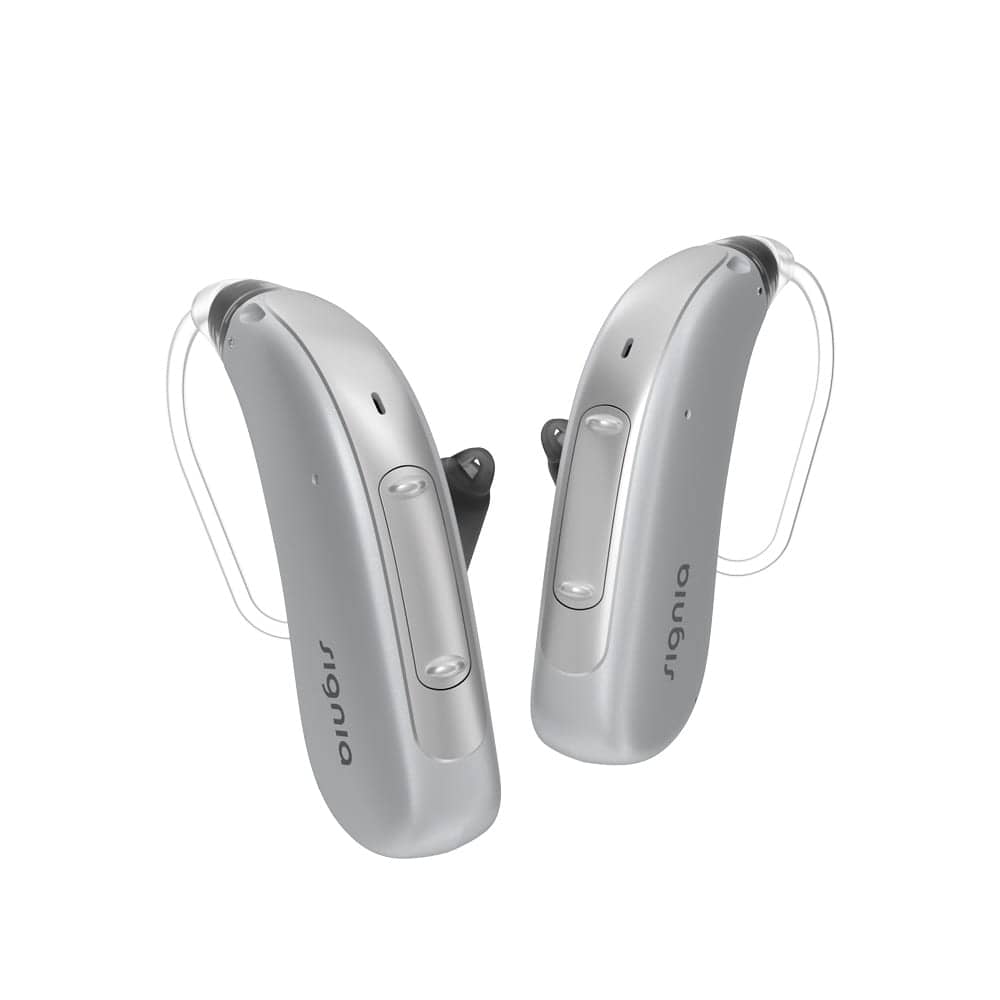
Signia Launches Motion X Hearing Aids

Signia Launches Motion X Hearing Aids


Signia Launches Motion X Hearing Aids

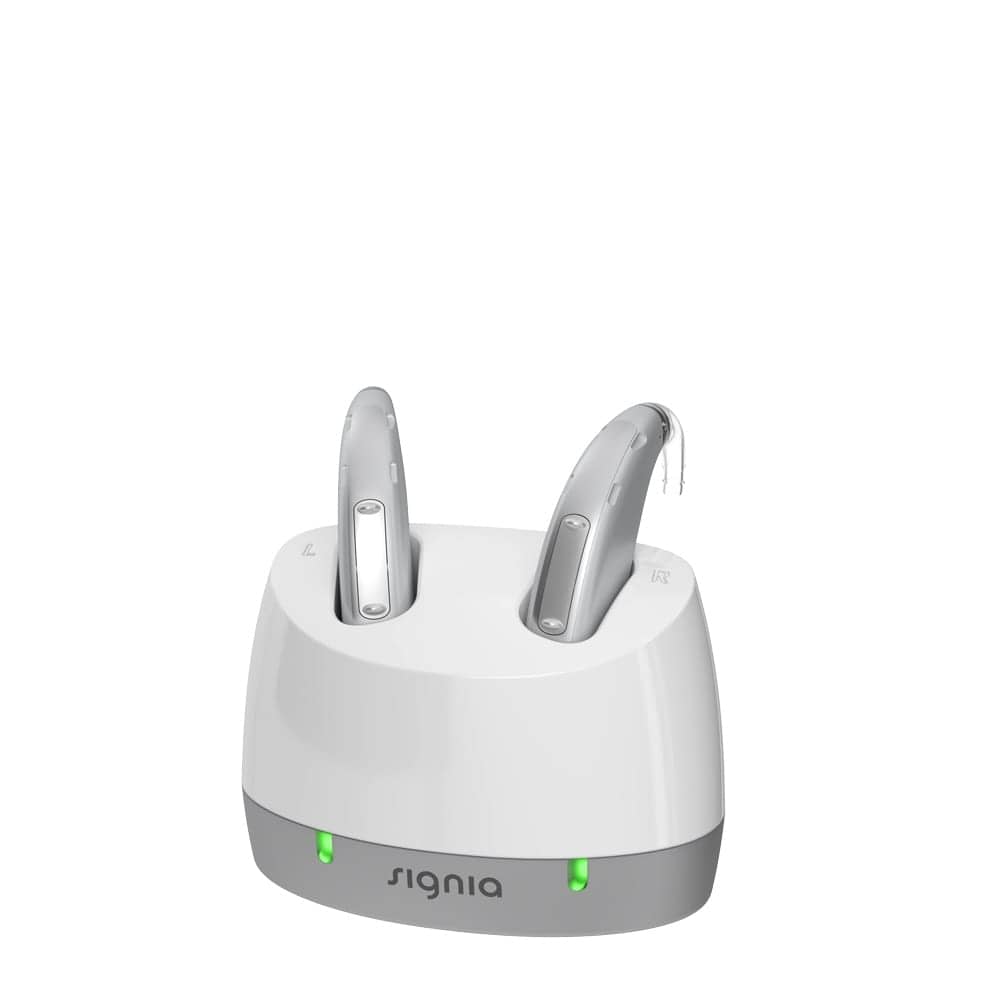
Signia announced the launch of its newest lineup of Motion Charge&Go X hearing aids, which includes the Motion Charge&Go SP X – said to be the “first-ever rechargeable super power hearing aid that delivers uncompromised hearing with up to 61 hours of run-time per charge.” The Motion Charge&Go SP X, and its rechargeability, helps “ensure that even individuals with severe-to-profound hearing loss can enhance their human performance through improved hearing in every situation.”

This joins two other all-new Motion hearing aids – Motion Charge&Go P X and Motion Charge&Go X – to complete Signia’s latest lineup of Motion Charge&Go behind-the-ear (BTE) hearing solutions that are said to address “all levels of hearing loss.”

“Those with moderate to severe hearing loss depend heavily on their hearing aids – and not just for catching the total at the grocery checkout line or the specials at a restaurant, but for the real connections and sounds that give life meaning,” said Dr Tish Ramirez, Signia’s Vice President of Professional Relations and Product Management. “Signia Motion X delivers industry-best rechargeability and connectivity to ensure wearers stay better connected to their world without any limitations. Motion X hearing aids don’t just provide better hearing, they help provide a better life.”

Motion Charge&Go SP X is said to have up to 61 hours per charge, according to Signia, and is “the world’s most powerful rechargeable hearing aid.” The Motion Charge&Go P X offers up to 30 hours per charge, while the Motion Charge&Go X offers up to 24 hours per charge.

Signia Motion Charge&Go X: A new era in hearing technology

Signa’s “first-of-its-kind acoustic-motion sensor technology” is said to recognize one’s movements and adjusts sounds accordingly to ensure hearing in any situation is as precise and personalized as possible. Signia’s world’s-first OVP is a cutting-edge technology that processes the wearer’s voice separately from other sounds, leading to higher user satisfaction with the sound of their own voice.[1]

The Signia app provides access to hearing aid controls, streaming capabilities, tinnitus therapy, the Signia Assistant for a more personalized listening experience, and 24/7 digital support, Signia Telecare for remote care support, Signia Face Mask Mode for better speech understanding through masks, and much more.

Furthermore, the Xperience fitting (XFit) strategy helps offer a choice between more linear and more compressive gain settings for those with moderate-to-profound hearing loss. With the Dynamic Soundscape Processing slider, the wearer can “easily find a preferred balance of sound for best performance.” Additionally, the AI-based Signia Assistant helps allow the wearer to be more involved in actively shaping the sound quality of their own hearing aid.

All three models of Motion Charge&Go X offer Li-ion charging, Bluetooth connectivity, and an optional telecoil. They are available in all performance levels and can be ordered with an optional charger upgrade that includes a UV Dry&Clean function.

“Signia has invested heavily in developing first-of-its-kind, industry-leading technologies – across rechargeability, connectivity, speech intelligibility, and more,” said Ramirez. “However, this investment has been made with the sole aim of creating hearing solutions that prove people don’t have to be limited by their hearing loss – and that with one’s hearing restored, there’s nothing holding them back from performing their best.”

For more information, visit: https://pro.signiausa.com/launch/.

[1] Powers T, Froehlich M, Branda E, Weber J. Clinical study shows significant benefit of own voice processing. Hearing Review. 2018;25(2):30-34.

Source: Signia

Images: Signia

17th March 2021/by admin
https://www.keynshamhearing.co.uk/wp-content/uploads/2019/03/logo-300x79.png 0 0 admin https://www.keynshamhearing.co.uk/wp-content/uploads/2019/03/logo-300x79.png admin2021-03-17 18:02:252021-03-17 18:02:25Signia Launches Motion X Hearing Aids
Hearing aids Bath, Hearing aids Bristol

Widex Moment Receives Tech for Change Award

Widex Moment Receives Tech for Change Award


Widex Moment Receives Tech for Change Award

Widex Inc announced that it has been recognized by Digital Trends Media Group with a Tech for Change Award at CES 2021 for its WIDEX MOMENT hearing aids. Recipients were selected based on innovations intended to make the world a better place, as displayed during CES.

WIDEX MOMENT was selected for having pioneered “the first digital hearing aid to incorporate dual artificial intelligence engines to improve real-time listening,” according to the company’s announcement. Furthermore, the WIDEX MOMENT is said to leverage ZeroDelay technology to “reduce the standard sound delay from 7-10 milliseconds seconds to just 0.5 milliseconds to give people with hearing loss the most natural hearing experience available.”

“Hearing aids have historically delivered a ‘tinny’, tube-like sound due to the delay in digital sound processing; as the leader in natural sound, Widex could not stand for this,” said Søren Hvidberg Nielsen, President of Widex US. “Our engineers have worked tirelessly for five years to overcome this technical challenge, and with our breakthrough WIDEX MOMENT hearing aids we’ve now succeeded.”

Continued Nielsen, “These intelligent devices go far beyond simply boosting speech perception, offering wearers a true-to-life sound experience that’s been elusive until now. We are honored that Digital Trends Media Group recognized WIDEX MOMENT as an innovative, class-leading wearable and wellness device designed to make the world a better place through natural sound for all.”

Widex has pioneered the use of artificial intelligence to create a more personalized sound experience, which in turn leads to higher wearer acceptance and usage. WIDEX MOMENT leverages SoundSense Learn, an AI-based technology, to personalize hearing aid settings in two ways.

First, WIDEX MOMENT learns how users prefer to hear their surroundings by analyzing settings and guiding them through a series of A-B comparisons. Second, an AI-algorithm draws from millions of user settings stored in the cloud to help personalize the listening experience, according to the company.

Furthermore, WIDEX MOMENT also includes the PureSound ZeroDelay technology, a “parallel processing path that all but eliminates latency, resulting in a more natural sound without the ‘tinny’ distortions associated with other hearing aids.”

The WIDEX MOMENT is available now. Visit https://www.widex.com/en-us to find a hearing care provider in your area.

Source: Widex

Images: Widex

8th March 2021/by admin
https://www.keynshamhearing.co.uk/wp-content/uploads/2019/03/logo-300x79.png 0 0 admin https://www.keynshamhearing.co.uk/wp-content/uploads/2019/03/logo-300x79.png admin2021-03-08 18:17:102021-03-08 18:17:10Widex Moment Receives Tech for Change Award
Ear wax removal Keynsham Bristol, Hearing aids Bath, Hearing aids Bristol

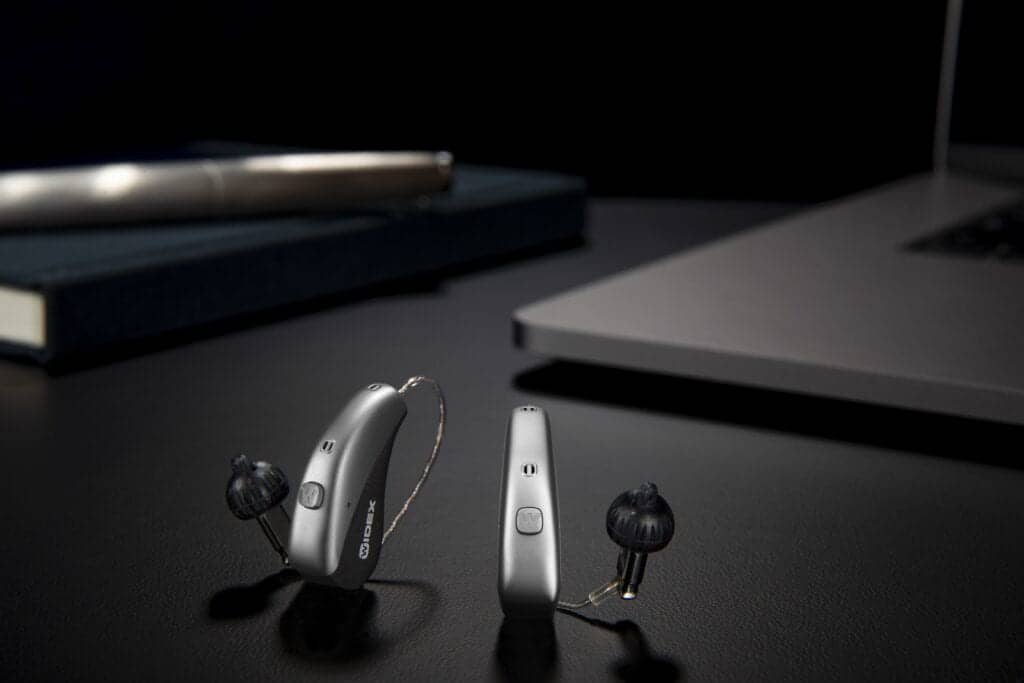
Widex Moment hearing aids

Widex Moment hearing aids

Sound Quality in Real Life–Not Just for Experts

Feb 17, 2021 | Personal Sound Amplification |     

Sound Quality in Real Life–Not Just for Experts

Tech Topic | February 2021 Hearing Review

By Laura Winther Balling, PhD, Oliver Townend, BSc, and Dana Helmink, AuD

Sound quality plays a key feature for overall hearing aid satisfaction as well as in everyday moments of real-life hearing. A large international survey of hearing aid users confirms the importance of sound quality, showing higher satisfaction with the WIDEX MOMENT™ hearing aids for overall sound quality, for specific situations of real-life use and for hearing aid users’ ability to participate in daily life.

As one of the major global hearing aid manufacturers, Widex has a long history of focusing on sound quality, designing all signal processing with the aim of achieving the best and most natural sound quality possible. For example, True Input Technology, with a linear transfer function up to 113 dB SPL and a linear input dynamic range of 108 dB SPL, was groundbreaking when launched,1 as was Variable Speed Compression, which offers the benefits of both slow and fast-acting compression.2

Most recently, WIDEX MOMENT™ launched with the focus on sound quality expressed in two main features:

  • TruAcoustics™ is an intelligent algorithm by which the acoustics in the individual ear canal is integrated in the parameter settings of the hearing aid, so the output at the eardrum is exactly right for the individual ear canal with the specific earware choice.3
  • Widex PureSound™ drastically reduces hearing aid delay and eliminates the delay-based distortions which are characteristic of other digital hearing aids.4

Innovations like these improve the sound quality in clearly audible ways and result in sound quality preferences in studies, such as the one reported by Balling et al.4 However, it is also an important assumption of the Widex design philosophy that good sound is not an isolated quality but a means to achieving higher hearing aid satisfaction across many situations in real life. With this broader view of sound quality, it is arguably the most important parameter for hearing aid satisfaction, along with speech understanding (especially in noise).

For these reasons, the survey reported below focused on satisfaction with sound quality in itself, as well as the experience in diverse situations of real-life hearing with Widex MOMENT hearing aid.

Survey Method

Our survey included 101 experienced hearing aid users recruited at local hearing clinics in 7 countries (US, Canada, China, Germany, France, Portugal, UK). They all wore the MOMENT mRIC R D rechargeable hearing aids and rated their satisfaction with them in comparison to their own existing hearing aids, which were from all major brands. Respondents were 60% male with a median age of 66 years (range 18-88). Close to half (45%) were work active, and they had a median of 6 years’ hearing aid experience (range 1-59 years).

Respondents fell into two groups: 39 of them had mild-to-moderate hearing losses going from 40 dBHL at low frequencies to 70 dBHL at high and had as their primary program PureSound™, which is particularly suitable for open fits and milder losses. The other 62 respondents had hearing losses up to 80 dB HL across frequencies (the mRIC M-receiver fitting range) and were fitted with the Universal program as their primary program. The MOMENT hearing aids were fitted with the ear tip recommended in the Compass GPS fitting software.

The survey used a cross-over design where respondents started a 7-week survey period by rating their satisfaction with their own existing hearing aids before being fitted with the MOMENT hearing aids and wearing them for 3 weeks. After 3 weeks, they rated their satisfaction with the MOMENT devices, before switching back to their own hearing aids, wearing those for 2 weeks and rating them at Week 6. For the final 2 weeks of the survey, respondents wore MOMENT and filled in a final set of questions about those at Week 7. This resulted in two ratings for own hearing aids (at Weeks 0 and 5) and two for MOMENT (at Weeks 3 and 7).

The questionnaires were filled in online using SMART-TRIAL software, using a format inspired by the MarkeTrak surveys,5 where respondents rate their satisfaction with their hearing aids on a 7-point scale ranging from “Very dissatisfied” (a rating of 1) to ‘Very satisfied’ (a rating of 7). Following the MarkeTrak approach, respondents who gave ratings in the top-3 satisfaction categories may be classified together as being “satisfied.” We asked questions about satisfaction both in general and in specific real-life situations.

The responses show that people are reasonably satisfied with their own hearing aids at the beginning of the survey period, but once they try the MOMENT hearing aids, their ratings of their own hearing aids in many cases become significantly lower. This in itself is evidence in favor of the MOMENT devices. However, the more interesting direct comparison is between the ratings of own hearing aids in Week 5 and MOMENT in Week 7, where respondents have had the most time to form an opinion about the new hearing aids.

We also estimated the age of the respondents’ own hearing aids based on the launch date of the device. Interestingly, we found no significant effects of this variable, indicating that the MOMENT advantages that we observe throughout are not simply explained by the contrast between older own hearing aids and new MOMENT devices, but by a genuine preference for the MOMENT sound.

Unless otherwise indicated, statistical testing of results was done using mixed-effects models that take into account the crucial fact that we have multiple responses per person. The significance levels for the relevant contrasts between own and MOMENT hearing aids are all below 0.0001, which means that potential concerns about repeated testing are unfounded.

Sound Quality Across Situations

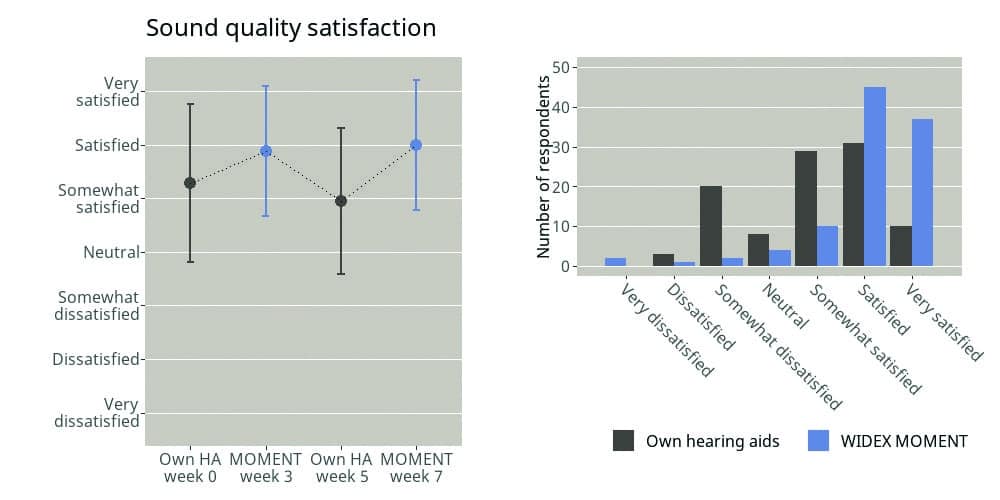
As we would expect given the Widex design focus, the responses show a solid sound quality advantage for the MOMENT hearing aids, with significantly higher satisfaction for MOMENT than for own hearing aids (p < 0.0001). Looking at the average ratings plotted in the left panel of Figure 1, there is a 1-point advantage for MOMENT, with the average rating “Satisfied” for MOMENT and “Somewhat satisfied” for own hearing aids. Examining the distribution of answers in the right panel of Figure 1, we see many more “Very satisfied” and “Satisfied” MOMENT users. In total, considering the top-3 satisfaction categories, 91% of respondents are satisfied with the MOMENT sound quality.

Figure 1. Ratings of satisfaction with sound quality. The left panel shows mean ratings of satisfaction with sound quality as filled circles, with the whiskers representing ±1 standard deviation (SD) around the mean. The right plot shows ratings of own hearing aids in Week 5 and of MOMENT hearing aids in Week 7 of the survey.

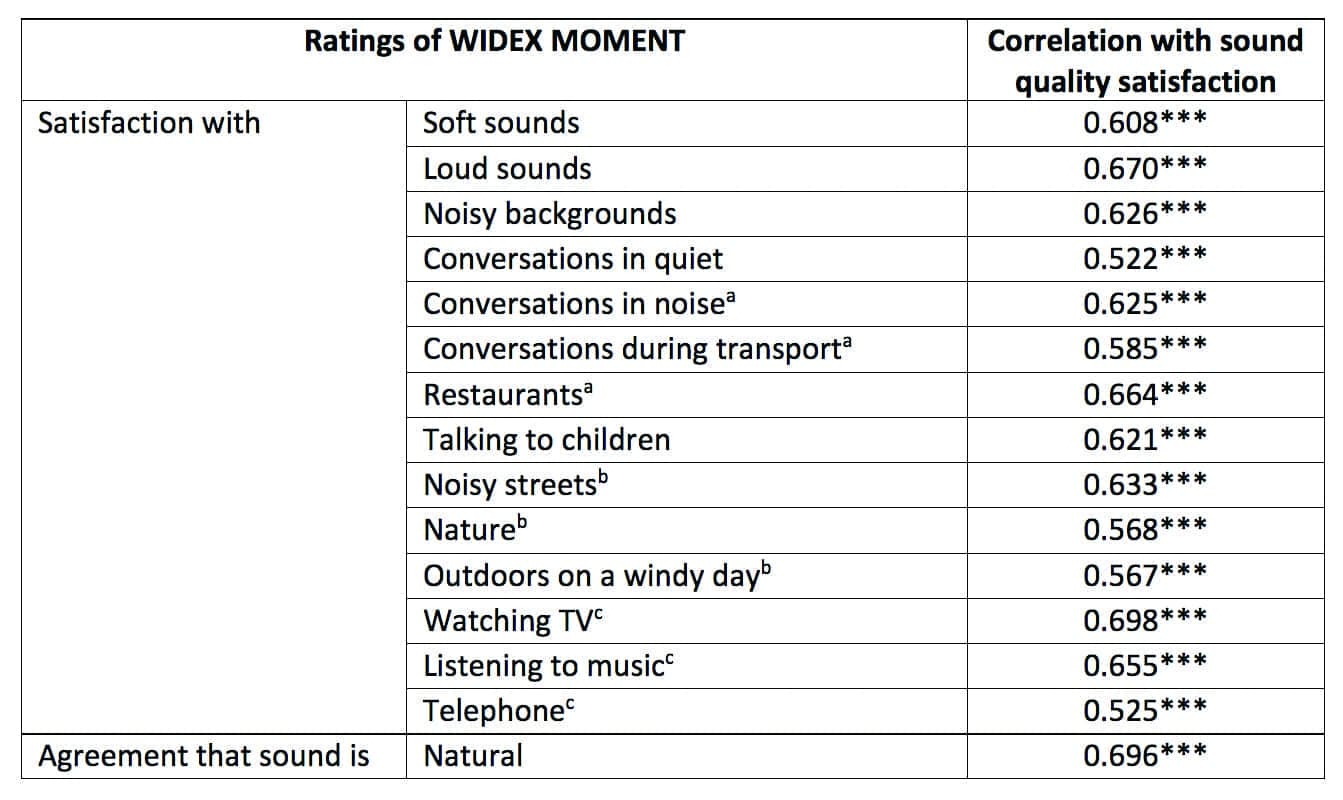
An intriguing question is which aspects of sound and hearing aid use influence these high-satisfaction sound quality ratings. This is a complex issue that this survey cannot fully address, but it is informative to look at which other questions are correlated with sound quality satisfaction. In Table 1, such correlations are listed for the ratings of MOMENT at the end of the survey period. They are all strong correlations ranging between 0.522 to 0.698, and although there is some variation between individual situations, the correlations are all highly significant and of similar size. These correlations do not, of course, indicate causation but do suggest that sound quality plays a similar role across different situations.

Table 1. Spearman Rho correlations between sound quality satisfaction and satisfaction in specific situations for WIDEX MOMENT. (Notations: *** indicates significance at the p<0.001 level; a) Speech-in-noise situations; b) Outdoor situations; c) Listening through devices.

Another way of assessing the impact of sound quality on everyday satisfaction with hearing aids is analyzing the average satisfaction across the specific situations listed in Table 1 (excepting satisfaction with soft and loud sounds, which are not specific situations). A regression model shows that satisfaction with sound quality is a highly significant predictor of mean satisfaction across situations, accounting for more than 50% of the variance in satisfaction across situations (R2 = 0.51).

Sound Quality and Naturalness

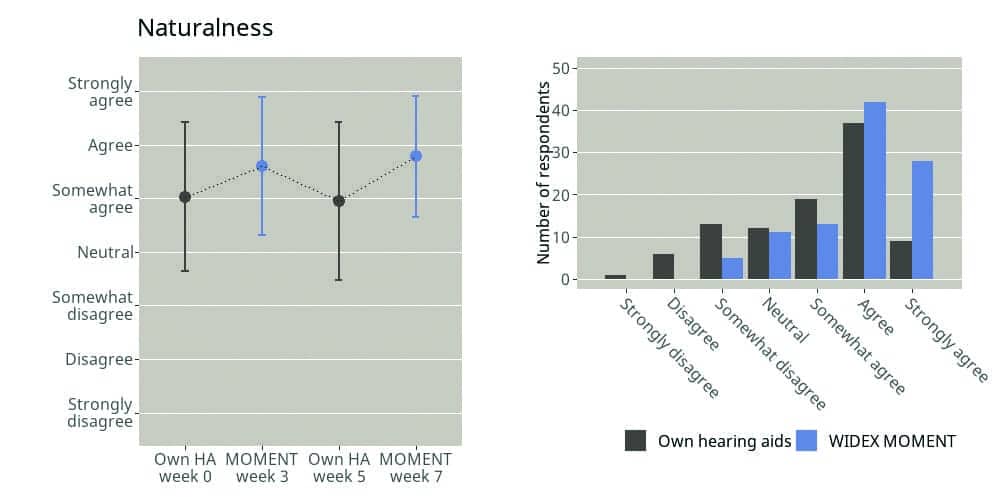
In addition to the different listening situations, Table 1 also lists respondents’ agreement with the statement “I find that the sound is natural with the MOMENT hearing aids” on a 7-point scale. This shows one of the highest correlations with sound quality satisfaction, which means that those hearing aid wearers who are highly satisfied with the sound quality also perceive the sound as more natural.

In addition, naturalness ratings show a very similar pattern across weeks to sound quality satisfaction, as illustrated in Figure 2. Again, we see approximately a 1-point difference between the ratings of own and MOMENT hearing aids, and many more who “Agree” or “Strongly agree” that the sound of MOMENT is natural.

Figure 2. Ratings of naturalness of sound, with the left panel showing mean ratings per week and the right panel showing ratings for own hearing aids in Week 5 and for MOMENT in Week 7.

Satisfaction in Everyday Situations

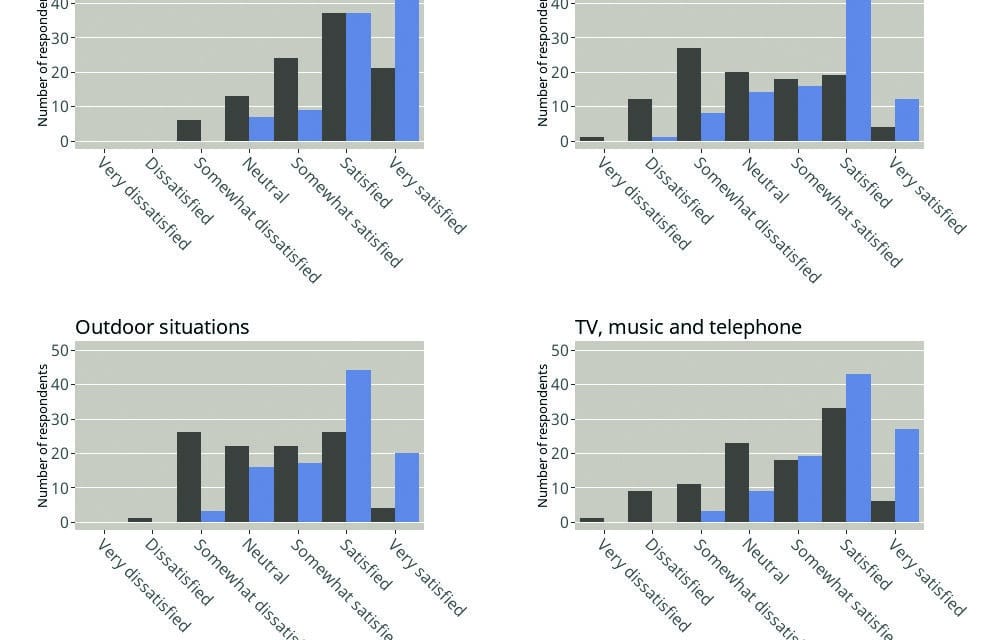
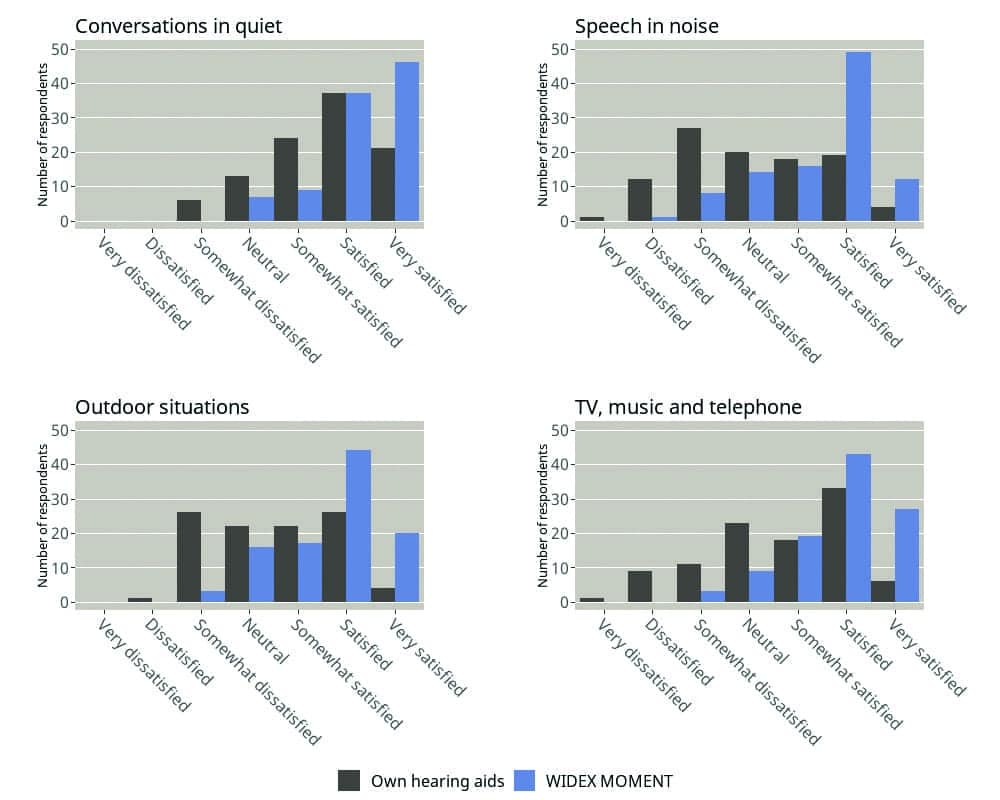
As seen in Table 1, the survey included questions on a wide range of everyday situations. In Figure 3, these are grouped into four different more general categories, showing the distribution of ratings in Week 5 (own hearing aids) and Week 7 (MOMENT hearing aids).

Figure 3. Histograms showing distribution of ratings in Weeks 5 (own hearing aids) and 7 (MOMENT hearing aids).

The top-left panel shows the satisfaction with conversations in quiet, assessed by a single question. Level of satisfaction is generally high, as we would expect for this relatively easy listening environment. However, although the baseline is already high, the MOMENT ratings are still higher, with the most frequent response being “Very satisfied” and the difference to own hearing aids being highly significant (p < 0.0001).

Speech-in-noise ratings are shown in the top-right panel, based on a mean across questions on satisfaction in restaurants and with conversations in noise and during transport. These tend to be difficult situations for hearing aid users, which is also clear if we compare the general level of satisfaction with speech in quiet. This makes the significant advantage for MOMENT (p < 0.0001) all the more noteworthy: the most frequent mean rating for these questions is clearly in the “Satisfied” category for MOMENT, whereas ratings for own hearing aids are more spread out, with “Somewhat dissatisfied” as the most frequent. If we compare the own-vs-MOMENT hearing aid ratings per respondent, five times as many respondents are more satisfied with the MOMENT hearing aids compared with their own: 74% of respondents are more satisfied with MOMENT, 12% more satisfied with their own, and the remaining 14% give the same ratings to both.

The bottom left panel illustrates mean ratings in outdoor situations, again with a markedly differently distribution of ratings for own and MOMENT hearing aids (p < 0.0001). Part of the explanation for the MOMENT advantage could be that respondents experience the sound of MOMENT as more natural, something that is likely to play a larger role outdoors.

The final panel of Figure 3 represents the frequent listening situations where sound comes from a device, with TV likely being the most frequent for most people, but also telephone and music. As for conversations in quiet, the general level of satisfaction is higher here than for more difficult listening situations, but the MOMENT advantage remains, with a significant difference to own hearing aids (p < 0.0001). Collectively, the four types of situations illustrated in Figure 3 give a comprehensive view of the everyday lives of hearing aid users, and across all these situations MOMENT shows a solid advantage.

Participation in Daily Life

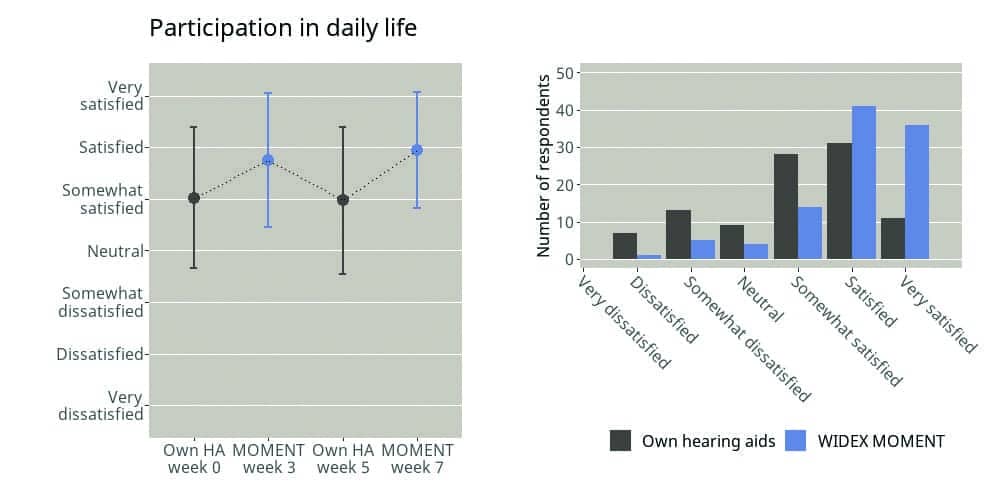
A common problem for people with hearing loss, reported both scientifically6,7 and by hearing aid users and their relatives to HCPs all over the world, is the difficulty of participating in everyday life. Therefore, the survey included a question inspired by the International Outcome Inventory for Hearing Aids (IOI-HA)8: “How satisfied are you with your ability to participate effortlessly in everyday life with [your own hearing aids/the WIDEX MOMENT hearing aids]?” The ratings for this question are shown in Figure 4, where both plots illustrate a similar 1-point MOMENT advantage that was also seen previously (p < 0.0001). An interesting statistic is how many people are satisfied (in the top-3 categories) with their ability to participate in everyday life; this number is 69% for own hearing aids but 90% for MOMENT. Conversely, only 6% of respondents indicate dissatisfaction with participation when wearing MOMENT, while the corresponding number is 20% for own hearing aids, in spite of the fact that the MOMENT devices are new to the respondents and they cannot be expected to be completely habituated to them yet.

Figure 4. Ratings of ability to participate in everyday life, with the left panel showing mean ratings per week and the right panel showing ratings for own hearing aids in Week 5 and for MOMENT in Week 7.

Overall Satisfaction

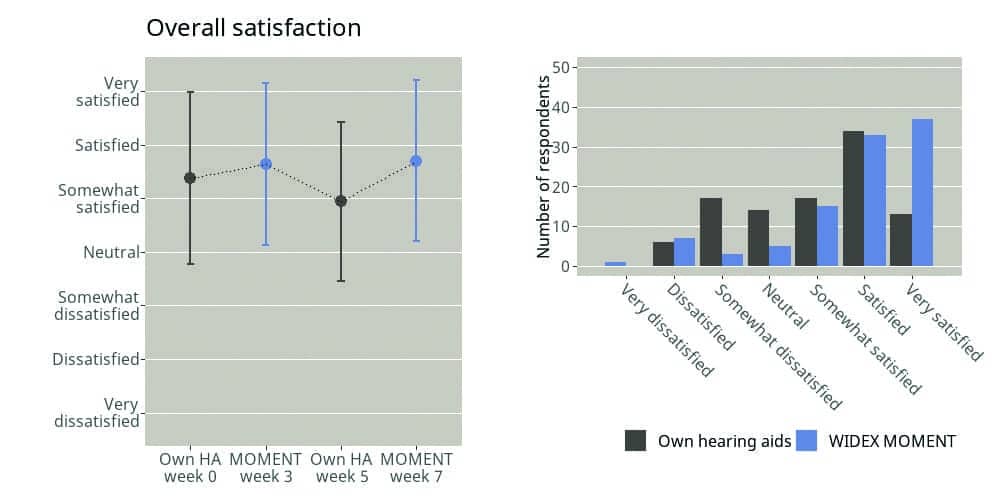
Finally, a question about overall satisfaction examines how all these different elements of real-life hearing come together in the respondents’ entire experience of wearing the MOMENT hearing aids, compared with their own. The responses to this question were tested in the same way as previous results, showing significantly higher ratings (p < 0.0001) for MOMENT than own hearing aids. The left panel in Figure 5 is a particularly clear example that respondents’ ratings of their own hearing aids change when they have tried MOMENT, as evidenced by the lower ratings in Week 5 compared to Week 0. More generally, Figure 5 confirms the MOMENT advantage that has also been clear in the more detailed questions, with the most frequent overall response to the MOMENT hearing aids being “Very satisfied.”

Figure 5. Ratings of overall satisfaction, with the left panel showing mean ratings per week and the right panel showing ratings for own hearing aids in Week 5 and for MOMENT in Week 7.

The Importance of Sound Quality in Real Life Hearing Aid Use

The results reported in this article show the importance of sound quality in many different moments of real life, confirming the Widex design philosophy that sound quality should be central. We see solid advantages for the MOMENT devices for sound quality satisfaction in general, as well as for ratings of a representative selection of real-life situations, and for the key factor of participation in daily life.

The results also show that sound quality should not be seen as a quality for experts only. The respondents in this survey were not selected to have a specific focus on sound quality; they represent a broad group of hearing aid users, with different lives and different (hearing) needs and wishes. Nonetheless, the results support the importance of sound quality, both as an overall phenomenon and as a continually relevant factor in many different situations of real-life hearing for many different people. So, although Widex does aim to fulfill the needs of musicians and other sound experts with great-sounding hearing aids, the target group is not limited to connoisseurs: the great sound quality of WIDEX MOMENT™ benefits everyone.

Acknowledgements

We are grateful to all hearing aid users and hearing care professionals for participating. We would like to thank the following clinics for taking part: In the US: Amazing Hearing, Laguna Hills, CA; Associated Audiologists, Shawnee Mission, KS; Bergen Audiology, Hackensack, NJ; ENT Specialist of Abilene, Abilene, TX; Pacific Hearing Service, San Francisco, CA; San Francisco Audiology, San Francisco, CA. In Canada: Audiology Clinic of Northern Alberta, Edmonton, Alberta; Davidson Hearing Aid Centres, Ottawa, Ontario; Harp Hearing, Calgary, Alberta; Lakeside Hearing, Kelowna, British Columbia; North Bay Audiology Clinic, North Bay, Ontario; Owen Sound Audiology, Owen Sound, Ontario; Sackville Hearing Centre, Lower Sackville, Nova Scotia; Sound id-EARS, Vancouver, British Columbia. In China: Blue Hearing, Kunming, Yunnan; Conhearing, Zhengzhou, Henan; Conhearing, Haerbin, Heilongjiang; Earhearing, Chengdu, Sichuan; Huier, Hangzhou, Zhejiang; Intelligent Sound, Shanghai; Li Sound, Wuhan, Hubei; Logic Sound, Chongqing; Nordic Sound, Shanghai; Sound of Nature, Shanghai; Sound of Xin, Guangzhou, Guangdong. In Germany: Hesselbach Hörakustik; Hörakustik Tielesch; Hörgeräte Seifert GmbH; Schaaf & Maier Hörgeräte GmbH. In Portugal: Widex Braga; Widex Coimbra; Widex Funchal; Widex Guimarães; Widex Lisboa.

Citation for this article: Balling LW, Townend O, Helmink D. Sound quality in real life–Not just for experts. Hearing Review. 2021;28(2):27-30.

Correspondence can be addressed to Dr Balling at: laba@widex.com.


References

  1. Kuk F, Lau C-C, Korhonen P, Crose B. Evaluating hearing aid processing at high and very high input levels. Hearing Review. 2014;21(3):32-35.
  2. Kuk F, Hau O. Compression speed and cognition: A variable speed compressor for all. Hearing Review. 2017;24(3):40-48.
  3. Balling LW, Jensen NS, Caporali S, Cubick J, Switalski W. Challenges of instant-fit ear tips: What happens at the eardrum? Hearing Review. 2019;26(12):12-15.
  4. Balling LW, Townend O, Stiefenhofer G, Switalski W. Reducing hearing aid delay for optimal sound quality: A new paradigm in processing. Hearing Review. 2020;27(4):20-26.
  5. Powers TA, Rogin CM. MarkeTrak 10: Hearing aids in an era of disruption and DTC/OTC devices. Hearing Review. 2019;26(8):12-20.
  6. Scarinci N, Worrall L, Hickson L. The effect of hearing impairment in older people on the spouse. Int J Audiol. 2008;47(3):141-151.
  7. Ciorba A, Bianchini C, Pelucchi S, Pastore A. The impact of hearing loss on the quality of life of elderly adults. Clin Interv Aging. 2012;7:159-163.
  8. Cox R, Hyde M, Gatehouse S, et al. Optimal outcome measures, research priorities, and international cooperation. Ear Hear. 2000;21(4):106S-115S.


3rd March 2021/by admin
https://www.keynshamhearing.co.uk/wp-content/uploads/2019/03/logo-300x79.png 0 0 admin https://www.keynshamhearing.co.uk/wp-content/uploads/2019/03/logo-300x79.png admin2021-03-03 10:33:372021-03-03 10:33:37Widex Moment hearing aids
Hearing aids Bath

Phonak Launches Roger II Focus Ear-Level Receiver

Phonak Launches Roger II Focus Ear-Level Receiver

  Phonak announced the launch of the second generation of Roger Focus, the ear-level receiver that allows “children, teens, and adults to hear a speaker’s voice via any Roger microphone.” Research has shown that speech recognition in noise is significantly improved for children with unilateral hearing loss 1,2, autism spectrum disorder 3,4 , and auditory processing disorder 5 when using Phonak remote microphone technologies like Roger Focus II compared to no technology.

Potential applications for Roger Focus II include:

Unilateral hearing loss (UHL)
UHL affects 1-3% of school children 6,7 and left untreated, can impact a child’s behavior, social engagement, and anxiety levels.8-10 Emerging research shows that when using Roger Focus II, children with UHL have 53 percentage-points better speech understanding in noise at five meters distance compared to their normal hearing peers and even show significant improvement in quiet environments compared to no technology.11

Autism spectrum disorder (ASD)
Some children on the autism spectrum with normal hearing have “functional hearing loss,” which is loosely defined as a hearing loss with no natural or physiological cause.12 In other words, these children have impaired auditory filtering that makes it difficult to hear, function, and complete tasks in the presence of background noise.8 Parents reported improved listening in children with ASD and teachers reported that classroom attentiveness, behavior, and listening improved in children with ASD when using Phonak remote microphone technology like Roger Focus II. 13-15

 Auditory processing disorder (APD)

Children with APD may also experience functional hearing loss despite normal hearing and may have difficulties with spatial sound processing and word discrimination. This can result in poorer behavior, attention, and concentration7 while leading to negative psychosocial effects like social withdrawal, difficulty with interpersonal relationships, and increased anxiety.16 Speech understanding in noise is improved significantly in children with APD when using Phonak remote microphone technology like Roger Focus II compared to no technology, according to Phonak. Meanwhile, students report improvement in anxiety, depression, and interpersonal relationships.

“Roger Focus II was developed to help children overcome the challenges of hearing over distance and in background noise so that they can focus on what matters,” said Angela Pelosi, director of global audiology at Phonak. “As a leading innovator of world-class pediatric hearing solutions, it’s critically important that we provide children with unilateral or functional hearing loss the confidence that they can fully participate in everyday activities—and the Roger Focus II does just that.”

The new Roger Focus II is available in a new lithium-ion rechargeable option or a traditional zinc-air battery featuring a “tamper-proof” battery door. According to Phonak, it received an IP68-rating for water and dust resistance and has new coupling options to fit even smaller ears than its predecessor. The rechargeable version comes in ten assorted colors and offers up to 20 hours of battery life on a full charge.

Roger Focus II is intended for children over three years old and is available to order today via licensed hearing care professionals in the US and other select markets.

For more information: https://www.phonakpro.com/com/en/products/wireless-accessories/roger-focus/overview-roger-focus.html.

Source: Phonak

Images: Phonak

23rd February 2021/by admin
https://www.keynshamhearing.co.uk/wp-content/uploads/2019/03/logo-300x79.png 0 0 admin https://www.keynshamhearing.co.uk/wp-content/uploads/2019/03/logo-300x79.png admin2021-02-23 11:04:002021-02-23 11:04:00Phonak Launches Roger II Focus Ear-Level Receiver
Page 1 of 212

Categories

  • Bath ear wax removal
  • Bath hearing loss centre
  • Ear wax removal Bristol
  • Ear wax removal Keynsham Bristol
  • Hearing aids Bath
  • Hearing aids Bristol
  • Hearing loss
  • Hearing test Bristol
  • News
  • Tinnitus therapy
  • Uncategorised

Latest News

  • 40 Years of hearing aid Sound Processing7th June 2021 - 9:38 am
  • ‘Forbes’ Journalist Tries Widex Moment Hearing Aids1st June 2021 - 3:30 pm
  • Bath hearing centre, Bristol hearing centre, Frome hearing centre,,Phonak Launches Naida Paradise Hearing Aid21st May 2021 - 2:42 pm
  • Ear Drum Scaffolding8th May 2021 - 3:55 pm
  • Oticon More Keynsham Hearing3rd May 2021 - 6:09 pm

Interesting Fact

A person with hearing loss will always have hearing loss, but with hearing aids they can learn to communicate more easily. Hearing aids provide a way for those who are hard of hearing to improve their quality of life.

Keynsham Hearing Centre

34 Temple Street, Keynsham,
BS31 1EH

Call us now on 0117 986 4242

email: info@keynshamhearing.co.uk

Working Hours

Monday: 9AM – 4PM
Tuesday: 9AM – 4PM
Wednesday: 9AM – 4PM
Thursday: 9AM – 4PM
Friday: Closed
Saturday: By Appointment only
Sunday: Closed
Bank holidays: Closed

Latest News

  • 40 Years of hearing aid Sound Processing7th June 2021 - 9:38 am
  • ‘Forbes’ Journalist Tries Widex Moment Hearing Aids1st June 2021 - 3:30 pm
  • Bath hearing centre, Bristol hearing centre, Frome hearing centre,,Phonak Launches Naida Paradise Hearing Aid21st May 2021 - 2:42 pm
  • Ear Drum Scaffolding8th May 2021 - 3:55 pm
© Copyright 2019-2024 Keynsham Hearing Centre - Powered by creativeminds.co.uk
  • Facebook
Scroll to top

We are using cookies to give you the best experience on our website.

You can find out more about which cookies we are using or switch them off in settings.

Keynsham Hearing Centre
Powered by  GDPR Cookie Compliance
Privacy Overview

This website uses cookies so that we can provide you with the best user experience possible. Cookie information is stored in your browser and performs functions such as recognising you when you return to our website and helping our team to understand which sections of the website you find most interesting and useful.

Strictly Necessary Cookies

Strictly Necessary Cookie should be enabled at all times so that we can save your preferences for cookie settings.

If you disable this cookie, we will not be able to save your preferences. This means that every time you visit this website you will need to enable or disable cookies again.