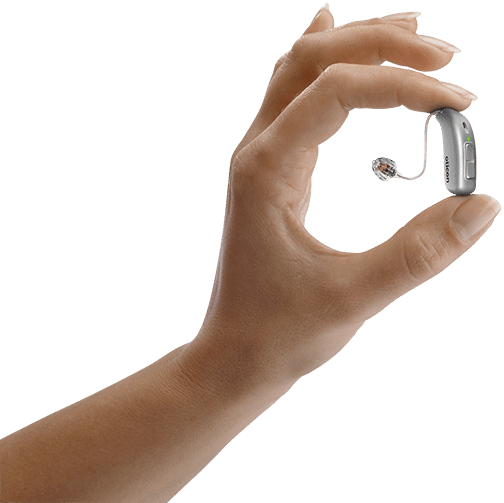
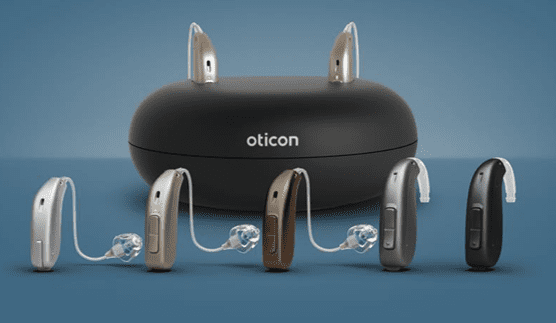
Oticon Launches Oticon More at 2021 OticonNext Event
Oticon announced that over 5,000 hearing care professionals registered to join the company for its 2021 OticonNext “Discover More” Conference, the company’s “biggest ever launch event for a new product.” The live, virtual knowledge-sharing experience introduced participants to Oticon More, “the world’s first hearing aid with an on-board deep neural network.” This new hearing aid is said to build on Oticon’s “proven BrainHearing approach to deliver a full and precisely balanced sound scene that makes it easier for the brain to perform optimally.” Oticon President Gary Rosenblum and Oticon staff experts showed conference participants how Oticon More represents a “fundamentally new approach” to signal processing.
“Through the OticonNext Conference, we aimed to equip practitioners with the knowledge and tools they need to continue to bring life-changing technology to patients,” said Rosenblum. “Over the past decade, Oticon has pioneered new standards and advanced its portfolio of hearing solutions dramatically. From our newest addition, Oticon More, to our innovative power and pediatric solutions, we continue to offer hearing care professionals and their patients one of the industry’s most comprehensive portfolios of hearing technology.”
Rosenblum shared recent honors for the new hearing solution with conference participants. On January 11, the Consumer Electronics Association named Oticon More an honoree in the CES 2021 Innovation Awards in the Health & Wellness and Wearable Technologies categories. This is the fifth consecutive year that Oticon, Inc has been recognized by the international awards program that annually selects the best of the best in consumer electronics. The most recent awards bring to an even dozen the number of times Oticon has been honored by the CES InnovationAwards program.
Inspiration, Innovation, and Practice Support
Keynote speaker Dan Buettner, author of The Blue Zones: Lessons for Living Longer from the People Who’ve Lived the Longest, provided guidance on how technology like Oticon More contributes to health and long life by enabling patients to maintain vital connections to people and the world. A panel discussion addressed questions from the online audience on Oticon More’s technology innovations, including the new Polaris platform. Following the conference, hearing care professionals were invited to explore The Zone exhibit hall to learn more about the variety of clinical and business support available through Oticon and the company’s business partners.
Interactive Webisodes Continue Knowledge Sharing
The conference’s interactive virtual format extends beyond the launch event with a series of post-conference educational webisodes that build on the knowledge gained at OticonNext. The live interactive sessions take a deeper dive into the audiology of Oticon More and the new research that shows the brain needs access to all sounds—not just speech—in order to work in a natural way. Scheduled for February and March, the five webisodes each last approximately one hour and require prior registration.
Learn more about Oticon More and the entire portfolio of Oticon hearing solutions with BrainHearing technology at: www.Oticon.com/More.
https://www.keynshamhearing.co.uk/wp-content/uploads/2019/03/logo-300x79.png00adminhttps://www.keynshamhearing.co.uk/wp-content/uploads/2019/03/logo-300x79.pngadmin2021-01-20 10:49:282021-01-20 10:49:28Oticon hearing aids
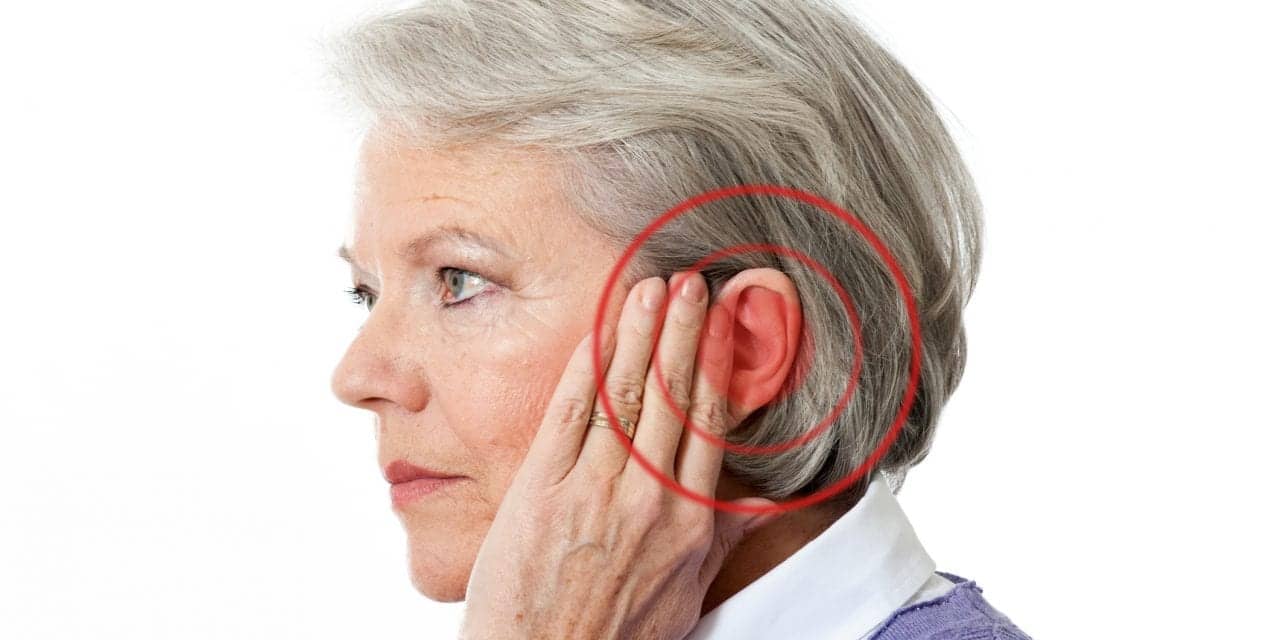
A technology called functional near-infrared spectroscopy (fNIRS) can be used to objectively measure tinnitus, or ringing in the ears, according to a new study published November 18 in the open-access journal PLoS ONE by Mehrnaz Shoushtarian of The Bionics Institute, Australia, and colleagues. A summary of the study was published on the Science Daily website.
Tinnitus, the perception of a high-pitched ringing or buzzing in the ears, affects up to 20% of adults and, when severe, is associated with depression, cognitive dysfunction, and stress. Despite its wide prevalence, there has been no clinically used, objective way to determine the presence or severity of tinnitus.
In the new study, researchers turned to fNIRS, a non-invasive and non-radioactive imaging method which measures changes in blood oxygen levels within brain tissue. The team used fNIRS to track activity in areas of the brain’s cortex previously linked to tinnitus. They collected fNIRS data in the resting state and in response to auditory and visual stimuli in 25 people with chronic tinnitus and 21 controls matched for age and hearing loss. Participants also rated the severity of their tinnitus using the Tinnitus Handicap Inventory.
fNIRS revealed a statistically significant difference in the connectivity between areas of the brain in people with and without tinnitus. Moreover, the brain’s response to both visual and auditory stimuli was dampened among patients with tinnitus. When a machine learning approach was applied to the data, a program could differentiate patients with slight/mild tinnitus from those with moderate/severe tinnitus with an 87.32% accuracy. The authors conclude that fNIRS may be a feasible way to objectively assess tinnitus to assess new treatments or monitor the effectiveness of a patient’s treatment program.
The authors add: “Much like the sensation itself, how severe an individual’s tinnitus is has previously only been known to the person experiencing the condition. We have combined machine learning and non-invasive brain imaging to quantify the severity of tinnitus. Our ability to track the complex changes that tinnitus triggers in a sufferer’s brain is critical for the development of new treatments.”
BySarah E. McQuate, PhD, Science Writer | University of Washington News & UW College of Engineering
Smartwatches offer people a private method for getting notifications about their surroundings — such as a phone call, health alerts, or an upcoming package delivery.
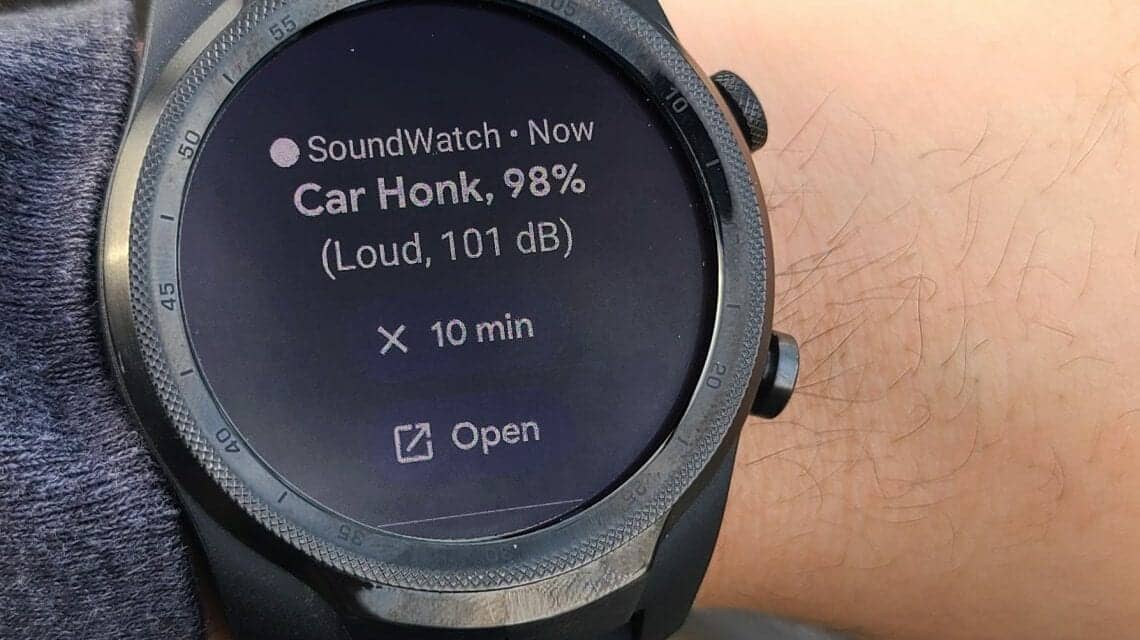
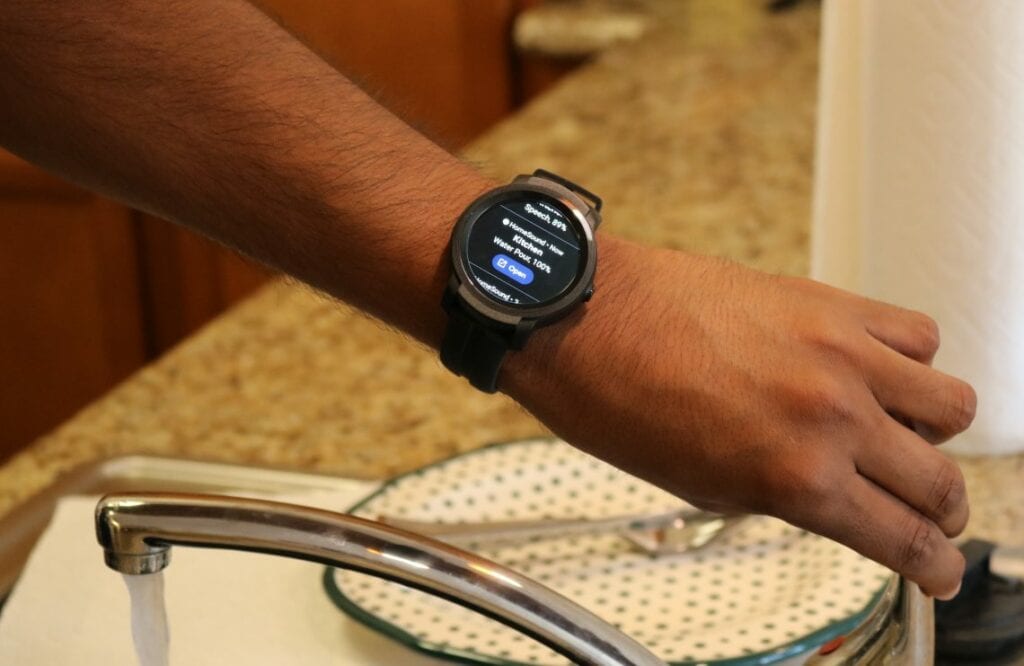
Now University of Washington researchers have developed SoundWatch, a smartwatch app for deaf, Deaf, and hard-of-hearing people who want to be aware of nearby sounds. When the smartwatch picks up a sound the user is interested in — examples include a siren, a microwave beeping, or a bird chirping — SoundWatch will identify it and send the user a friendly buzz along with information about the sound, according to an article on the UW News website.
The team presented these findings October 28 at the ACM conference on computing and accessibility.
“This technology provides people with a way to experience sounds that require an action — such as getting food from the microwave when it beeps. But these devices can also enhance people’s experiences and help them feel more connected to the world,” said lead author Dhruv Jain, a UW doctoral student in the Paul G. Allen School of Computer Science & Engineering. “I use the watch prototype to notice birds chirping and waterfall sounds when I am hiking. It makes me feel present in nature. My hope is that other d/Deaf and hard-of-hearing people who are interested in sounds will also find SoundWatch helpful.”
The team started this project by designing a system for d/Deaf and hard-of-hearing people who wanted to be able to know what was going on around their homes.
“I used to sleep through the fire alarm,” said Jain, who was born hard of hearing.
The first system, called HomeSound, uses Microsoft Surface tablets scattered throughout the home which act like a network of interconnected displays. Each display provides a basic floor plan of the house and alerts a user to a sound and its source. The displays also show the sound’s waveforms, to help users identify the sound, and store a history of all the sounds a user might have missed when they were not home.
The researchers tested HomeSound in the Seattle-area homes of six d/Deaf or hard-of-hearing participants for three weeks. Participants were instructed to go about their lives as normal and complete weekly surveys.
Based on feedback, a second prototype used machine learning to classify sounds in real time. The researchers created a dataset of over 31 hours of 19 common home-related sounds — such as a dog bark or a cat meow, a baby crying, and a door knock.
“People mentioned being able to train their pets when they noticed dog barking sounds from another room or realizing they didn’t have to wait by the door when they were expecting someone to come over,” Jain said. “HomeSound enabled all these new types of interactions people could have in their homes. But many people wanted information throughout the day, when they were out in their cars or going for walks.”
In the second prototype of HomeSound, the tablets sent information to a smartwatch, which is how the researchers got the idea to make the standalone app. Jain et al./CHI 2020
The researchers then pivoted to a smartwatch system, which allows users to get sound alerts wherever they are, even in places they might not have their phones, such as at the gym.
Because smartwatches have limited storage and processing abilities, the team needed a system that didn’t eat the watch’s battery and was also fast and accurate. First the researchers compared a compressed version of the HomeSound classifier against three other available sound classifiers. The HomeSound variant was the most accurate, but also the slowest.
To speed up the system, the team has the watch send the sound to a device with more processing power — the user’s phone — for classification. Having a phone classify sounds and send the results back to the watch not only saves time but also maintains the user’s privacy because sounds are only transferred between the user’s own devices.
The researchers tested the SoundWatch app in March 2020 — before Washington’s stay-at-home order — with eight d/Deaf and hard-of-hearing participants in the Seattle area. Users tested the app at three different locations on or around the UW campus: in a grad student office, in a building lounge and at a bus stop.
People found the app was useful for letting them know if there was something that they should pay attention to. For example: that they had left the faucet running or that a car was honking. On the other hand, it sometimes misclassified sounds (labeling a car driving by as running water) or was slow to notify users (one user was surprised by a person entering the room way before the watch sent a notification about a door opening).
The team is also developing HoloSound, which uses augmented reality to provide real-time captions and other sound information through HoloLens glasses.
“We want to harness the emergence of state-of-the-art machine learning technology to make systems that enhance the lives of people in a variety of communities,” said senior author Jon Froehlich, an associate professor in the Allen School.
Another current focus is developing a method to pick out specific sounds from background noise, and identifying the direction a sound, like a siren, is coming from.
The SoundWatch app is available for free as an Android download. The researchers are eager to hear feedback so that they can make the app more useful.
“Disability is highly personal, and we want these devices to allow people to have deeper experiences,” Jain said. “We’re now looking into ways for people to personalise these systems for their own specific needs. We want people to be notified about the sounds they care about — a spouse’s voice versus general speech, the back door opening versus the front door opening, and more.”
Whisper may have a quiet name, but it could reverberate loudly in the hearing healthcare industry. The company launched its first new hearing aid on October 15—a product that really is significantly different from all others dispensed by audiologists and hearing aid specialists. And, yes, that’s right: the Whisper Hearing System is designed for dispensing by hearing care professionals. As such, Whisper represents the first new major hearing aid manufacturer with a product specifically designed for dispensing since the InSound Medical XT was approved by the FDA in 2003 (later purchased in 2010 by Sonova and renamed Lyric).
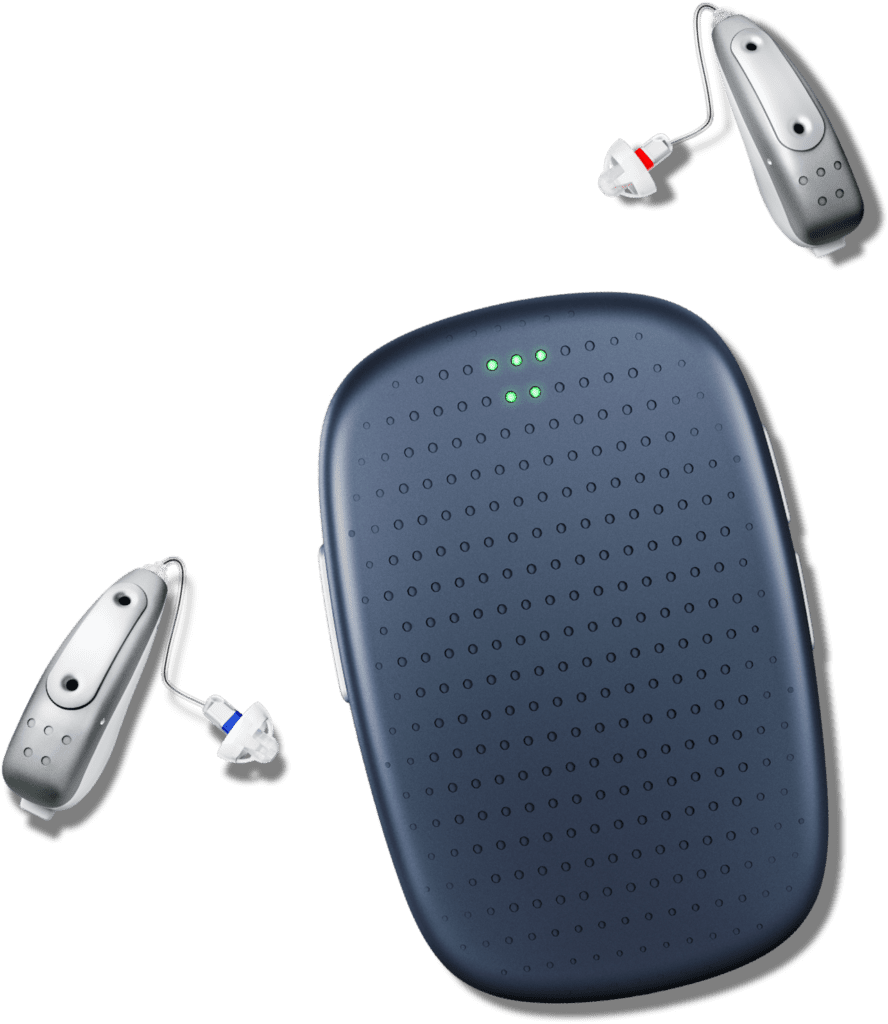
The Whisper RIC hearing aids and brain.
And a bit like Lyric, Whisper will use a subscription payment model for consumers. The leasing concept is gaining ground in hearing healthcare, in part due to the fact that technology moves so fast, hearing aids can be expensive, and frequent product upgrades are now a given in the industry. Whisper will be available via a comprehensive monthly plan that includes ongoing care from a local hearing care professional, a lease of the Whisper Hearing System, regular software upgrades, and a 3-year warranty that not only covers the system itself but also loss and damage. The company is offering a special introductory rate of $139/month (regularly $179/month) for a 3-year term.
The New Whisper Hearing System
The Whisper Hearing System essentially has three components:
A hearing aid processor that resembles an advanced receiver-in-the-canal (RIC) hearing aid;
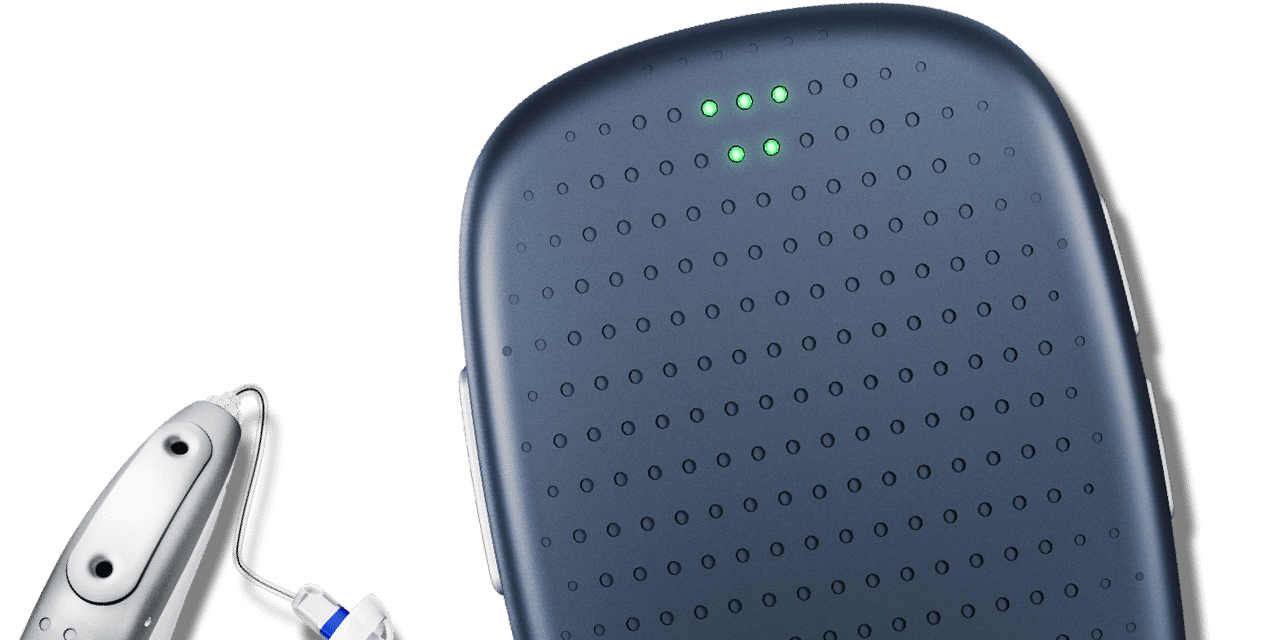
The Whisper Brain is a small device that runs an AI-driven Sound Separation Engine to optimize sound in real time. It also enables connectivity to iPhones, and
A phone app that provides an interface for the consumer.
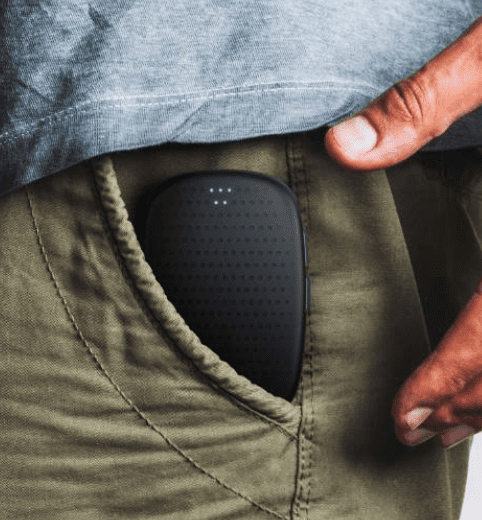
The Whisper team, which is largely composed of executives from the AI field, created the Whisper brain as a dedicated, powerful sound processing system that also allows for updates and other capabilities—instead of relying on the wearer’s smartphone for many of these functions. “We developed the Whisper Brain to run the core technology we’ve developed for hearing,” said company Co-founder and President Andrew Song in an interview with Hearing Review. “Think about your smartphone and all the processing inside it. We’re using the Whisper Brain to apply this type of processing to hearing without having to compete with smartphone games or applications. The Whisper Brain is a dedicated processor designed to provide the best hearing.”
However, the Whisper Brain isn’t required to use the hearing aid, as there may be situations where the wearer wants to step away from it or not take it with them. In those situations, the hearing aid uses the “onboard” hearing aid algorithms in the RIC (similar to other advanced hearing aids when unpaired to the user’s cell phone).
Wireless connectivity with iPhones is also provided through the Whisper Brain via Bluetooth, and the company says it may support other phones and has plans to expand on this in the future. The RICs use a size 675 battery with an expected use of 4-5 days with typical use including streaming, and the WhisperBrain has a USB port for recharging.
Not Your Grandfather’s Hearing Aid
Andrew Song
According to Song, Whisper started about 3 years ago in San Francisco when he began discussions with another Whisper co-founder, Dwight Crow, the company’s CEO. Song is the former head of products for an online instant-messaging (IM) system most of us are familiar with: Facebook Messenger Core. A mathematics and computer science graduate of the University of Waterloo, he is an expert in artificial intelligence and a member of Sequoia Capital’s Scout Program which was formed to discover and develop promising companies. Crow is the founder of Carsabi, a machine-learning based car sales aggregator acquired by Facebook in 2012, and he helped build the e-commerce segment at Facebook which yields over $1 billion per quarter in revenue. A third co-founder, Shlomo Zippel, was the applications team leader at PrimeSense which built the 3D sensor technology behind Microsoft Kinect.
Jim Kothe
The company then added as head of sales Jim Kothe, an audiologist and hearing industry veteran who has a wealth of experience within both the dispensing community and manufacturing, in addition to an extremely impressive team of executives with experience and leadership roles at companies like Facebook, Nest, Google, Invisalign, Johnson & Johnson, Solta Medical, and Cutera. Together they are collaborating on a product that blends artificial intelligence, hearing care, hardware, and software for helping solve the challenge of providing better hearing.
“I think for me, and probably for everyone at the company, it’s a very personal mission,” says Song. “Personally, the starting point is really my grandfather. He has hearing loss and is not an uncommon story when you work in this business: I’d say that he’s a hearing aid owner, but not a hearing aid wearer.”
This set into motion Song’s investigation into what hearing aid technology was doing, what experiences people were having with it, and why his grandfather had the complaints he did. “That really opened my world to all the exciting things that could be done, but also the opportunity we have for how we can really build a product to help [people like him],” says Song. “Since then we’ve been putting the product together and bringing the expertise that comes from hearing folks like Jim and the others on our team—and blending it with the kind of product and technology ideas we almost take for granted here in Silicon Valley. Products are becoming more consumer friendly, more consumer oriented, and we’re building some of those ideas into a new type of hearing aid product. So, while Whisper is a hearing aid regulated by the FDA, all of these things influenced our approach, our mentality, and our vision towards this space, and we think our approach is a little different [from those of other hearing aid manufacturers].”
The larger capacity for processing power is extremely exciting for Song and his colleagues, and he likens this advancement to the leap from analog to digital hearing technology.
The larger capacity for processing power is extremely exciting for Song and his colleagues, and he likens this advancement to the leap from analog to digital hearing technology. He says some great hearing aid algorithms have been, and will continue to be, created that will result in substantially improved hearing. However, there’s little point in having these algorithms if they can’t be fully employed in a wearable device.
He also says the problem in hearing aids is much more complex than, for example, those solutions found in noise-cancelling headphones. “Over time, [we’ve had] very ambitious people with a lot of ideas on what we should do with this powerful processing. What’s really exciting is not just having this technology, but also having a learning platform to be able to develop it. I think one of the most interesting parts of development is that the goal, at the end of the day, really isn’t about perfect noise removal. You need noise in your life. We have demos we can run that more or less perfectly remove noise…and it just creates sort of a weird environment. So, I think in many cases, the unique aspect of what we’re doing revolves around how do we use [the research] and how do we invent some truly novel ideas? Obviously, it’s not only about noise removal, but how we can use the powerful processing specifically in these hearing aids to make hearing aids really good for the purpose of listening. That subtlety is where we feel like we can really differentiate ourselves and truly make a difference in people’s lives.”
A System that Relies on Professional Care
Song says there has been a patient-centric approach at every turn in the design, development, marketing, and especially distribution of the Whisper Hearing System. And it starts with the hearing care professional’s expertise.
“I think there’s several very important things along that path; the first of which was to work with hearing care professionals who are the ‘artists’ in delivering great care,” Song told HR via a Zoom interview. “If I look at my grandfather’s experience, it was pretty obvious to me that having the right professionals made a huge difference. And so you can talk about using Zoom or you can talk about going direct to consumer, but it’s very, very obvious—even as a Silicon Valley engineer—that the audiologist is extremely important in the process. That’s why we made a decision very early on that we’d be working with professionals. And if you remember, when the company started in 2017, that’s when the OTC laws were getting passed. That’s where all the ‘cool stuff’ was supposed to be. Everyone was saying, ‘Get rid of these professionals!’ …But there’s a care-oriented mindset in hearing healthcare. You can see that there’s a personal aspect [needed] to evaluate what would be good for my grandfather. And when you talk to patients and you talk to audiologists, this becomes very clear. So, I think that was a very early decision that’s not necessarily about the product, per se, but about our business and how we best deliver the hearing system.”
One of the things Whisper also wants to address is the post-purchase feeling of regret that can accompany a high-end, high-technology purchase. As with any car, computer, or consumer electronics device, when a consumer purchases an expensive top-of-the-line hearing aid, there is doubtlessly a more advanced model with new processing capabilities and features that will be launched 6 months later. But, with hearing loss, Song believes that sense of regret can be magnified because hearing is such a personal, important 24/7 activity.
The Whisper Hearing Aid Brain
That led to the idea of a subscription-based system using a machine-learning platform that can be upgraded on regular intervals without continually replacing the actual hearing aid or brain itself. “The nature of our product is that it gets better over time. You don’t need to pay for [the upgrades]; the hearing aid learns on its own, and we’ll also deliver you a software upgrade every few months. [It’s] similar to how you might think of a cell phone plan…Fundamentally, that’s really what we’re trying to offer.”
It’s also important that professionals have the margins and revenues to be able to cover their expenses in order to provide exceptional hearing care, says Song. Whisper plans to provide upfront fees and work with professionals, while offering patients a better way to pay for the product, support, and systems that the company has developed. Currently, a select number of hearing care professionals are using the Whisper Hearing System, and the company is now expanding from this base of dispensing offices.
When asked how he thinks Whisper will change the hearing aid market, Song quickly replied, “I really hope that everybody around the world gets an upgradable hearing aid in the next 5 years. And, of course, I hope it’s ours. We have a lot to offer. But if the market moves toward Whisper in 5 years, then we’re competing with everybody to make the best upgrades. Frankly, I think that’s a big win for the industry. And it’s also a big win for my grandfather, right? I think, as part of that vision, we have to be really mindful about how much we bite off in any of our product development. So this first product represents a first step, especially on the device with this kind of learning capability and working with professionals on this payment model—all of the new things that we’ve already talked about. But there are other aspects around this kind of patient-centric, consumer-centric model with the professional and I think there’s a lot of interactivity that we can build on. There’s a lot of new ideas we have about how to better integrate everything together. And so, more and more, we’ll be able to build that out and address those issues because we’ll have an excellent learning hearing aid on the market.”
Funding for Whisper
The initial investment to establish the company came from Sequoia Capital and First Round Capital, and on Thursday (October 15) Whisper announced the close of a $35 million Series B funding round led by Quiet Capital for total funding of $53 million. Advisors for the company include Mike Vernal of Sequoia and former VP of engineering at Facebook; audiologist Robert Sweetow who is the former UCSF Director of Audiology; Lee Linden of Quiet Capital and founder of TapJoy and Karma; Rob Hayes of First Round which also invested in Uber and Square, and Stewart Bowers, former VP of engineering at Tesla who was responsible for AutoPilot.
“Software-defined hearing technology is the future,” said Vernal in a press statement. “By building the Whisper Hearing System around software, the Whisper team will be able to improve patient care with a device that adapts, upgrades, and improves continuously for the wearer’s benefit. This is the start of a new paradigm for delivering hearing technology, and we’re thrilled to partner with Whisper on this journey.”
“What I look for in a company is the team,” said Hayes. “The Whisper team combines incredible expertise in cutting edge artificial intelligence, software, and hardware with a genuine passion for helping people. I’m excited to work with them to transform the hearing space.”
‘BMJ’ Publishes ‘First Reported UK Case’ of Sudden Hearing Loss Linked to COVID-19
Although uncommon, sudden permanent hearing loss seems to be linked to COVID-19 infection in some people, warn doctors, reporting the first UK case in the journal BMJ Case Reports. An article summarising the results appears on the EurekAlert website.
Awareness of this possible side effect is important, because a prompt course of steroid treatment can reverse this disabling condition, they emphasize.
Sudden hearing loss is frequently seen by ear, nose, and throat specialists, with around 5-160 cases per 100,000 people reported every year. It’s not clear what the causes are, but the condition can follow a viral infection, such as flu, herpes, or cytomegalovirus.
Despite plenty of published research on sudden onset hearing loss, only a handful of other cases associated with COVID-19 have been reported, and none in the UK—until now.
The doctors describe a case of a 45-year-old man with asthma who was referred to the ear, nose, and throat department at their hospital after suddenly experiencing hearing loss in one ear while being treated for COVID-19 infection as an inpatient.
He had been admitted to hospital with COVID-19 symptoms which had been going on for 10 days. He was transferred to intensive care as he was struggling to breathe.
He was put on a ventilator for 30 days and developed other complications as a result. He was treated with remdesivir, intravenous steroids, and a blood transfusion after which he started to get better.
But a week after the breathing tube was removed and he left intensive care, he noticed ringing (tinnitus) in his left ear followed by sudden hearing loss in that ear.
He had not lost his hearing or had ear problems before. And apart from asthma, he was otherwise fit and well.
Examination of his ear canals revealed that he had no blockages or inflammation. But a hearing test showed that he had substantially lost his hearing in the left ear. He was treated with steroid tablets and injections after which his hearing partially recovered.
He tested negative for other potential causes, including rheumatoid arthritis, flu, and HIV, prompting his doctors to conclude that his hearing loss was associated with COVID-19 infection.
“Despite the considerable literature on COVID-19 and the various symptoms associated with the virus, there is a lack of discussion on the relationship between COVID-19 and hearing,” say the report authors. “Hearing loss and tinnitus are symptoms that have been seen in patients with both COVID-19 and influenza virus, but have not been highlighted.”
The first case of hearing loss mentioning COVID-19 alone was reported in April this year.
SARS-CoV-2, the virus responsible for COVID-19, is thought to lock on to a particular type of cell lining the lungs. And the virus has also recently been found in similar cells lining the middle ear, explain the report authors. SARS-CoV-2 also generates an inflammatory response and an increase in the chemicals that have been linked to hearing loss.
“This is the first reported case of sensorineural hearing loss following COVID-19 infection in the UK,” write the report authors. “Given the widespread presence of the virus in the population and the significant morbidity of hearing loss, it is important to investigate this further.”
They add: “This is especially true given the need to promptly identify and treat the hearing loss and the current difficulty in accessing medical services.”
Doctors should ask patients in intensive care about hearing loss and refer them for urgent treatment, they advise.
https://keynshamhearing.co.uk/wp-content/uploads/2020/10/Honiton-hearing-near-Exeter-.jpg6401280adminhttps://www.keynshamhearing.co.uk/wp-content/uploads/2019/03/logo-300x79.pngadmin2020-10-16 12:49:182020-10-16 12:49:18Sudden Hearing Loss Linked to COVID-19
Phonak’s Audéo Paradise Launch Supports the Company’s Overall “Well Hearing is Well Being” Mission
Voltaire said “Wherever my travels may lead, paradise is where I am.” Phonak is hoping its newest hearing aid, Audéo Paradise, will evoke similar sentiments in people with hearing loss over a vast array of listening situations, and lend further support for its tenet that “Well hearing is well being.”
As the successor to its premium Audéo Marvel product line, Audéo Paradise has big shoes to fill. Marvel was introduced in October 2018 and sold over 1 million hearing aids within its first year—the fastest-ever sales for the company and probably Phonak’s most successful hearing aid since its 2005 launch of Phonak Savia. A Marvel 2.0 upgrade was released last August which, among several other things, made RogerDirect technology available to all Marvel hearing aids while expanding form factor options.
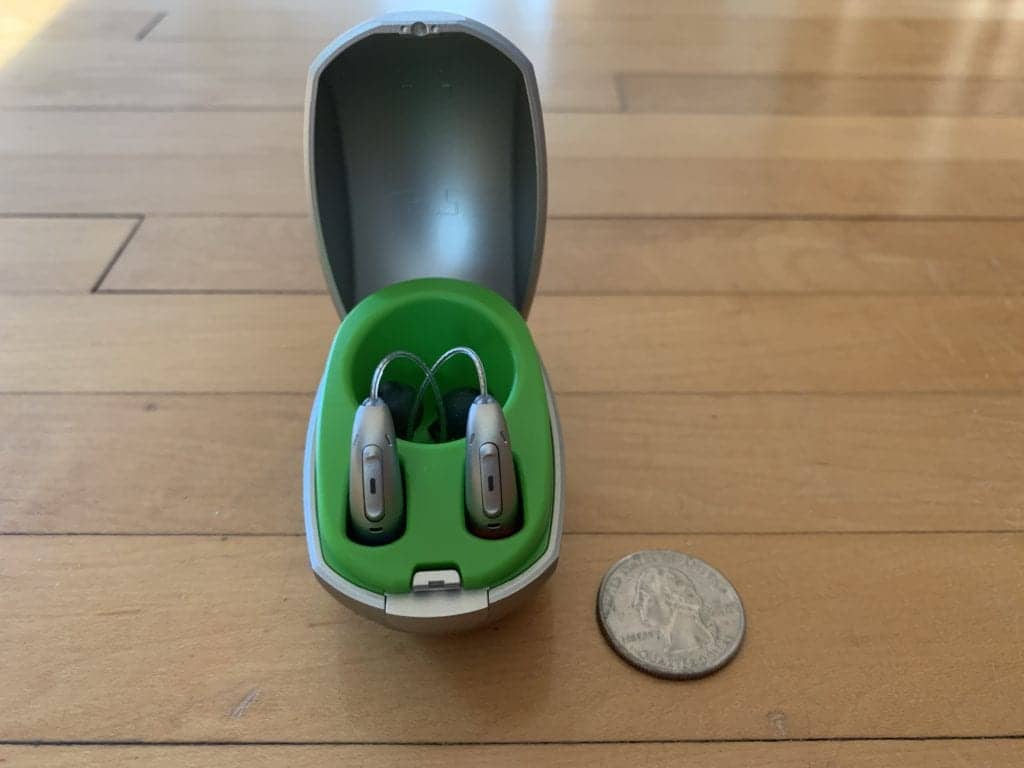
The new Phonak Audéo Paradise, officially released today (August 19), is designed to provide “the next level of excellent sound quality” through its new PRISM (Processing Real-time Intelligent Sound Management) sound processing chip that features approximately double the memory of Phonak’s previous chip, “universal” connectivity options, and a new fitting formula designed to provide better fits (particularly for milder losses), reduced reverberation, greater dynamic range, and reduced listening fatigue in noise. The company is also introducing a new version of AutoSense OS™ (ASOS 4.0), the fourth-generation of its successful operating system which augments the existing feature set found in Audéo Marvel with a new speech enhancer, dynamic noise cancellation, and motion-sensor hearing technology for even better performance in noisy environments.
Keynsham hearing centre near Bristol
The integrated motion sensor not only detects when the wearer is moving and having a conversation, but it also supports hands-free conversations while connecting with Siri®, Google Assistant™, or Amazon Alexa® via a simple double-tap to the ear. The new hearing aid also features proven lithium-ion rechargeable battery technology that provides a full day of listening, including audio streaming, on a single charge and comes with an easy-to-use portable charging unit.
In July, Phonak held an online premiere of its new Paradise hearing aid for members of the press, and later even allowed participants to try the product for themselves during a remote fitting session (look for the upcoming blog about the editor’s experience with remote programming for a mild hearing loss).
Sound Quality and Innovative App Features
During the online media event, Phonak Product Manager Fabia Müller detailed three new features of the Audéo Paradise. These key features are designed to improve ease-of-use for the hearing aid wearer, while enhancing communication in a multitude of listening situations, particularly in quiet, in loud environments, and for special situations involving movement:
Speech Enhancer is designed for more intimate one-on-one conversations with a friend or loved one by enhancing the peak elements of speech (ie, providing more gain on the soft input speech signals).
Dynamic Noise Cancellation is a new feature that employs a directional beamformer when users are trying to understand speech in a loud environment, like in a restaurant, bar, or playground. The new system works in combination with Phonak’s adaptive beamformer, as well as the motion sensor. Müller says the entire system can provide up to 4 dB SNR improvement.
Motion Sensor Hearing detects if the user is moving or stationary, then seamlessly steers the microphone mode and the dynamic noise cancellation appropriately to maximize the speech signal and retain natural sound.
“With Paradise, we are delivering crisp natural sound, brilliant speech understanding, and personalized noise cancelling,” said Müller. She says ASOS 4.0 system uses artificial intelligence (AI) to orchestrate a fully automatic experience, blending the new features above into the existing Audéo features to ensure that the beamformer and dynamic noise cancellation are in the appropriate settings—whether one is walking or standing still—in a wide variety of environments.
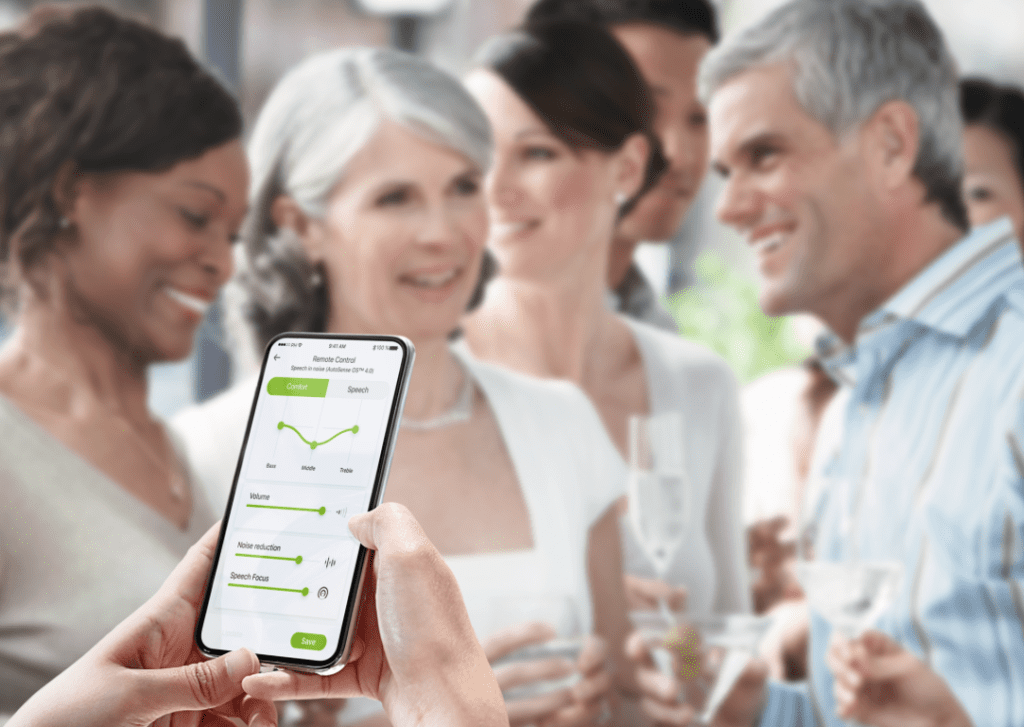
The myPhonak app can control sound settings for Phonak Paradise users.
Paradise also introduces a suite of personalized digital solutions so hearing aid wearers get the most out of their new hearing aids. Through the myPhonak app, consumers can now easily adjust the level of background noise, and even receive a hearing test directly through hearing aids from a professional remotely, without leaving their home. The Phonak Hearing Screener has also been upgraded so that any person can quickly receive a hearing assessment online.
Audéo Paradise users can also receive help in special listening situations from the app’s Hearing Diary. Within the diary, there are four broad areas: “sound quality,” “speech understanding,” “hearing aid,” and “other.” Within each of these areas, one can choose to rate your satisfaction in various situations like “conversation in quiet,” “restaurant,” “watching TV,” “music,” “workplace,” etc, then provide more specific comments and feedback for assistance and/or possible adjustment.
Broadened Connectivity Options
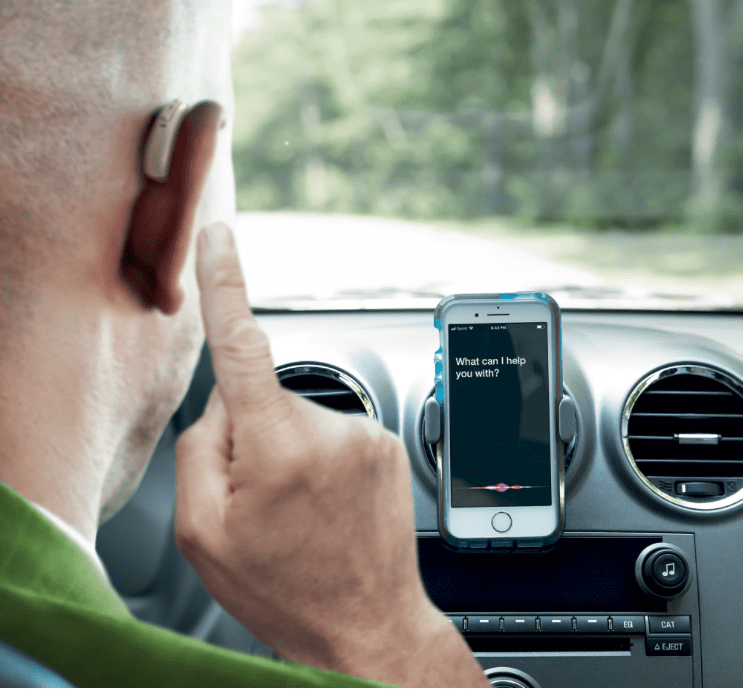
With Paradise, a simple double-tap to the ear can hail your favourite voice assistant like Siri or Alexa.
With the new Tap Control, Paradise users can activate Siri or Alexa, answer or reject calls, or even pause or resume audio streaming by tapping on the outer ear (upper helix/pinna). In previous Phonak Audéo hearing aids, there were two Bluetooth connections, with only one being active at any one time; with Audéo Paradise, there are now eight possible Bluetooth connections, with two capable of being active via the customisable Tap Controls.
New First-fit Capabilities and Advanced Processing
Phonak has also adapted its proprietary fitting formula to these new capabilities by introducing Adaptive Phonak Digital 2.0 (APD 2.0), an update to the original fitting formula introduced 15 years ago. There are three main changes in the new APD 2.0:
Adaptive compression speeds for greater dynamic range and reduced perception of reverberation;
“Linearalized” gain for higher inputs like loud speech-in-noise situations or music (ie, a “louder input kneepoint”), and
A new pre-calculation of the gain settings and amplification schemes for mild-to-moderate hearing losses to provide better first-fit acceptance at the first appointment for this unique user group.
Müller noted that research at Hörzentrum Oldenburg GmbH showed APD 2.0 helped reduce listening effort particularly in noise. Additionally, OSOS 4.0 uses AI to orchestrate these new features, as well as previous Audéo performance benefits, to provide the best speech intelligibility and sound quality.
In summary, Audéo Paradise is the first hearing aid to benefit from Sonova’s new sound processing chip, PRISM, which delivers crisp, natural sound in any environment for excellent sound quality. In quiet situations, soft voices over distance are enhanced by the Speech Enhancer. With the Motion Sensor Hearing, the hearing aids can detect when the wearer is moving while having a conversation and automatically adjust the directional microphones to focus on the direction of speech. Paradise wearers also have more control over how they hear thanks to a new personalised noise cancelling feature in the myPhonak app.
“When creating our latest hearing solution, we turned to nature for inspiration,” said Martin Grieder, Group Vice President of Marketing for Sonova in a press statement. “Hearing is such an intricate part of our existence and fundamental for our overall well-being. Nature is also the source of so many sounds that can soothe, relax and comfort us. What better way to rediscover sound than with a hearing aid inspired by nature itself – Phonak Audéo Paradise.”
The Bigger Picture of Brain Health and the Future
During the online media event, Phonak Director of Global Audiology Angela Pelosi pointed out that hearing loss fundamentally changes our perceptions of well-being, safety, and security—one of the many reasons why hearing healthcare needs to change its messaging from just solving immediate hearing problems to a more universal message of “Well Hearing is Well Being.” Increasingly, scientific evidence shows that untreated hearing loss is associated with comorbidities like falls, loneliness and depression, increased use of healthcare systems, as well as cognitive impairment (eg, see recent Lancet Commission update that confirmed untreated hearing loss as the largest modifiable risk factor in dementia).
Julia Sarant, PhD, of the University of Melbourne presented information on a study indicating improved executive function for all participants who used hearing aids for 18+ months. The research also found that people with greater degrees of hearing loss are more likely to have poorer cognitive function, and that older adults who use hearing aids may be able stabilize their cognitive status or actually improve it significantly over time. In other words, “Looking after hearing health is also looking after brain health,” says Dr Sarant.
Paradise Models and Availability
Audéo Paradise is available beginning today via licensed hearing care professionals in the United States. It will be offered in all performance levels across four models, all Roger compatible, including the Audéo P-RT, a lithium-ion rechargeable model with telecoil.
For more details on Audéo Paradise, visit the Phonak website.
University of Auckland to Study Chatbot Technology for Potential Tinnitus Therapy
Chatbot technology that offers therapy for tinnitus sufferers via a mobile device such as a smartphone will be trialed at the University of Auckland, according to an announcement on the school’s website.
Researchers are recruiting participants for the “Tinnibot” study which is aimed at helping those who suffer from a hearing disorder that affects around one in ten New Zealanders and more than 700 million people worldwide.
Tinnitus is usually experienced as a ringing in the ears but sufferers report a range of noises including buzzing, clicking, and even the sound of cicadas. Severity varies: sounds can be continuous or intermittent but the condition is linked to serious mental health effects including depression, anxiety, and insomnia. Currently there is no cure.
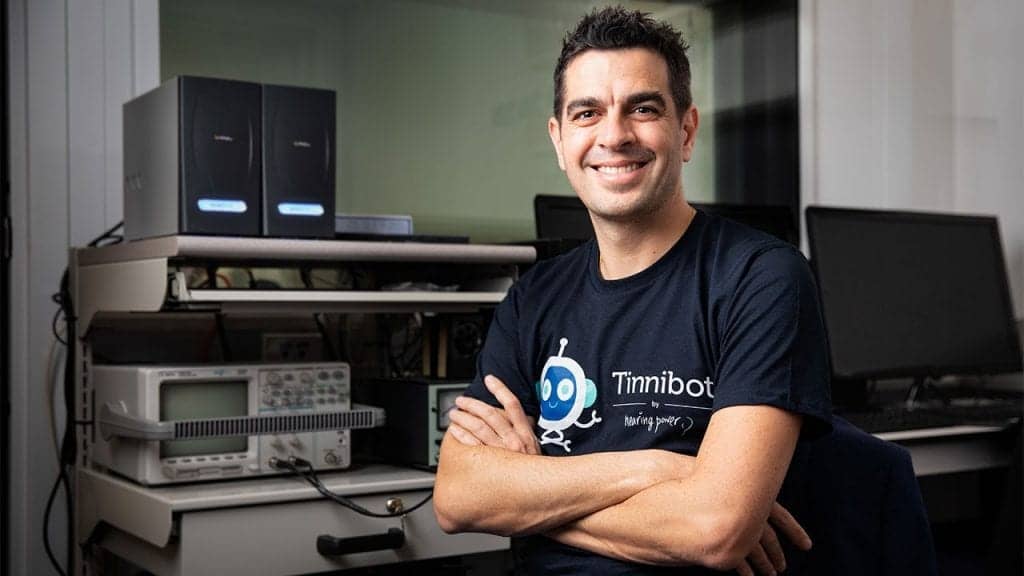
But as online technologies and devices such as smartphones change the way health care is delivered, Dr Fabrice Bardy from the University of Auckland’s School of Psychology says it has created new opportunities to treat tinnitus and to study which treatments work best.
Dr Fabrice Bardy
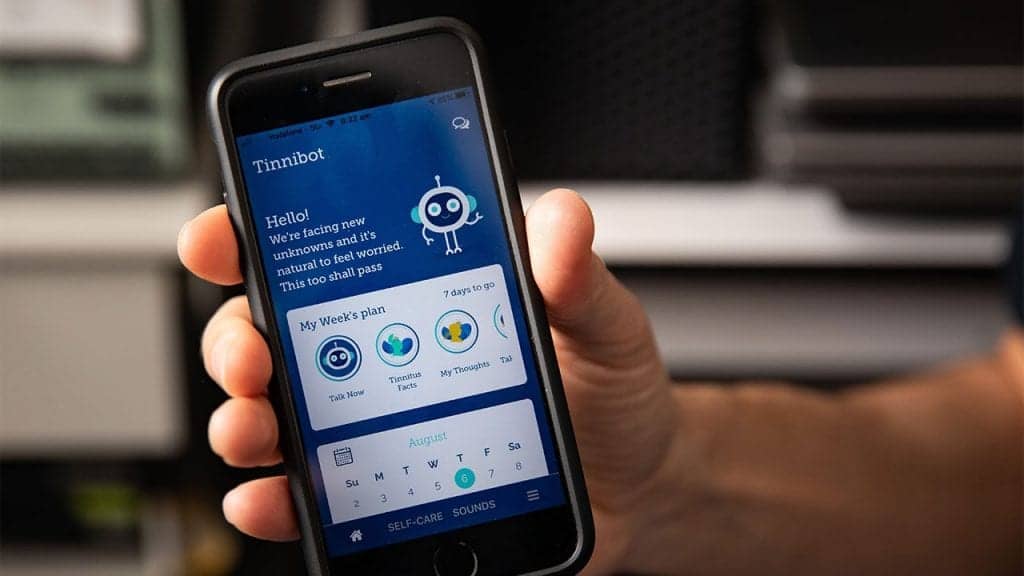
Tinnibot is a chatbot program which uses Cognitive Behavioural Therapy (CBT), proven to be effective in the treatment of tinnitus but usually only available through one-on-one sessions which can be expensive and involve long wait times.
The chatbot’s software interface delivers CBT designed for an individual’s needs directly to their mobile, conducting an automated and interactive text conversation designed to help people regulate their thoughts by focusing on positive thoughts and challenging negative ones.
The interface incorporates a sound therapy library which has proved to be effective tinnitus therapy, particularly for those who have trouble sleeping. It works by using noise at just the right volume to drown out the sounds tinnitus can produce.
Keynsham hearing centre
Dr Bardy describes Tinnibot to be like having a tinnitus expert in your pocket.
“This chatbot interface is the first one designed specifically for the treatment of tinnitus, a tool that offers direct therapy and support which is convenient and affordable,” he said. “It will help people better understand their condition and to manage symptoms, give them a sense of being in control, and a confidence boost because that’s an important part of successful treatment.”
Participants in the research will be split into two cohorts with one using Tinnibot only and the other using Tinnibot as well as video counseling with a psychologist. The aim is to see which treatment is more effective.
If you have been bothered with tinnitus for over three months and if you are interested in participating in the study, contact Dr Bardy for more information.
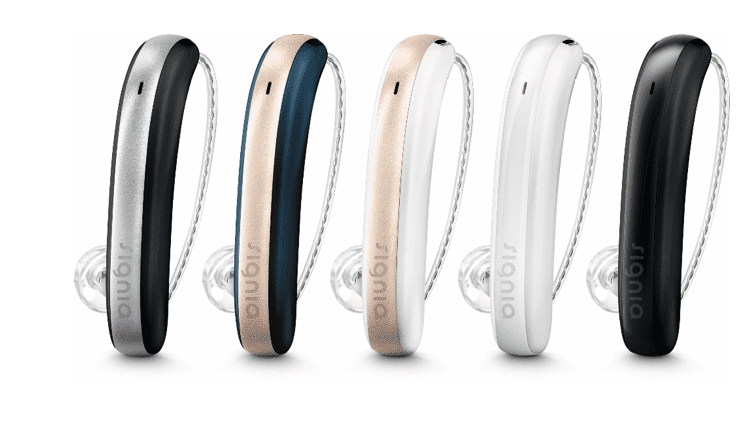
Signia announces the launch of the Styletto X. This new device, said to be “the world’s first SLIM-RIC form factor” pioneered by Signia, is now available on the Signia Xperience platform.
Styletto X reportedly offers “the most complete hearing experience, combining one-of-a-kind style that patients desire with the uncompromised technology that hearing care professionals demand,” according to the company’s announcement. Signia says that this “highly sophisticated hearwear helps to improves listening in any situation—even when moving—and delivers better-than- normal-hearing in difficult noise.” Features of the Styletto X include exchangeable receivers, portable rechargeability, Bluetooth connectivity, and self-service patient support via Signia Assistant.
In addition to Styletto X, Signia has introduced additional products on the Signia Xperience platform, helping to empower hearing care professionals to address more patient needs and preferences. These new offerings include:
The Silk X, a “discreet alternative to customs,” helping to allow hearing care professionals to operate more efficiently with a same-day-fit.
An expanded Essentials line to offer Signia’s advanced technology to more patients, regardless of budget.
Three new CROS solutions (CROS Pure Charge&Go X, CROS Pure 312 X, and CROS Silk X) for a choice of styles and fittings for patients with single-sided deafness.
“With its slim, rounded form and striking color combinations, Styletto X was developed to attract individuals who wouldn’t otherwise consider wearing hearing aids, while providing new options to existing wearers looking to upgrade to a sleek and modern device,” said Dr Tish Ramirez, AuD, Signia’s Vice President, Clinical Education & Professional Relations.
As evidence of its appeal, the eye-catching Styletto form factor—preferred by 8 out of 10 consumers—was found to significantly increase in-store-conversion of people with hearing loss into satisfied hearing aid wearers.2
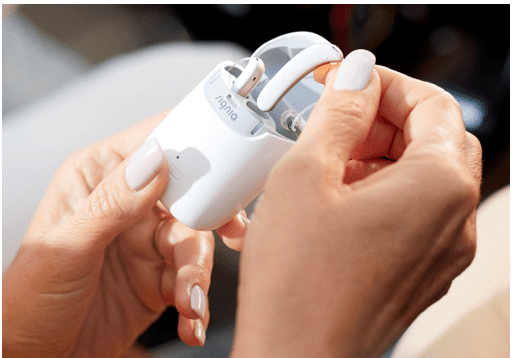
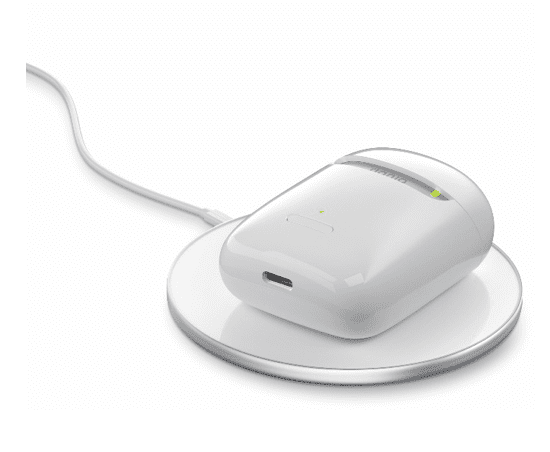
Signia is the “first hearing aid brand” to incorporate Qi wireless charging technology, helping to enable wearers to place the Styletto X pocket-sized charging case on a charging pad for greater usability.
“Styletto X features several enhancements to this already well-received design, based on feedback from our hearing care professional partners,” Ramirez added. “In particular, Styletto X now comes with exchangeable receivers to treat a wider range of hearing loss and enable more patients to benefit from this one-of-a-kind device.”
A New Era of Wearability and Autonomy
Signia is “the first hearing aid brand” to incorporate Qi wireless charging technology into a hearing aid charging case. With this technology, wearers can simply place the Styletto X pocket-sized charging case on a charging pad in cafés, restaurants, or cars, instead of having to plug it into the charging port. Styletto X can be fully charged in only four hours to provide a full day’s wearing, including five hours of streaming.3
The Signia Assistant can help hearing care professionals by leveraging artificial intelligence to help support patients, 24/7, with text-based dialogue, instant sound adjustments, and how-to-videos to answer handling questions.
Remote Fitting and Service Options
With Signia’s new Remote Care solution, hearing care professionals and hearing aid wearers can benefit from flexible fitting and service options via TeleCare, “the first full, live remote fine-tuning solution in the industry,” according to the company.
This hearing solution is available now in performance levels 7, 5, 3, 2, 1 and sDemo and in the contemporary color combinations Snow White/Rose Gold, Black/Silver, Cosmic Blue/Rose Gold, and in new White or Black.
1 Red Dot Design Award 2019, iF Design Award 2019 2 Hakvoort, Burton: Increasing Style, Reducing Stigma: The Styletto Solution (Signia White Paper, 2018) 3 Based on 16 hours wearing incl. 5 hours streaming per day
Oticon Launches Ruby Hearing Aid for Budget-Conscious Patients
For consumers returning to work and social activities in an uncertain economic climate, the newest addition to Oticon’s line of technology offers a combination of “sound quality, sought-after features, and affordability,” according to an announcement from the company. The new Oticon Ruby “sets a new standard in the essential category, delivering great sound quality, hassle-free rechargeability, and easy wireless connectivity in one complete solution—all within the reach of today’s budget-conscious patients.”
Powered by the Velox S platform, Oticon Ruby introduces the new SuperShield feedback management system that “helps prevent feedback before it occurs, so patients can enjoy hearing without interruptions from unwanted whistling and squealing.” For patients who want the convenience of rechargeable batteries, a new lithium-ion rechargeable option helps provide a full-day’s* charge in a few hours. Bluetooth connectivity helps enable patients to connect to smartphones and other modern devices to stream audio and music directly to their hearing aids.
“After experiencing this time of social distancing, consumers recognise the value of easy access to modern technologies to stay connected with family, friends, and business colleagues,” said Don Schum, PhD, Vice President of Audiology for Oticon, Inc. “Phone calls, video chats, and other virtual connections have become their lifeline to the world. These connections are enhanced with better hearing. At the same time, despite the start of an economic recovery, some patients may be more careful about spending. Oticon Ruby allows practitioners to offer patients looking for sought-after features, like rechargeability and easy wireless connections, a quality solution at a more affordable price.”
Like all Oticon wireless hearing aids, Oticon Ruby is compatible with Oticon RemoteCare, a new telehealth solution that allows hearing care professionals to follow up online with patients to remotely adjust and fine-tune hearing aids in a virtual appointment. For select patients who have valid audiograms, first fit with Oticon RemoteCare allows hearing care professionals to fit new hearing aids remotely.
Bath hearing centre
Oticon Ruby and all Oticon hearing aids use BrainHearing technology to “help support the brain in making sense of sound and enable patients to participate in challenging listening environments.” The Velox S platform powers the new SuperShield technology to analyse incoming sound levels, identify feedback, and prevent whistling before it occurs.
Oticon Ruby miniRITE R rechargeable hearing aids offer a full day* of power with an overnight charge. The charger helps provide a stable, reliable magnetic connection for charging that delivers power throughout the day, including streaming, with a three-hour charging time. A 30-minute recharge provides an additional six hours of power, according to Oticon.
With 2.4 GHz Bluetooth low-energy technology, Oticon Ruby helps deliver “easy wireless connectivity with low battery consumption to a wide range of devices such as smartphones, audio or music streams in stereo to both hearing aids from Bluetooth-connected mobile phones, MP3 players, PCs, and more.” Patients can pair Oticon Ruby with multiple TV Adapters and use the Oticon ON App to stream from any TV. The Oticon ON App also lets patients adjust volume, switch settings, check battery level, and access features such as Find My Hearing Aid and Oticon HearingFitness.
Keynsham ear wax removal
Oticon Ruby is available in a full lineup of styles, including miniRITE, miniRITE T (telecoil), miniRITE R (rechargeable), BTE and BTE Power Plus, and five popular colours. Oticon Ruby is compatible with Oticon CROS hearing aids.
https://www.keynshamhearing.co.uk/wp-content/uploads/2019/03/logo-300x79.png00adminhttps://www.keynshamhearing.co.uk/wp-content/uploads/2019/03/logo-300x79.pngadmin2020-07-20 11:51:082020-07-20 11:51:08Oticon Launches Ruby Hearing Aid for Budget-Conscious Patients
Apple Takes Another Step Toward Hearing Aid Functionality
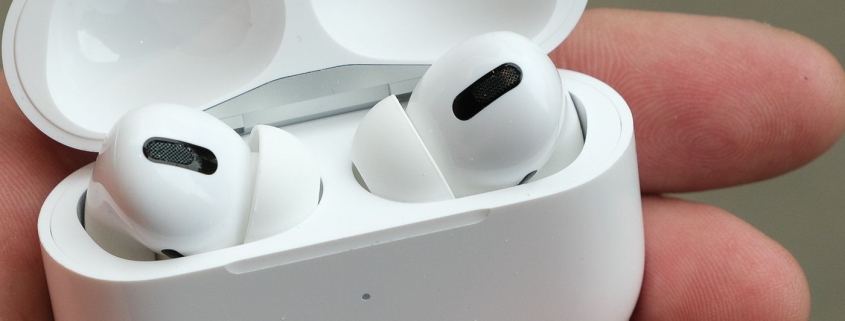
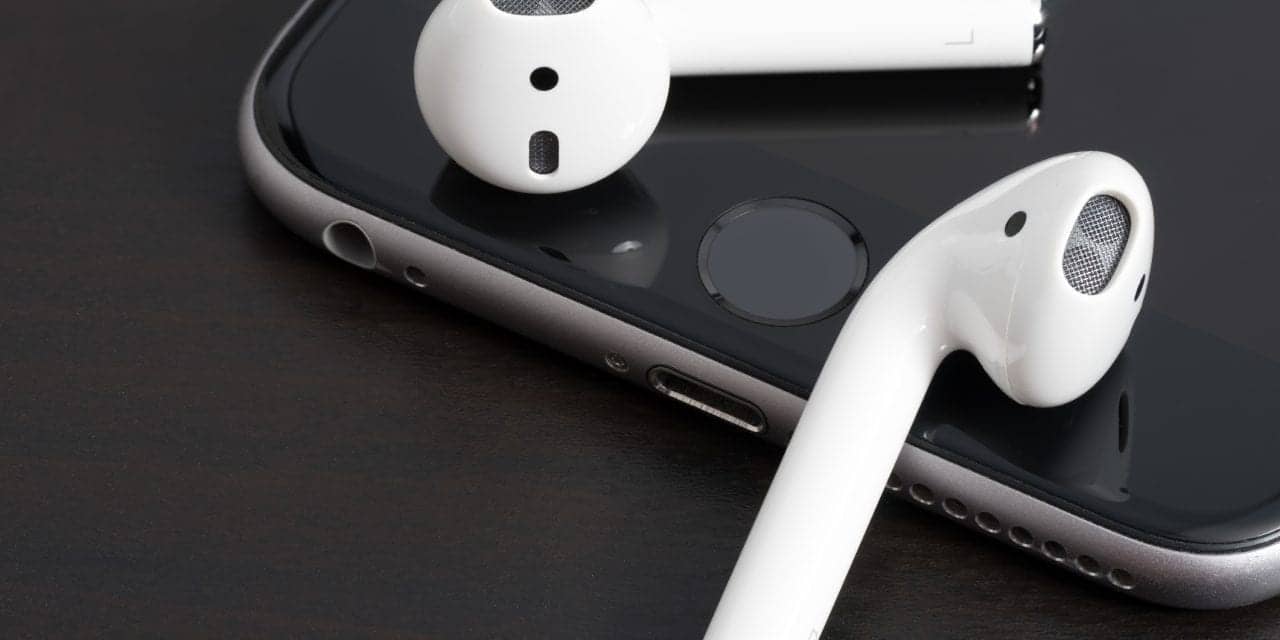
On Monday, June 22, Apple introduced its latest operating system, iOS14, which includes —among many new features—a substantial move towards its AirPod Pros becoming a hearing-aid-like device. Almost buried as an afterthought at the bottom of Apple’s IOS New Features Preview are identical entries in the “Airpods” and “Accessibility” sections that say:
Headphone Accommodations
This new accessibility feature is designed to amplify soft sounds and adjust certain frequencies for an individual’s hearing, to help music, movies, phone calls, and podcasts sound more crisp and clear.Headphone Accommodations also supports Transparency mode on AirPods Pro, making quiet voices more audible and tuning the sounds of your environment to your hearing needs.
Hmmm…sounds a lot like a basic description of wide dynamic frequency compression (WDRC) or AGC, doesn’t it? Abram Bailey of Hearing Tracker, who broke the news yesterday, stated “This is the extremely exciting part, as it indicates that AirPods can now essentially be used to provide typical hearing aid functionality; applying personalised amplification to make it easier to hear those around you.” Bailey went on to show how the headphone accommodations use a custom audio setup with a listening test that generates an “audiogram” from the Apple Health app that “seems to indicate that the AirPods Pro will be capable of providing a very fine-tuned custom amplification experience, based on the audiogram (pitch-by-pitch hearing abilities) unique to the user.”
It should be acknowledged that Apple has for many years been developing hearing-aid-related features, including Live Listen for hearing aids and cochlear implants in 2014 (and later for AirPods and the Earpods), in addition to speech audiometry and speech-in-noise packages for developers, noise warning apps for its WatchOS, and more. The company sold more than 60 million Airpods in 2019, compared to about 15 million hearing aids worldwide for the entire hearing industry (4.2 million units in the US). Apple’s Wearables, Home and Accessories division had the most significant year-on-year growth for the company last year, with its sales increasing 41% thanks to the Airpod and Apple Watch, and the tech-giant owns an enviable 36.5% of the wearables market, according to CompareCamp. Mind you, this includes the “hearables” market that Nick Hunn predicted earlier this year will reach $80 billion a year by 2025.
As Paul Dybala, PhD, AuD, of AudiologyDesign points out in a recent LinkedIn post about Apple and its threat to the hearing industry, “If none of this impresses you, buy a pair of AirPod Pros and turn on the Active Noise Cancelling feature. Then change them over to Transparency Mode and listen further. Once you wipe your jaw off the floor, continue reading. Take your time, I’ll wait…” However, he then goes on to point out that hearing loss is widely viewed as a healthcare problem that should be addressed by a hearing healthcare professional, as shown in a 2017 survey by a study he did with colleague Brande Plotnick at Healthy Hearing.
**************
As a side-note, I’ve personally tried several of the products and hearing tests available in some of the better PSAPs. As one example, Alango Technology’s BeHear app did an impressive job of replicating an audiogram of my own mild sloping hearing loss and tailoring the sound to suit my preferences. The idea of an app doing this also reminded me of a September 2018 Hearing Reviewarticle by James Jerger, PhD, who—after describing three basic forms of automated audiometry—wrote:
“The most important issue is to catch up with the rest of the automated world…In spite of the many examples of successful automated systems summarised above, I suspect that there will be little further progress in the actual clinical use of automated audiometry of any variety until clinicians become part of the solution. It goes back to their initial educational experience. If the only procedure they learn as students is the manual Hughson-Westlake method on a conventional audiometer, it is unlikely that they will be easily diverted from that familiar path, sophisticated technology notwithstanding. PhD and AuD students—in addition to practicing clinicians—need to understand that automated audiometry can be carried out by less credentialed personnel, resulting in time and cost savings in a clinical setting. It is apparent this testing is moving into the digital/consumer realm [with the link going to Apple’s WDDC 2018 video that includes a demonstration of speech audiometry].
The point is professional hearing healthcare is so much more than automated tests and apps. As Dr Dybala notes in his article, it’s about assessing an often-complex medical problem and applying all of the tools available to tailor an individual solution that works for the patient in all kinds of listening situations, including (and especially) noise. However, as shown by Apple and others, the world of hearables with their automated testing and applied amplification should help millions of consumers make their first moves toward professional hearing care.
https://keynshamhearing.co.uk/wp-content/uploads/2020/06/Apple-earpods.jpg14001400adminhttps://www.keynshamhearing.co.uk/wp-content/uploads/2019/03/logo-300x79.pngadmin2020-06-30 19:13:482020-06-30 19:13:48Apple Takes Another Step Toward Hearing Aid Functionality
This website uses cookies so that we can provide you with the best user experience possible. Cookie information is stored in your browser and performs functions such as recognising you when you return to our website and helping our team to understand which sections of the website you find most interesting and useful.
Strictly Necessary Cookies
Strictly Necessary Cookie should be enabled at all times so that we can save your preferences for cookie settings.
If you disable this cookie, we will not be able to save your preferences. This means that every time you visit this website you will need to enable or disable cookies again.