Keynsham Hearing Centre
  • Facebook
  • Home
  • Testimonials
  • Video
    • Earwax Removal Keynsham
    • #615 (no title)
    • Ear syringing.. How it was
    • Hopi candle truth 2020
    • Unitron Hearing Aid
    • GN Sports Lock Retention Wire
    • Hearing Test Information
    • Fitting Hearing Aid Battery
  • Sound Proof Room
  • Hearing Aids
  • Noise Protection
  • Microsuction
  • Contact
  • News
  • Search
  • Menu
Ear wax removal Bristol, Uncategorised

Phonak Launches Naida Paradise Hearing Aid

Phonak Launches Naida Paradise Hearing Aid


Phonak Launches Naida Paradise Hearing Aid

Phonak, a global provider of hearing solutions, announced Naída Paradise, the power hearing aid that “gives people with severe-to- profound hearing loss the power, sound quality, and wireless connectivity they need to connect with everything around them.” Now in its seventh generation, Naída Paradise is said to be “14% smaller, 27% lighter1, and further improves upon the hearing performance that wearers expect from Phonak.” This includes “powerful sound, industry-leading connectivity, and soon a new custom program memory feature with the new myPhonak 5.0 app.”
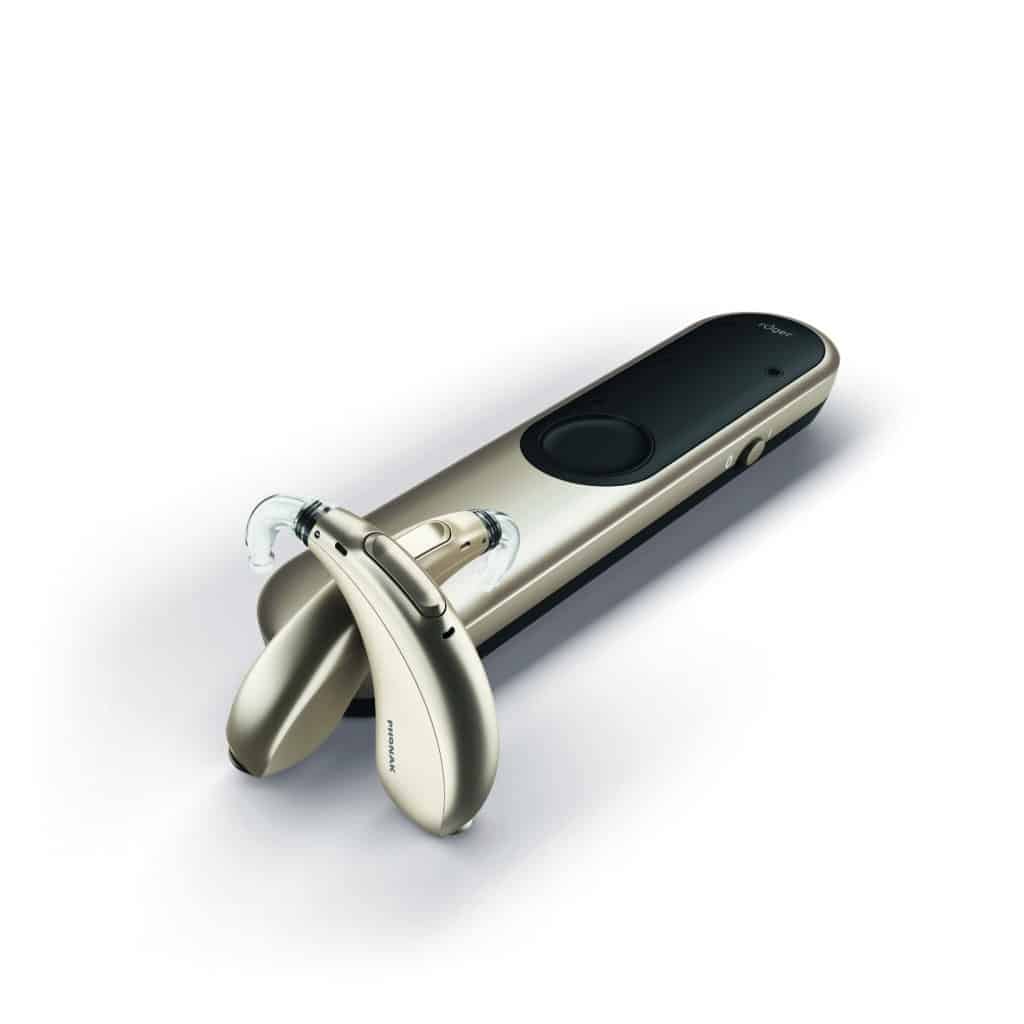
Phonak Naida Paradise and Roger On

Naída Paradise features a powerful double receiver that delivers up to 141 dB of peak gain in the UP model and up to 130 dB in the rechargeable model, according to Phonak. It’s powered by the new PRISM sound processing chip and features AutoSense OS 4.0 for “a host of premium features that work together seamlessly.” For example, the hearing aids can “automatically enhance soft speech in quiet places or reduce noise in loud environments.” A built-in accelerometer detects movement and automatically steers the microphones to improve listening on-the-go.2
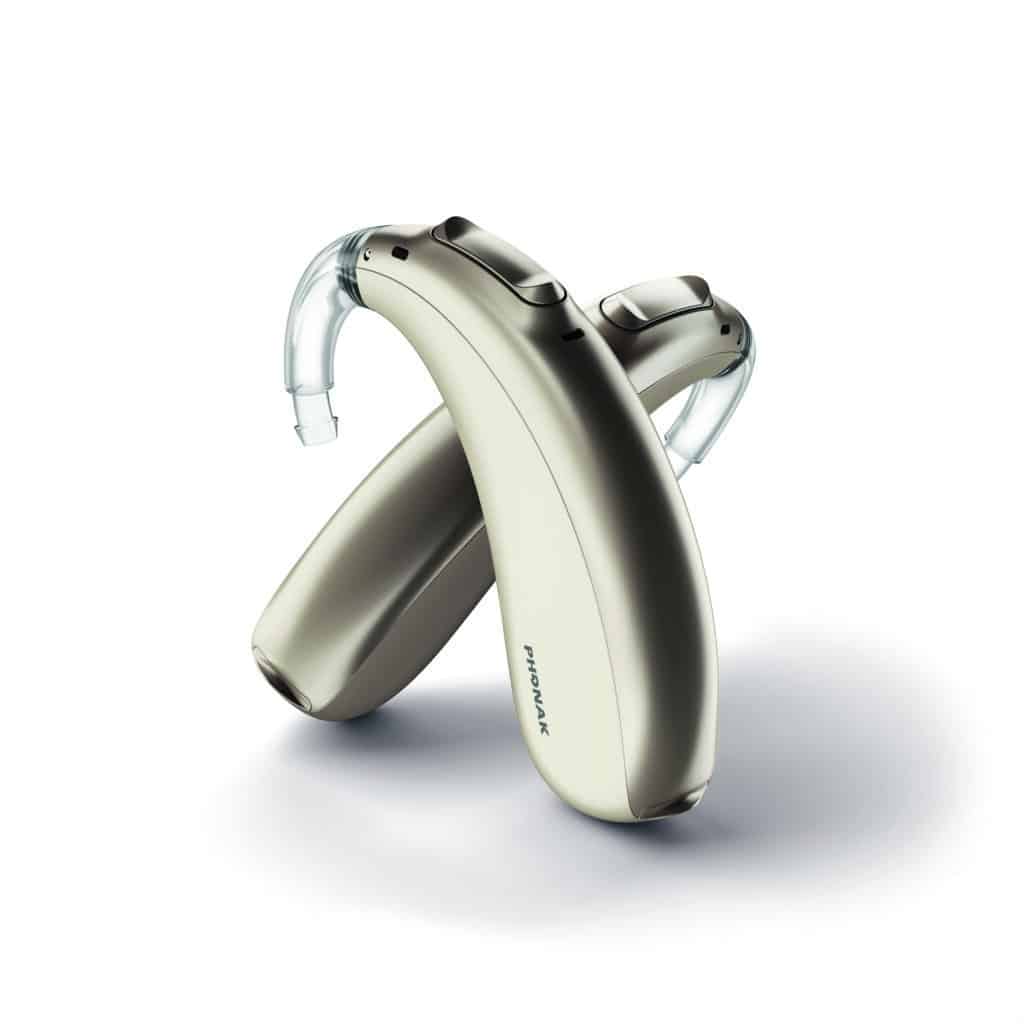
Phonak Naida Paradise

Naída Paradise helps eliminate connectivity barriers that previously existed for consumers who needed more power. With Phonak universal connectivity, wearers can wirelessly stream audio directly into both hearing aids from virtually any smartphone, TV, laptop, tablet, eBook, and more. Phonak Paradise technology helps allow two active Bluetooth connections at the same time, so wearers can stay connected to their smartphone and their video chat without having to manually switch back and forth.

In addition to universal Bluetooth connectivity, Naída Paradise hearing aids are also equipped with RogerDirect. This means wearers can also receive the Roger remote microphone signal with no additional accessory required. Launched in 2013, Roger™ technology is “proven to boost hearing performance in loud noise and over distance.” In fact, hearing aid wearers who receive the Roger signal have better speech understanding in noise and over distance than people with normal hearing.3 Some Roger microphones and receivers have also been shown to help users understand up to 61% more speech in a group conversation in 75dBA of noise than using hearing aids alone.4

Universal Bluetooth connectivity coupled with on-board microphones means Naída Paradise wearers can use their hearing aids as wireless headsets for hands-free calls. A new Tap Control2 feature allows users to double tap on their ear to accept or end a call, or pause or resume streaming. A tap on the other ear gives access to smartphone voice-assistants like Siri or Google Assistant.

“Naída has a long-lasting history of delivering power without sacrificing sound quality, so we knew that we needed to deliver an outstanding product to our wearers who depend so heavily on their devices,” said Jon Billings, Vice-President Phonak Marketing. “With Naída Paradise, we’re making history again by giving those with severe forms of hearing loss access to next-level, powerful sound with industry-leading connectivity.”

In late spring, the myPhonak app’s 5.0 update will include the myPhonak Memory feature. It helps allow consumers to save a custom program from the app to the hearing aids, access the last-used custom program using the hearing aid’s multi-function button, or access other custom programs via the app.

Phonak is also preparing for the newest member of the Roger family with the debut of Roger On. The new Roger On remote microphone will feature MultiBeam 2.0 technology and an “improved pointing mode that allows the user to zoom into a speaker by simply pointing.” Roger On will be compatible with most hearing aids and cochlear implants and will be able to stream a variety of audio content.

The new Phonak Naída Paradise is available for pre-order by licensed hearing care professionals in the US and other select markets and will begin shipping in late February. The myPhonak 5.0 app featuring myPhonak Memory feature as well as the new Roger On microphone will be introduced in the US and other select markets in late spring.

  • For US hearing care professionals to learn more and to pre-order: https://www.phonakpro.com/us/en/campaign/naida.html.

Source/Reference

1 Naída P UP with RogerDirect compared to Naída B UP + external Roger receiver.

2 In the Phonak power BTE portfolio, only Naída P-PR comes with motion sensor technology, including Tap Control.

3 Thibodeau L. Comparison of speech recognition with adaptive digital and fm remote microphone hearing assistance technology by listeners who use hearing aids. American Journal of Audiology. 2014;23(2):201-210.

4 Thibodeau LM. Benefits in speech recognition in noise with remote wireless microphones in group settings. Journal of the American Academy of Audiology. 2020;31(6):404–411.

Bluetooth® word mark is a registered trademark owned by Bluetooth SIG, Inc. and any use of such mark by Sonova AG is under license.

Siri® is a trademark of Apple Inc., registered in the U.S. and other countries.

Google Assistant™ is a trademark of Google LLC.

Source: Phonak

Images: Phonak
15th February 2021/by admin
https://www.keynshamhearing.co.uk/wp-content/uploads/2019/03/logo-300x79.png 0 0 admin https://www.keynshamhearing.co.uk/wp-content/uploads/2019/03/logo-300x79.png admin2021-02-15 11:52:192021-02-15 11:56:16Phonak Launches Naida Paradise Hearing Aid
Bath ear wax removal, Ear wax removal Bristol, Hearing aids Bristol

Study Shows Hair Cell Regrowth with New Drug

Study Shows Hair Cell Regrowth with New Drug


Study Shows Hair Cell Regrowth with New Drug

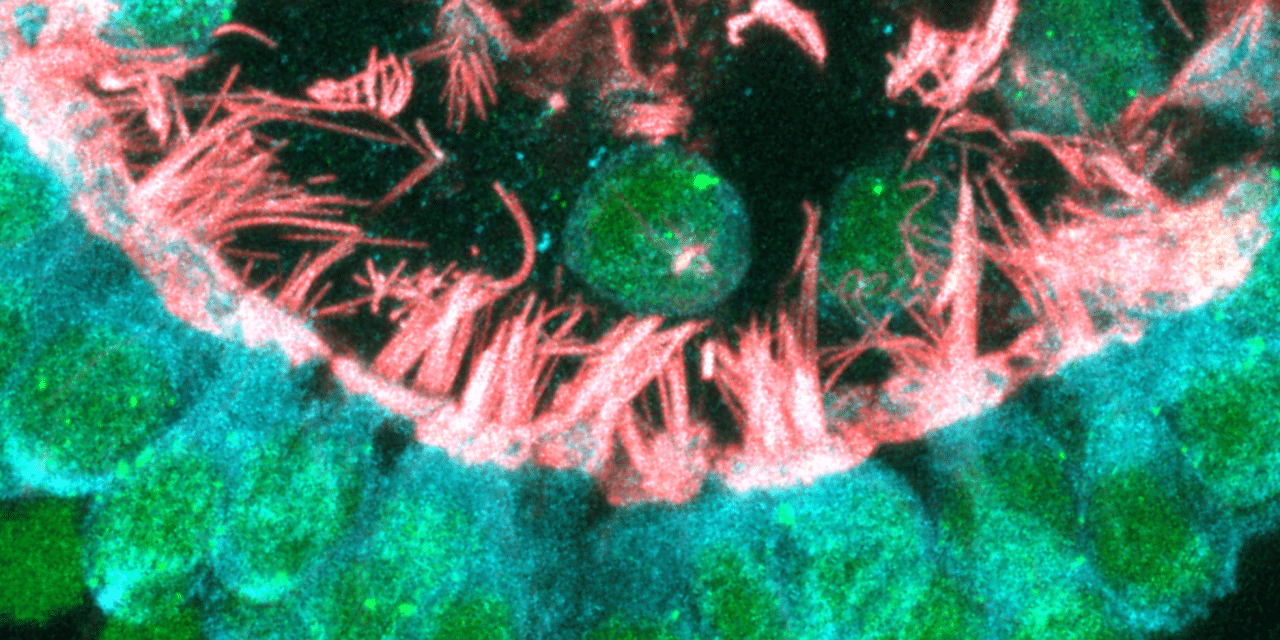
Newly formed cochlear hair cells contain intricate hair bundles with many stereocilia (critical for sensing sound) and other components that are critical for proper function and neural transmission. Credit: Will McLean

An approach to regenerate inner ear sensory hair cells reportedly lays the groundwork for treating chronic noise-induced hearing loss by the company, Frequency Therapeutics, Woburn, Mass, and its co-founders who are drawing on research from Brigham and Women’s Hospital (BWH), Harvard Medical School, Mass Eye and Ear Infirmary, and Massachusetts Institute of Technology (MIT). In the February 21, 2017 edition of Cell Reports, the scientists describe a technique to grow large quantities of inner ear progenitor cells that convert into hair cells. The same techniques are said to show the ability to regenerate hair cells in the cochlea.

Hearing loss affects 360 million people worldwide according to the World Health Organization (WHO). Inner ear hair cells are responsible for detecting sound and helping to signal it to the brain. Loud sounds and toxic drugs can lead to death of the hair cells, which do not regenerate. Humans are born with only 15,000 sensory hair cells in each cochlea, which are susceptible to damage from exposure to loud noises and medications—leading to cell death and hearing loss over time.

According to a press release from Frequency Therapeutics, sufficient numbers of mammalian cochlear hair cells have not been able to be obtained to facilitate the development of therapeutic approaches for hearing loss. The new research built on previous work to control the growth of intestinal stem cells expressing the protein Lgr5  and targeted a different population of Lgr5 cells that were discovered to be the source of sensory hair cells in the cochlea during development (a subset of supporting cells or progenitors). The team successfully identified a protocol of small molecules to efficiently grow the cochlear progenitor cells into large colonies with a high capacity for differentiation into bona fide hair cells.

Jeff Karp, PhD

Jeff Karp, PhD

“The ability to regenerate hair cells within the inner ear already exists in nature,” said Jeff Karp, PhD, of BWH and Harvard Medical School in the press release. “Birds and amphibians are able to regenerate these cells throughout their lives, which provided the base for our inspiration to find similar pathways in mammals. With our collaborators at Mass Eye and Ear Infirmary, we were able to study a small molecule approach, that we developed at MIT and BWH, to expand progenitor cells from the mouse cochlea. We believe this technique represents a major advance for hearing loss research and will enable new physiological studies as well as genetic screens using drugs, siRNA, or gene overexpression.”

The research team first focused on optimizing the expansion of Lgr5 expressing cochlear progenitor cells. With the combination of a GSK3 inhibitor to activate the Wnt signaling pathway and a histone deacetylase (HDAC) inhibitor to activate gene transcription, the research team achieved a greater than 2000-fold expansion of cochlear supporting cells compared to previous approaches. This protocol was used successfully and with consistency to generate colonies of neonatal and adult murine cells, as well as primate and human progenitor cells. Furthermore, according to the researchers, the team achieved 60-fold enhancement of hair cell production from the progenitor cells compared to current methods.

The generation of new hair cells was achieved even in cochlear tissue that had been depleted of hair cells by exposure to an ototoxic antibiotic. Importantly, hair cells produced from the protocols exhibited the same physical features, gene expression, and functionality as typical cochlear hair cells, says Frequency Therapeutics.

“This work has opened an entire field of what we call Progenitor Cell Activation (PCA), which we believe has many regenerative applications beyond hearing loss, ranging from skin-related diseases and ocular ailments to gastrointestinal diseases and diabetes,” said Will McLean, PhD, co-founder and VP, Biology and Regenerative Medicine, at Frequency Therapeutics, and the lead author of the paper. “Furthermore, the approach creates a platform with potential to explore large populations of previously difficult-to-access progenitor cell types. Drug discovery for the inner ear was limited by the inability acquire enough primary cells to explore drug targets. This approach unlocks that ability for hearing research and a variety of other fields.”

“By using Progenitor Cell Activation to restore healthy tissue within the inner ear, we’re harnessing the body’s innate ability to heal itself,” said David Lucchino, co-founder, president and CEO of Frequency Therapeutics. “Frequency’s development of a disease modifying therapeutic that can be administered with a simple injection could have a profound effect on chronic noise-induced hearing loss, our lead indication, and we are rapidly advancing this program into human clinical trials within the next 18 months,” added Chris Loose, PhD, co-founder and CSO of the company.

Frequency Therapeutics was founded to translate what the company describes as breakthrough work in Progenitor Cell Activation (PCA) by its scientific founders, Robert Langer, ScD, and Jeff Karp, PhD, into new treatments where controlled tissue regeneration with locally delivered drugs could have profound therapeutic potential. The company has licensed foundational patents from the MIT and Partners Healthcare.

Hearing Review has published several articles on work involving Lrg5, including work involving a co-author of this study, Albert Edge, PhD, and related work on blocking the notch pathway.

Original paper: McLean WJ, Yin X, Lu X, Lenz DR, McLean D, Langer R, Karp JM, Edge ASB. Clonal expansion of Lgr5-positive cells from mammalian cochlea and high-purity generation of sensory hair cells. Cell Reports. 2017;18(8):1917–1929.

Sources: Frequency Therapeutics; Brigham and Women’s Hospital; Cell Reports

14th December 2020/by admin
https://www.keynshamhearing.co.uk/wp-content/uploads/2019/03/logo-300x79.png 0 0 admin https://www.keynshamhearing.co.uk/wp-content/uploads/2019/03/logo-300x79.png admin2020-12-14 17:26:122020-12-14 17:26:12Study Shows Hair Cell Regrowth with New Drug
Bath hearing loss centre, Ear wax removal Bristol

Zoom Charges Monthly Fee for Closed Captioning

Zoom Charges Monthly Fee for Closed Captioning During Pandemic, ‘WBFO’ Reports


Zoom Charges Monthly Fee for Closed Captioning During Pandemic, ‘WBFO’ Reports

The challenges for hearing impaired people working remotely and utilizing video conferencing services during the coronavirus pandemic can make communication difficult. According to an article on the WBFO/NPR website, hearing advocate and Living With Hearing Loss founder Shari Eberts recently wrote an open letter—that turned into a petition with 58,000 signatures—asking video conferencing companies to remove the paywall from their captioning services.

Related article: How to Inspire Your Patients to Hear Their Best

According to the article, both Google and Microsoft have complied, but Zoom is still charging a $200 monthly fee for users to be able to access closed captioning.

Issues with video conferencing that include poor audio and/or sound quality as well as spotty internet connection, can make lip reading difficult. Even when using workarounds like speaker mode to be able to see a larger version of the person they’re speaking with and/or headphones to improve sound quality, a person’s lips can be out of sync with their words, Eberts says in the article. Closed captions could improve communication in these situations, she says.

“It’s hard for us to want to jump in or to share our thoughts because we’re not sure what’s been said. And obviously, there’s a lot of trepidation about looking silly or repeating something that someone just said,” Eberts is quoted in the article as saying.

To read the article in its entirety, please click here.

Source: WBFO

7th December 2020/by admin
https://www.keynshamhearing.co.uk/wp-content/uploads/2019/03/logo-300x79.png 0 0 admin https://www.keynshamhearing.co.uk/wp-content/uploads/2019/03/logo-300x79.png admin2020-12-07 15:42:392020-12-07 15:42:39Zoom Charges Monthly Fee for Closed Captioning
Bath ear wax removal, Ear wax removal Bristol

Hearing Speech Requires Quiet

Hearing Speech Requires Quiet—In More Ways than One


Hearing Speech Requires Quiet—In More Ways than One


A very interesting paper by:

 Kim Krieger, Research Writer, University of Connecticut

Perceiving speech requires quieting certain types of brain cells, report a team of researchers from UConn Health and University of Rochester in an upcoming issue of the Journal of Neurophysiology. Their research reveals a previously unknown population of brain cells, and opens up a new way of understanding how the brain hears, according to an article on the UConn Today website.

Your brain is never silent. Brain cells, known as neurons, constantly chatter. When a neuron gets excited, it fires up and chatters louder. Following the analogy further, a neuron at maximum excitement could be said to shout. When a friend says your name, your ears signal cells in the middle of the brain. Those cells are attuned to something called the amplitude modulation frequency. That’s the frequency at which the amplitude, or volume, of the sound changes over time.

Amplitude modulation is very important to human speech. It carries a lot of the meaning. If the amplitude modulation patterns are muffled, speech becomes much harder to understand. Researchers have known there are groups of neurons keenly attuned to specific frequency ranges of amplitude modulation; such a group of neurons might focus on sounds with amplitude modulation frequencies around 32 Hertz (Hz), or 64 Hz, or 128 Hz, or some other frequencies within the range of human hearing. But many previous studies of the brain had shown that populations of neurons exposed to specific amplitude modulated sounds would get excited in seemingly disorganised patterns. The responses could seem like a raucous jumble, not the organized and predictable patterns you would expect if the theory, of specific neurons attuned to specific amplitude modulation frequencies, was the whole story.

Related article: Psychoacoustics: Auditory Perception in Normal and Impaired Hearing: Interview with Jennifer Lentz, PhD

UConn Health neuroscientists Duck O. Kim and Shigeyuki Kuwada passionately wanted to figure out the real story. Kuwada had made many contributions to science’s understanding of binaural (two-eared) hearing, beginning in the 1970s. Binaural hearing is essential to how we localise where a sound is coming from. Kuwada (or Shig, as his colleagues called him) and Kim, both professors in the School of Medicine, began collaborating in 2005 on how neural processing of amplitude modulation influences the way we recognise speech. They had a lot of experience studying individual neurons in the brain, and, together with Laurel Carney at the University of Rochester, they came up with an ambitious plan: they would systematically probe how every single neuron in a specific part of the brain reacted to a certain sound when that sound was amplitude modulated, and when it was not. They studied isolated single-neuron responses of 105 neurons in the inferior colliculus (a part of the brainstem) and 30 neurons in the medial geniculate body (a part of the thalamus) of rabbits. The study took them two hours a day, every day, over a period of years to get the data they needed.

While they were writing up their results, Shig became ill with cancer. But still he persisted in the research. And after years of painstaking measurement, all three of the researchers were amazed at the results of their analysis: there was a hitherto unknown population of neurons that did the exact opposite of what the conventional wisdom predicted. Instead of getting excited when they heard certain amplitude modulated frequencies, they quieted down. The more the sound was amplitude modulated in a specific modulation frequency, the quieter they got.

It was particularly intriguing because the visual system of the brain has long been understood to operate in a similar way. One population of visual neurons (called the “ON” neurons) gets excited by certain visual stimuli while, at the same time, another population of neurons (called the “OFF” neurons) gets suppressed.

Last year, when Shig was dying, Kim made him a promise.

“In the final days of Shig, I indicated to him and his family that I will put my full effort toward having our joint research results published. I feel relieved now that it is accomplished,” Kim says. The new findings could be particularly helpful for people who have lost their ability to hear and understand spoken words. If they can be offered therapy with an implant that stimulates brain cells directly, it could try to match the natural behavior of the hearing brain.

“It should not excite every neuron; it should try to match how the brain responds to sounds, with some neurons excited and others suppressed,” Kim says.

The research was funding by the National Institutes of Health.

Original Paper: Kim DO, Carney LH, Kuwada S. Amplitude modulation transfer functions reveal opposing populations within both the inferior colliculus and medial geniculate body. Journal of Neurophysiology. 2020. DOI: https://doi.org/10.1152/jn.00279.2020.

Source: UConn Today, Journal of Neurophysiology

Image: UConn Today, Duck Kim

5th October 2020/by admin
https://www.keynshamhearing.co.uk/wp-content/uploads/2019/03/logo-300x79.png 0 0 admin https://www.keynshamhearing.co.uk/wp-content/uploads/2019/03/logo-300x79.png admin2020-10-05 10:12:172020-10-05 10:12:17Hearing Speech Requires Quiet
Ear wax removal Bristol, Ear wax removal Keynsham Bristol, News

Signia Launches Styletto X Hearwear

Signia Launches Styletto X Hearwear


Signia Launches Styletto X Hearwear

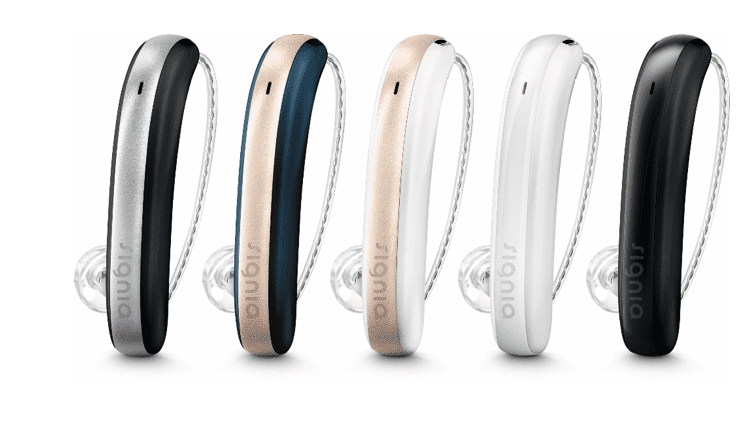
Signia announces the launch of the Styletto X. This new device, said to be “the world’s first SLIM-RIC form factor” pioneered by Signia, is now available on the Signia Xperience platform.

Styletto X reportedly offers “the most complete hearing experience, combining one-of-a-kind style that patients desire with the uncompromised technology that hearing care professionals demand,” according to the company’s announcement. Signia says that this “highly sophisticated hearwear helps to improves listening in any situation—even when moving—and delivers better-than- normal-hearing in difficult noise.” Features of the Styletto X include exchangeable receivers, portable rechargeability, Bluetooth connectivity, and self-service patient support via Signia Assistant.

Keynsham hearing aids Bristol

In addition to Styletto X, Signia has introduced additional products on the Signia Xperience platform, helping to empower hearing care professionals to address more patient needs and preferences. These new offerings include:

  • The Silk X, a “discreet alternative to customs,” helping to allow hearing care professionals to operate more efficiently with a same-day-fit.
  • An expanded Essentials line to offer Signia’s advanced technology to more patients, regardless of budget.
  • Three new CROS solutions (CROS Pure Charge&Go X, CROS Pure 312 X, and CROS Silk X) for a choice of styles and fittings for patients with single-sided deafness.

“With its slim, rounded form and striking color combinations, Styletto X was developed to attract individuals who wouldn’t otherwise consider wearing hearing aids, while providing new options to existing wearers looking to upgrade to a sleek and modern device,” said Dr Tish Ramirez, AuD, Signia’s Vice President, Clinical Education & Professional Relations.

As evidence of its appeal, the eye-catching Styletto form factor—preferred by 8 out of 10 consumers—was found to significantly increase in-store-conversion of people with hearing loss into satisfied hearing aid wearers.2

Bristol digital hearing aid shop
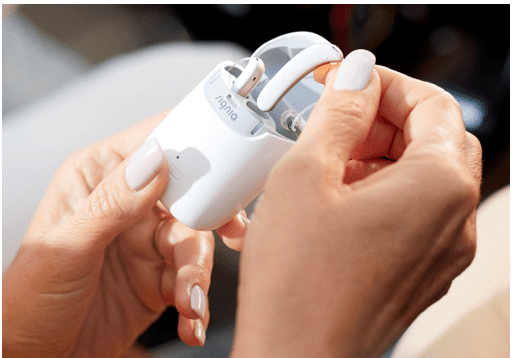
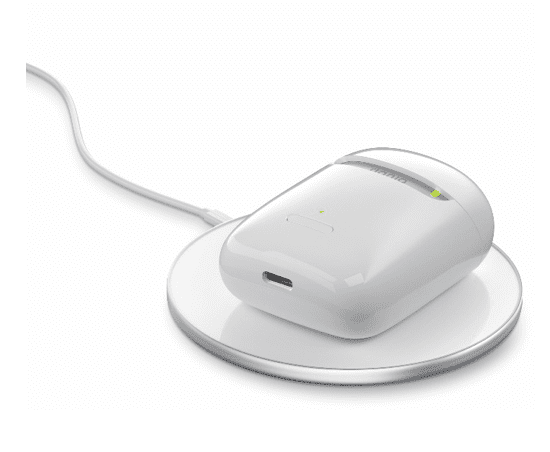
Signia is the “first hearing aid brand” to incorporate Qi wireless charging technology, helping to enable wearers to place the Styletto X pocket-sized charging case on a charging pad for greater usability.

“Styletto X features several enhancements to this already well-received design, based on feedback from our hearing care professional partners,” Ramirez added. “In particular, Styletto X now comes with exchangeable receivers to treat a wider range of hearing loss and enable more patients to benefit from this one-of-a-kind device.”

A New Era of Wearability and Autonomy

Signia is “the first hearing aid brand” to incorporate Qi wireless charging technology into a hearing aid charging case. With this technology, wearers can simply place the Styletto X pocket-sized charging case on a charging pad in cafés, restaurants, or cars, instead of having to plug it into the charging port. Styletto X can be fully charged in only four hours to provide a full day’s wearing, including five hours of streaming.3

The Signia Assistant can help hearing care professionals by leveraging artificial intelligence to help support patients, 24/7, with text-based dialogue, instant sound adjustments, and how-to-videos to answer handling questions.

Remote Fitting and Service Options

With Signia’s new Remote Care solution, hearing care professionals and hearing aid wearers can benefit from flexible fitting and service options via TeleCare, “the first full, live remote fine-tuning solution in the industry,” according to the company.

Bath digital hearing aid shop

This hearing solution is available now in performance levels 7, 5, 3, 2, 1 and sDemo and in the contemporary color combinations Snow White/Rose Gold, Black/Silver, Cosmic Blue/Rose Gold, and in new White or Black.

For further information, please see: https://pro.signiausa.com/styletto-x/.

1 Red Dot Design Award 2019, iF Design Award 2019
2 Hakvoort, Burton: Increasing Style, Reducing Stigma: The Styletto Solution (Signia White Paper, 2018)
3 Based on 16 hours wearing incl. 5 hours streaming per day

Source: Signia

Images: Signia

5th August 2020/by admin
https://www.keynshamhearing.co.uk/wp-content/uploads/2019/03/logo-300x79.png 0 0 admin https://www.keynshamhearing.co.uk/wp-content/uploads/2019/03/logo-300x79.png admin2020-08-05 11:50:012020-08-05 11:50:31Signia Launches Styletto X Hearwear
Bath ear wax removal, Ear wax removal Bristol, News

Phonak Launches Naída Marvel (M)

Bath hearing centre

Phonak Launches Naída Marvel (M)


Bath hearing centre 

Phonak announced the launch of the Naída Marvel (M), described as “a fully-connected, multifunctional super-power hearing aid for those with severe-to-profound hearing loss.” Naída Marvel reportedly delivers “rich, powerful sound and directly connects to virtually any Bluetooth device including smartphones, TVs, tablets, PCs, and much more,” according to Phonak. Integrated Marvel 2.0 technology like RogerDirect helps give wearers the flexibility to stream the Roger signal directly into both ears, resulting in almost 10x better-than-normal hearing in noisy situations and over distance.1 

Naída M: Power meets connectivity

Naída M is said to be “the world’s first super power hearing aid that directly connects to both iOS and Android, or virtually any other Bluetooth enabled audio device.” It’s also reportedly “the world’s only super-power hearing aid to allow hands-free phone conversations as well as the classification of streamed audio signals.” 2 With Naída M, super power wearers can use their hearing aids like wireless headsets, according to Phonak.

“Since the release of its first power hearing aid in 1978, the Phonak brand has been dedicated to creating powerful hearing solutions that deliver excellent hearing performance,” said Jon Billings, Vice President of Marketing at Phonak. “Now in its sixth generation, Naída M builds on this legacy with award-winning Marvel technology. The result is Naída becoming the most powerful Super Power3 multifunctional hearing solution that allows people with severe-to-profound hearing loss to connect to everyone and everything around them.”

Extending Marvel and increasing accessibility 

Per the World Health Organization (WHO), approximately 466 million people worldwide have disabling hearing loss.4 Left untreated, these individuals have extreme difficulty communicating with others, often relying on lip reading and/or sign language.5 One study found the societal costs of this degree of hearing loss in the US alone to be nearly $300,000 over the lifetime of each person, most of this attributed to reduced work productivity.6

Naída M’s combination of power with wireless connectivity was specifically engineered to address the unique communication needs of people with severe forms of hearing loss, Phonak says. According to the company’s announcement, StereoZoom helps to reduce listening effort in noise by 24% versus a non-directional program and even enhances memory recall with 10% more words recalled in noise.7 NaídaMarvel directly connects to Roger microphones to help improve speech understanding in noise and over distance1 while remaining 15% smaller and 14% lighter than previous versions that required an external receiver.

Finally, the myCall-to-Text app helps provide live transcription of phone calls from the other party in more than 80 languages. This is an ideal solution for people who would like to benefit from additional visual captions when using the phone.

Naída Marvel will be available to the public at the end of February through licensed hearing care professionals. For more information, please visit http://www.phonak.com/naidamarvel.

  1. Thibodeau L. Comparison of speech recognition with adaptive digital and FM remote microphone hearing assistance technology by listeners who use hearing aids. American Journal of Audiology. 2014;23(2):201-210.
  2. Rodrigues T, Liebe S. Phonak. AutoSense OS™ 3.0. The new & enhanced automatic operating system. https://www.phonakpro.com/content/dam/phonakpro/gc_ca/en/products_solutions/hearing_aid/Audeo_M/documents/Insight_btb_Audeo_Marvel_AutoSense_OS_30.pdf. Published July 2018.
  3. Phonak. Phonak NaídaTM M Technical Data. https://www.phonakpro.com/content/dam/phonakpro/gc_hq/en/products_solutions/hearing_aid/naida_marvel/documents/datasheet_naida_marvel_sp.pdf. Accessed January 13, 2020.
  4. Deafness and hearing loss fact sheet. World Health Organization (WHO). https://www.who.int/news-room/fact-sheets/detail/deafness-and-hearing-loss. Published March 20, 2019.
  5. European Working Group on Genetics of Hearing Impairment. Biomedical and Health Research Programme (HEAR) Infoletter 2. November 1996; 8.
  6. Mohr PE, Feldman JJ, Dunbar JL, et al. The societal costs of severe to profound hearing loss in the United States. International Journal of Technology Assessment in Health Care. 2000;16(04):1120-1135.
  7. Winneke A, Schulte M, Latzel M. The effect of spatial noise processing in hearing aids on neural correlates of listening and memory effort: An EEG study. 2019. Manuscript in preparation.

Bluetooth® word mark is a registered trademark owned by Bluetooth SIG, Inc. and any use of such mark by Sonova AG is under license.

IOS is a trademark of Cisco Technology, Inc.

Android is a trademark of Google LLC.

Source: Phonak

Images: Phonak

24th March 2020/by admin
https://keynshamhearing.co.uk/wp-content/uploads/2020/03/Keynsham-hearing-Somerset.jpg 480 640 admin https://www.keynshamhearing.co.uk/wp-content/uploads/2019/03/logo-300x79.png admin2020-03-24 12:40:562020-03-24 12:40:56Phonak Launches Naída Marvel (M)
Ear wax removal Bristol, Ear wax removal Keynsham Bristol, News

New report in deafness therapy

Ear wax removal Bristol, ear wax removal Bath, ear wax removal Somerset, ear wax removal Frome, ear wax removal Combe down,Lee Curran

New report in deafness therapy


New report in deafness therapy has been reported by a new scientific paper. Here at the Keynsham hearing centre are keen to keep up with the latest information to keep our patients informed.

Below is what was reported by the hearing review recently. 


High-pressure Oxygen Therapy May Help Treat Sudden Deafness, Says ‘JAMA’ Study


Keynsham hearing centre deafness experts

Bottom Line: The addition of hyperbaric oxygen therapy (where patients receive pure oxygen in a pressurised chamber) to standard medical treatment was associated with an improved likelihood that patients who experience sudden deafness might recover all or some of their lost hearing, JAMA Network announced on its website. Sudden deafness, also known as sudden sensorineural hearing loss (SSNHL), is hearing loss that happens within a few days and often has no identifiable cause. This study combined the results of 19 studies, including three randomised clinical trials, and suggests a greater benefit of adding the hyperbaric oxygen therapy may be associated with those patients who have severe to profound hearing loss and who failed to recover after standard medical treatment. A limitation of this study is that because a substantial number of patients with SSNHL will spontaneously recover, the benefits of treatment may not have been accurately evaluated.

Authors: Tae-Min Rhee, MD, DMO/UMO, National Maritime Medical Center, Changwon, Republic of Korea, and coauthors.

Original Paper: Rhee T-M, Hwang D, Lee J-S, Park J, Lee JM. Addition of hyperbaric oxygen therapy vs medical therapy alone for idiopathic sudden sensorineural hearing loss: A systematic review and meta-analysis. JAMA Otolaryngol Head Neck Surg. 2018. Available at: https://jamanetwork.com/journals/jamaotolaryngology/article-abstract/2704029

Source: JAMA Network, JAMA Otolaryngol Head Neck Surg


23rd December 2019/by admin
https://keynshamhearing.co.uk/wp-content/uploads/2019/03/testimonial-lee2.jpg 300 533 admin https://www.keynshamhearing.co.uk/wp-content/uploads/2019/03/logo-300x79.png admin2019-12-23 16:24:282019-12-23 16:24:28New report in deafness therapy
Ear wax removal Bristol, Ear wax removal Keynsham Bristol

MOMENT BABY DAUGHTER’S NEW HEARING AIDS ARE TURNED ON

Read more
7th December 2019/by admin
https://www.keynshamhearing.co.uk/wp-content/uploads/2019/03/logo-300x79.png 0 0 admin https://www.keynshamhearing.co.uk/wp-content/uploads/2019/03/logo-300x79.png admin2019-12-07 16:13:372019-12-07 16:13:37MOMENT BABY DAUGHTER’S NEW HEARING AIDS ARE TURNED ON
Bath hearing loss centre, Ear wax removal Bristol, Ear wax removal Keynsham Bristol, Hearing aids Bristol, News

Starkey’s Livio AI Featured in ‘TIME’s 100 Best Inventions of 2019′ List

Starkey’s Livio AI Featured in ‘TIME’s 100 Best Inventions of 2019′ List

The Keynsham hearing centre are excited to learn that Starkey’s Livio AI has featured in the ”Time’s 100 Best.

Starkey Hearing Technologies announces that Livio AI, “the world’s first multi-purpose hearing aid,” has earned a place on TIME’s 100 Best Inventions of 2019 in the accessibility category. This list is said to “highlight inventions that are making the world better, smarter, and even a bit more fun.”

Bath hearing centre

Starkey Livio AI hearing aid available at the Keynsham hearing centre.

Starkey Livio AI, at Keynsham hearing

TIME uses a multi-step process to assemble the annual list. Contenders from around the world are evaluated on key factors, including originality, effectiveness, ambition, and influence. The result: One hundred groundbreaking inventions that are changing the way we live, work, play, and think about what’s possible, according to Starkey’s announcement.

Livio AI  features integrated sensors and artificial intelligence, providing what the company says is “superior sound quality and the ability to track both body and brain health.” By providing direct monitoring of physical and cognitive activity, including fall alerts and transcription features, Livio AI helps raise awareness about the connection between treating hearing loss and reducing health risks, like cognitive decline and heart disease.

Somerset hearing centre

“I’d like to thank TIME for this incredible recognition. We are humbled and proud to be on this list and in the company of other innovative companies that are truly making the world a better place,” said Starkey President Brandon Sawalich. “I’m grateful to the entire Starkey team for its relentless dedication to helping people hear better, so they can live better. Thank you for continuing to push us to break technological boundaries and transform hearing health as we know it.”

The new issue of TIME, featuring Starkey and Livio AI, goes on sale November 22.

Source: Starkey Hearing Technologies 

25th November 2019/by admin
https://www.keynshamhearing.co.uk/wp-content/uploads/2019/03/logo-300x79.png 0 0 admin https://www.keynshamhearing.co.uk/wp-content/uploads/2019/03/logo-300x79.png admin2019-11-25 11:51:472019-11-25 11:52:47Starkey’s Livio AI Featured in ‘TIME’s 100 Best Inventions of 2019′ List
Ear wax removal Bristol, News

Bristol hearing experts

Bristol hearing aid experts


It has been estimated that only 1-in-5 people who need a hearing aid wears one.

Audiologist Stephen Neal of The Keynsham hearing centre, Somerset thinks that is unfortunate.

He has been fitting people with hearing aids for more than 20 years and says today’s technology has something for just about everyone’s hearing loss.

Hearing experts for Bristol

He says hearing aids now are smaller and can be regulated more discreetly and that the computer chips inside them recognise different sound types and can be programmed to adjust volume accordingly as well as to meet an individual’s specific hearing needs.

Blue Tooth technology allows for direct streaming of sound into the ears from smartphones and other devices and, he adds, always improving applications from manufacturers enable those phones to act as remote controls in adjusting volume and sound in a variety of settings as well.

“Sometimes people have the idea that there is nothing that can be done for them. They might feel their hearing is not bad enough or they might feel like their hearing is so bad that nothing can be done,”

Ear wax removal Bristol

“Sometimes I find they were told 40 years ago, hearing aids won’t help you. If there is anyone who heard that, that is not true today. The technology can fit a wide range of hearing losses from mild to profound and, if it gets to the point where hearing aids don’t do the trick, we refer people for a cochlear implant and they can have that and that technology continues to get better, too.”

Stephen Neal is available for hearing consultations and ear wax removal. Please call reception and speak with Anita.

4th November 2019/by admin
https://www.keynshamhearing.co.uk/wp-content/uploads/2019/03/logo-300x79.png 0 0 admin https://www.keynshamhearing.co.uk/wp-content/uploads/2019/03/logo-300x79.png admin2019-11-04 14:44:242019-11-04 14:44:24Bristol hearing experts
Page 1 of 212

Categories

  • Bath ear wax removal
  • Bath hearing loss centre
  • Ear wax removal Bristol
  • Ear wax removal Keynsham Bristol
  • Hearing aids Bath
  • Hearing aids Bristol
  • Hearing loss
  • Hearing test Bristol
  • News
  • Tinnitus therapy
  • Uncategorised

Latest News

  • 40 Years of hearing aid Sound Processing7th June 2021 - 9:38 am
  • ‘Forbes’ Journalist Tries Widex Moment Hearing Aids1st June 2021 - 3:30 pm
  • Bath hearing centre, Bristol hearing centre, Frome hearing centre,,Phonak Launches Naida Paradise Hearing Aid21st May 2021 - 2:42 pm
  • Ear Drum Scaffolding8th May 2021 - 3:55 pm
  • Oticon More Keynsham Hearing3rd May 2021 - 6:09 pm

Interesting Fact

A person with hearing loss will always have hearing loss, but with hearing aids they can learn to communicate more easily. Hearing aids provide a way for those who are hard of hearing to improve their quality of life.

Keynsham Hearing Centre

34 Temple Street, Keynsham,
BS31 1EH

Call us now on 0117 986 4242

email: info@keynshamhearing.co.uk

Working Hours

Monday: 9AM – 4PM
Tuesday: 9AM – 4PM
Wednesday: 9AM – 4PM
Thursday: 9AM – 4PM
Friday: Closed
Saturday: By Appointment only
Sunday: Closed
Bank holidays: Closed

Latest News

  • 40 Years of hearing aid Sound Processing7th June 2021 - 9:38 am
  • ‘Forbes’ Journalist Tries Widex Moment Hearing Aids1st June 2021 - 3:30 pm
  • Bath hearing centre, Bristol hearing centre, Frome hearing centre,,Phonak Launches Naida Paradise Hearing Aid21st May 2021 - 2:42 pm
  • Ear Drum Scaffolding8th May 2021 - 3:55 pm
© Copyright 2019-2024 Keynsham Hearing Centre - Powered by creativeminds.co.uk
  • Facebook
Scroll to top

We are using cookies to give you the best experience on our website.

You can find out more about which cookies we are using or switch them off in settings.

Keynsham Hearing Centre
Powered by  GDPR Cookie Compliance
Privacy Overview

This website uses cookies so that we can provide you with the best user experience possible. Cookie information is stored in your browser and performs functions such as recognising you when you return to our website and helping our team to understand which sections of the website you find most interesting and useful.

Strictly Necessary Cookies

Strictly Necessary Cookie should be enabled at all times so that we can save your preferences for cookie settings.

If you disable this cookie, we will not be able to save your preferences. This means that every time you visit this website you will need to enable or disable cookies again.